Structural Drying After Water Damage in Kansas City
Structural drying addresses moisture that remains inside a
building after a leak, flood, or other water intrusion event.
Removing standing water from a floor does not necessarily mean
the surrounding structure is dry. Water can penetrate drywall,
move beneath flooring, enter wall cavities, soak insulation,
and become absorbed into wood framing and subfloor assemblies.
These materials may continue holding moisture even after
carpets, countertops, and other visible surfaces appear dry.
This distinction is especially important when water has reached
multiple layers of a finished interior. A wet carpet may conceal
saturated padding, while water beneath laminate or hardwood
flooring can remain trapped against the subfloor. Moisture
entering through a wall can affect baseboards, drywall edges,
insulation, and framing beyond the location of the original
leak. Without evaluating the affected materials, it can be
difficult to determine whether additional drying is necessary.
Kansas City properties present a variety of drying challenges.
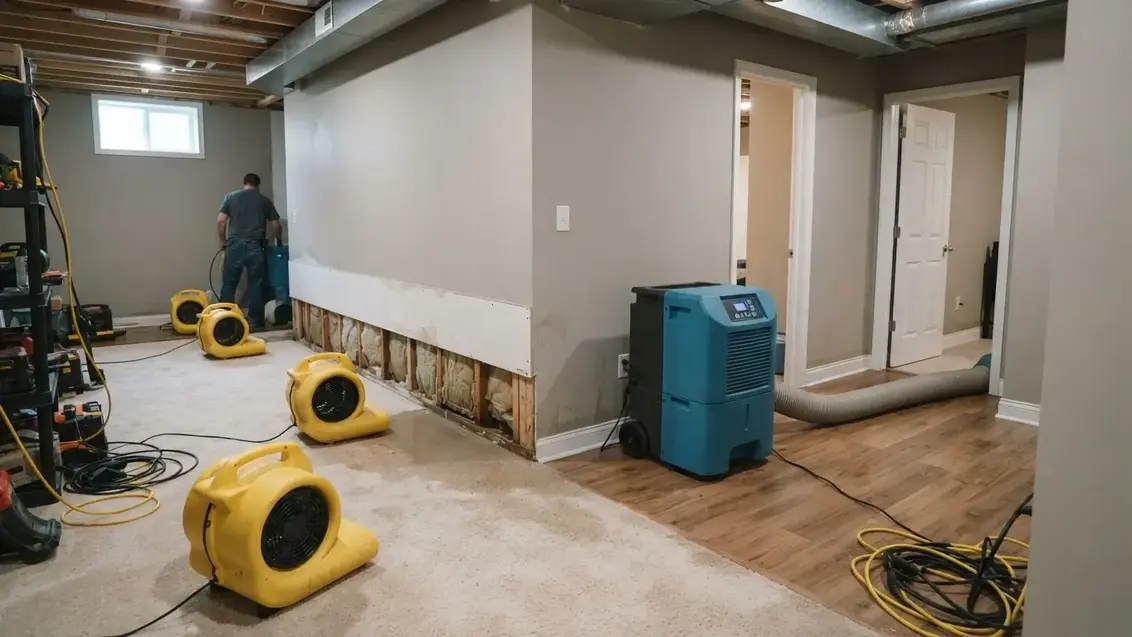
Finished basements can contain carpet, drywall, wood trim, and
enclosed framing that conceal moisture following foundation
seepage or plumbing failures. Multi-level homes may experience
water traveling from an upper-floor bathroom or laundry area
into ceilings, wall cavities, and lower-level rooms. Older
properties can have multiple layers of flooring and interior
finishes that make it harder to identify where water has
traveled. Apartments and commercial buildings may also have
moisture affecting adjoining rooms, ceilings, and shared
building assemblies.
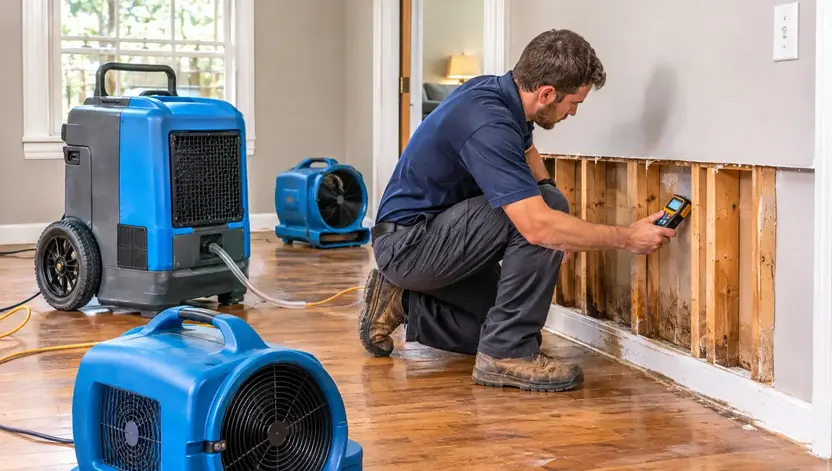
Structural drying involves more than placing fans in a room.
The drying approach must account for the materials affected,
the amount of moisture present, the surrounding environmental
conditions, and the way air can circulate through the space.
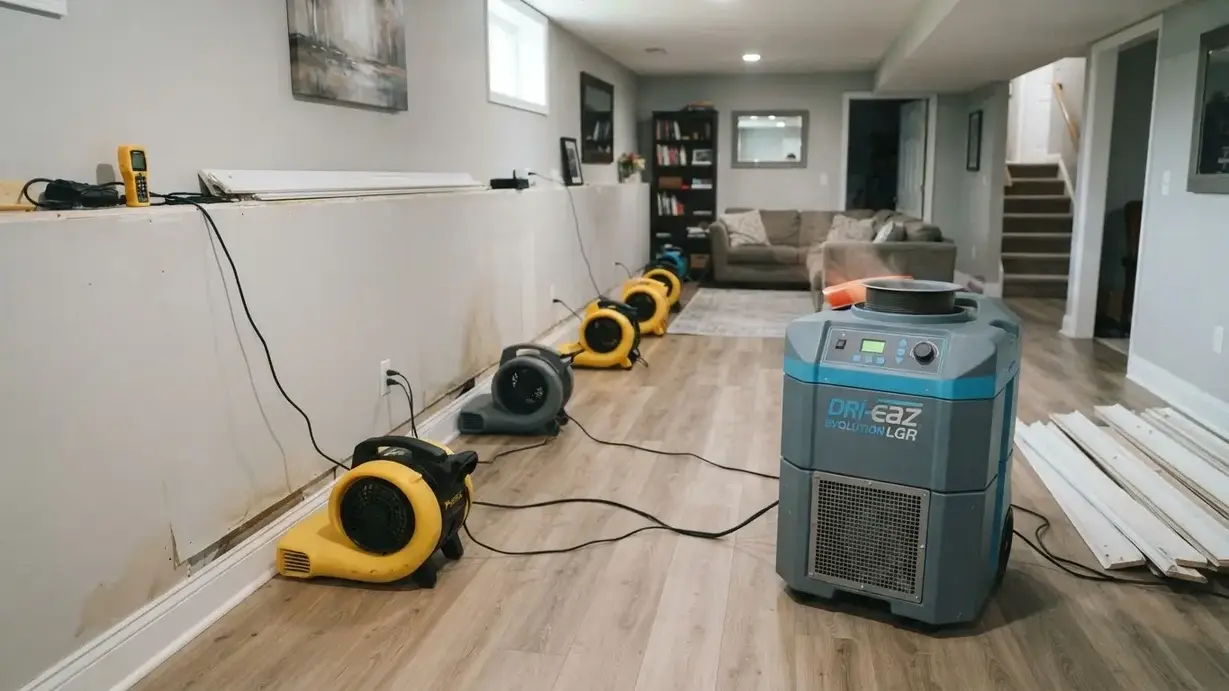
Air movers help increase evaporation from wet surfaces, while
dehumidifiers remove moisture from the surrounding air.
Moisture measurements help evaluate affected materials and
provide information for monitoring drying progress.
Depending on the water intrusion and the condition of the
building materials, structural drying may involve several
related activities:
-
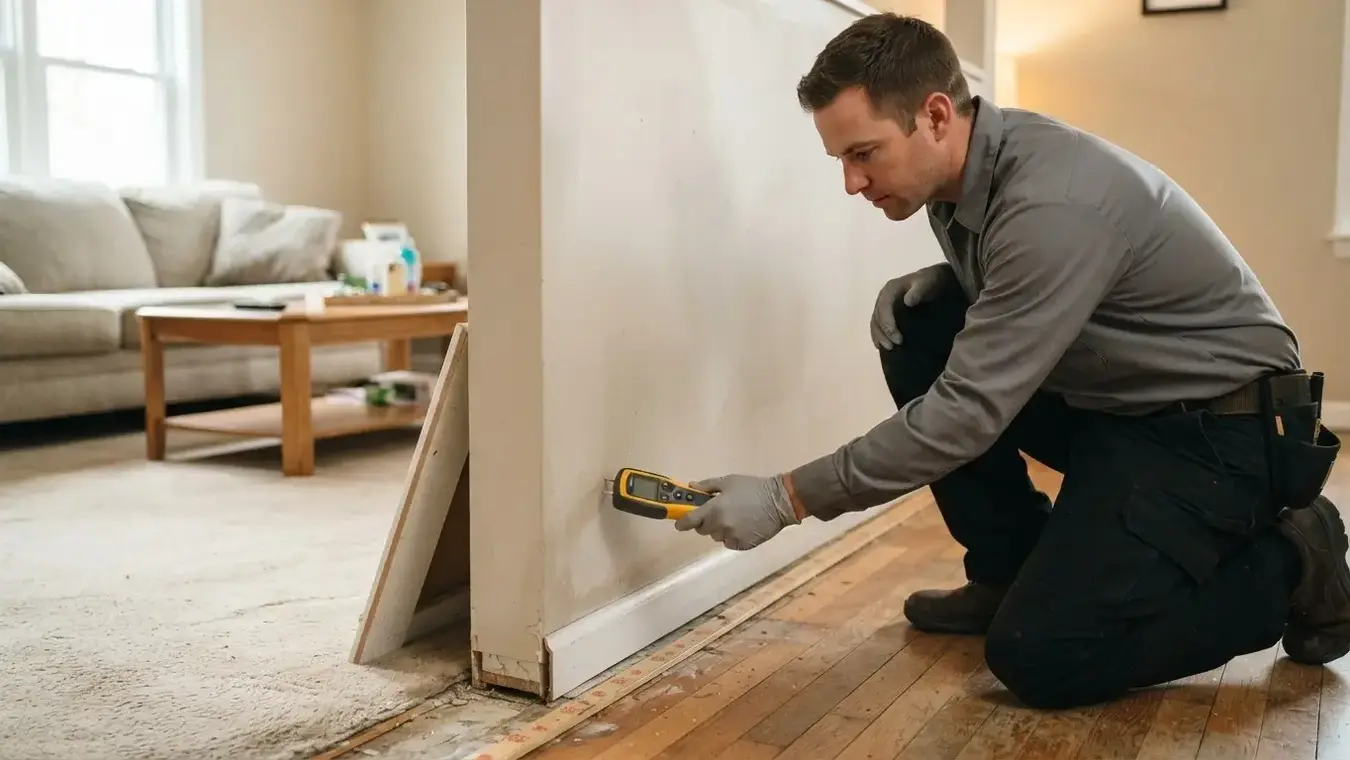
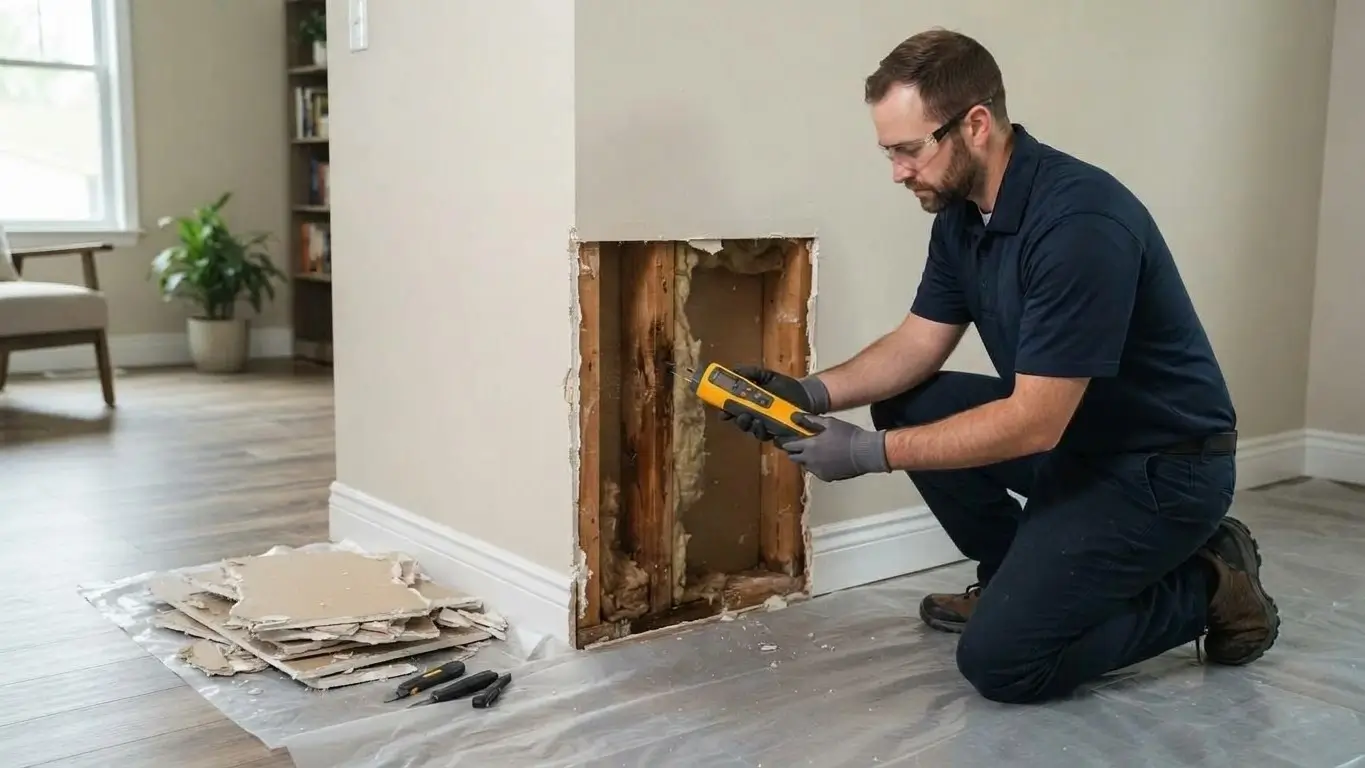
Moisture assessment:
Evaluating water-affected areas and building materials
to identify where moisture remains. This may include
drywall, baseboards, flooring, subfloors, exposed framing,
and other accessible surfaces.
-
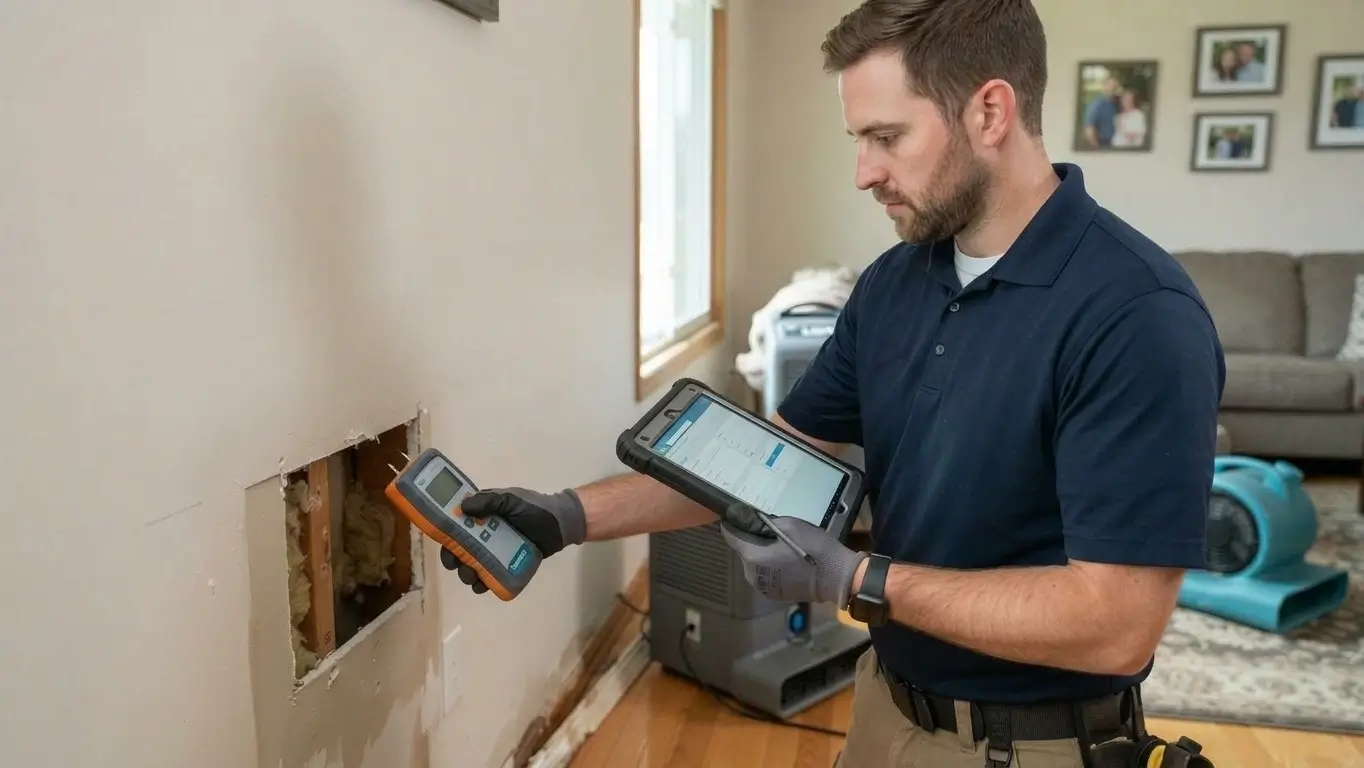
Moisture readings and monitoring:
Using appropriate moisture-measuring equipment to
evaluate affected materials and compare readings as
drying progresses. Measurements help determine whether
materials are continuing to dry or require further
attention.
-
Air movement:
Positioning air movers to circulate air across wet
surfaces and support evaporation from affected building
materials. Equipment placement depends on the layout
of the room and the areas requiring drying.
-
Dehumidification:
Using commercial dehumidification equipment to remove
evaporated moisture from indoor air. Controlling indoor
humidity helps maintain conditions that support continued
drying.
-
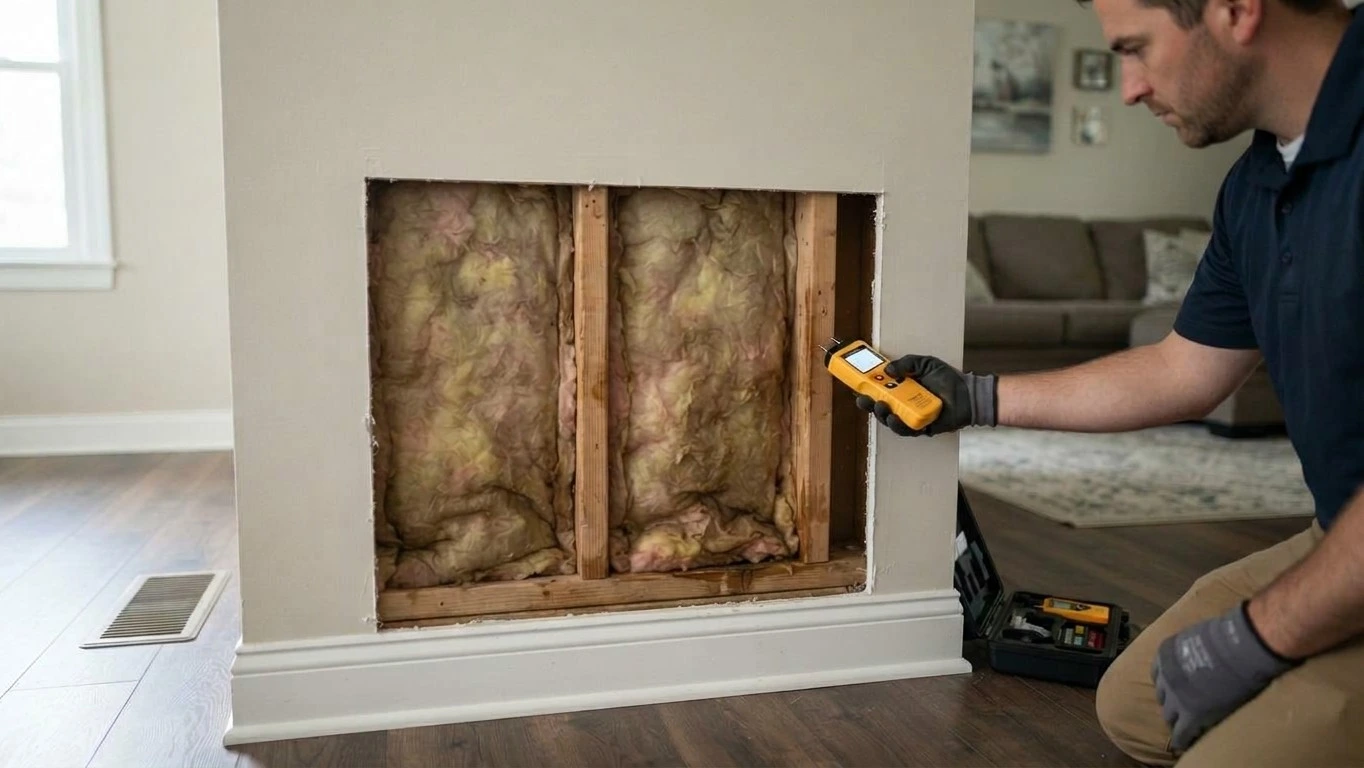
Building material evaluation:
Assessing materials such as drywall, carpet padding,
insulation, wood flooring, and subflooring to determine
whether they can be dried effectively or may require
removal because of their condition or contamination.
-
Drying progress verification:
Reviewing moisture measurements and the condition of
affected materials to evaluate drying progress. Equipment
should not be removed solely because a room feels dry
or visible water is no longer present.
The materials affected by water determine much of the drying
strategy. Carpet and padding can retain water against the
subfloor, while hardwood flooring may absorb moisture and
experience swelling, cupping, or changes in its surface.
Laminate flooring can trap moisture beneath its planks, and
drywall can absorb water along lower edges or around plumbing
penetrations. Wood framing and structural sheathing may also
retain moisture after the visible surfaces have dried.
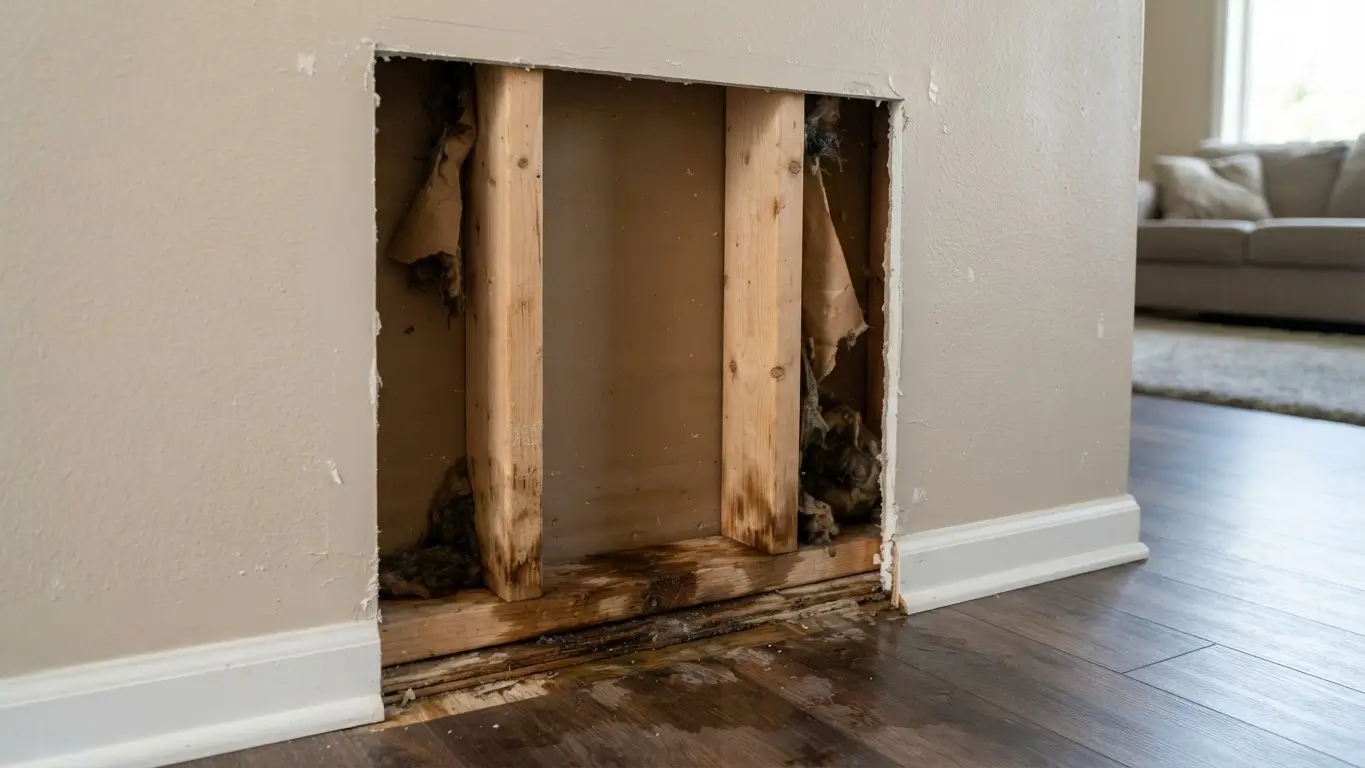
Wall cavities and enclosed spaces deserve particular attention.
Water from a failed supply line, bathroom fixture, or appliance
connection can travel behind finished walls and accumulate
around insulation, framing, and the back of drywall. A moisture
problem may extend beyond the visible stain or damaged section.
Where the affected assembly cannot be adequately evaluated
from its exposed surfaces, additional investigation may be
necessary to determine the extent of the damage and the
appropriate drying or material-removal approach.
Flooring assemblies can create a different set of challenges.
Water may move through carpet into padding, collect beneath
floating floors, or become trapped between finished flooring
and the subfloor. In finished basements, moisture can affect
flooring near foundation walls, around floor drains, and
beneath built-in cabinets. Simply drying the exposed floor
surface may not address moisture held in the layers below it.
Drying time varies according to the materials involved, the
amount of water absorbed, the extent of the affected area,
indoor temperature and humidity, and the effectiveness of
the drying setup. A small area of damp drywall may respond
differently from a flooded basement with wet carpet, padding,
wall materials, and subflooring. There is no reliable single
drying timeline that applies to every water-damaged property.
Structural drying is also different from water extraction
and reconstruction. Water extraction focuses on removing
accessible standing water, while structural drying addresses
residual moisture in affected building materials. Reconstruction
involves repairing or replacing damaged finishes and building
components after the necessary mitigation work. Some materials
may be suitable for drying, while others may need removal
depending on their condition, exposure, and contamination.
For Kansas City property owners, the important question is
not simply whether the floor looks dry. It is whether moisture
remains inside the materials affected by the original water
intrusion. Evaluating those materials, using appropriate
drying equipment, and monitoring moisture conditions helps
establish whether the affected areas are progressing toward
suitable drying conditions.