🔥 Kansas City Fire & Smoke Damage Cleanup • Soot Removal • Smoke Odor Remediation

Fire & Smoke Damage Cleanup in Kansas City, MO

Fire damage can extend beyond the areas directly affected by flames. Smoke and soot can travel through adjoining rooms, settle on interior surfaces, and leave persistent odors in walls, ceilings, flooring, and household contents. KC Water Damage Pros helps property owners address fire-related contamination, smoke residue, and cleanup needs following residential and commercial fire incidents.

Serving homeowners, businesses, and property managers throughout Kansas City, Overland Park, Lee's Summit, Independence, and nearby Missouri and Kansas communities. Contact KC Water Damage Pros to discuss fire and smoke damage affecting living spaces, finished basements, attached garages, and other interior areas.

Fire Damage Cleanup • Smoke & Soot Removal • Smoke Odor Remediation

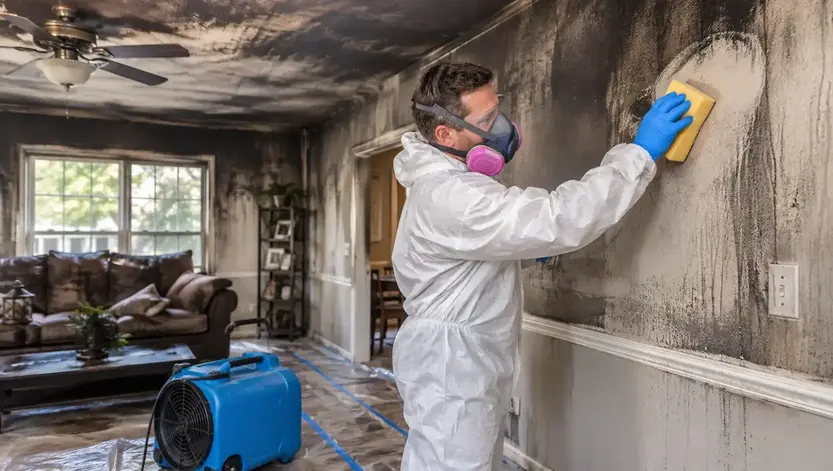
Professional fire and smoke damage cleanup inside a Kansas City property with soot-affected interior surfaces
Fire Damage Cleanup Fire-Affected Areas • Surface Residue • Property Cleanup
Smoke & Soot Removal Smoke Residue • Soot Deposits • Affected Interior Surfaces
Smoke Odor Remediation Persistent Odors • Porous Materials • Smoke-Affected Rooms
Kansas City Fire Restoration Kansas City, MO • Kansas City, KS • Surrounding Communities

Fire & Smoke Damage Restoration in Kansas City

A fire can leave behind much more than visible burn damage. Even when flames are contained to one room, smoke, soot, heat, and firefighting water can affect adjoining rooms, wall cavities, ceilings, flooring, insulation, and household contents. Smoke can travel through doorways, stairwells, utility openings, and, in some situations, HVAC systems, leaving contamination in areas that may appear untouched by the fire.

Before cleanup or restoration work begins, the property must be safe to enter. Fire-damaged buildings can have weakened structural components, damaged electrical systems, unstable debris, and other hazards that are not always immediately visible. Property owners should wait for clearance from the appropriate authorities before entering or allowing cleanup activities to begin.

Restoring a fire-damaged property requires identifying the full extent of the damage before cleaning or repairs begin. Different materials respond differently to heat and smoke exposure, and soot residues can become more difficult to remove when handled incorrectly. A proper restoration assessment helps determine which surfaces can be cleaned, which materials may need removal, and whether additional moisture or odor concerns require attention.

Depending on the property's condition and how the fire was extinguished, fire and smoke damage restoration may involve several related cleanup needs:

  • Fire and heat damage: Evaluation of charred building materials, heat-affected finishes, damaged fixtures, and areas requiring removal before repairs.
  • Smoke migration: Identification of smoke residues and odor contamination that may have spread beyond the room where the fire originated.
  • Soot removal and surface cleaning: Material-appropriate cleaning methods for affected walls, ceilings, hard surfaces, fixtures, and other salvageable materials.
  • Smoke odor treatment: Identification and treatment of lingering odor sources rather than relying on fragrances or temporary deodorizing products.
  • Firefighting water damage: Evaluation of water intrusion, wet building materials, and moisture conditions created during fire suppression when water damage is present.
  • Contents and belongings: Assessment of furniture, household items, and other contents to determine what may be cleaned and salvaged, what requires specialized treatment, and what may need disposal.

The right restoration approach depends on the fire's location, the materials involved, the amount of smoke produced, and how far contamination traveled. A kitchen fire, for example, can leave smoke residues throughout connected living areas, while a fire contained to a basement may affect stored belongings, framing, insulation, and mechanical spaces. HVAC filters, ductwork, and equipment may also require evaluation when smoke has circulated through the ventilation system. Each property needs an assessment based on its actual conditions rather than a one-size-fits-all cleanup approach.

For Kansas City property owners, understanding the difference between visible fire damage and less obvious smoke, soot, and moisture damage is an important first step. A thorough evaluation helps establish cleanup priorities, identify materials that need attention, and determine what work is necessary before the property can move toward repairs and normal use.

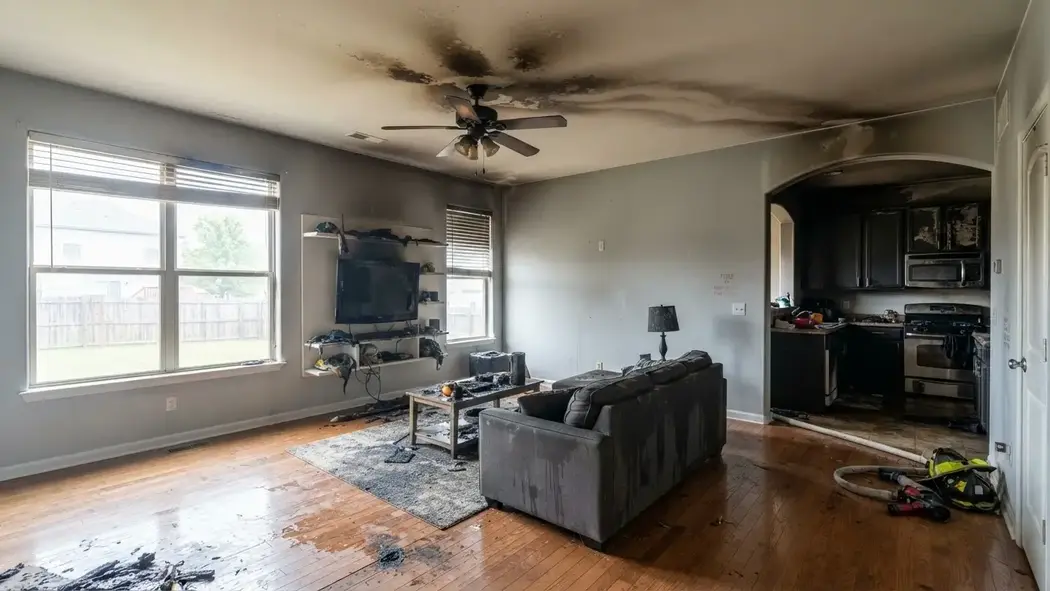
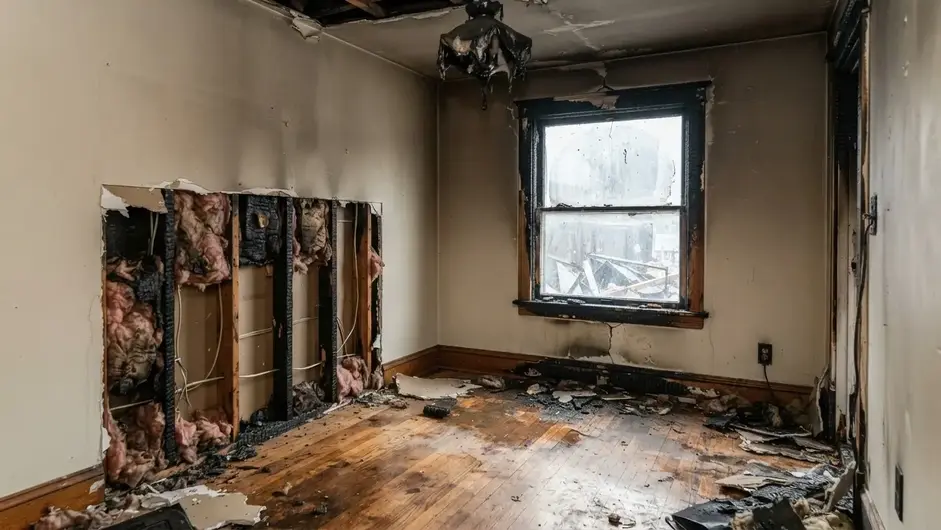
Residential interior showing fire damage, smoke staining, and soot deposits on walls and ceilings

Fire damage can extend beyond the burned area, with smoke residue, soot, heat exposure, and firefighting water affecting adjoining rooms and building materials.

Fire Damage Assessment and Inspection in Kansas City

Before fire damage cleanup begins, the affected property needs to be evaluated for direct flame damage, smoke contamination, soot deposits, heat exposure, and water intrusion from firefighting efforts. The visible burn area is only one part of the assessment. Smoke can travel into adjoining rooms, while suppression water may reach lower floors, wall cavities, and concealed building assemblies.

A useful inspection establishes where the fire originated, which areas experienced direct heat, how smoke moved through the building, and which materials may have absorbed residue or moisture. In Kansas City homes with finished basements, attached garages, multiple floors, and enclosed utility spaces, these connections deserve particular attention. An inspection limited to the room where the fire occurred can overlook additional cleanup requirements.

What Should a Fire Damage Inspection Evaluate?

Direct Fire and Heat Damage

Identify charred materials, burned finishes, heat-related discoloration, damaged fixtures, and building components that may require evaluation by qualified construction professionals.

Smoke Migration and Soot

Examine adjoining rooms, hallways, ceilings, stairwells, cabinets, and other surfaces where smoke residue may have settled beyond the original fire location.

Fire Suppression Water

Identify wet flooring, saturated drywall, affected insulation, and possible moisture movement into lower levels or concealed areas following firefighting efforts.

Building Materials

Evaluate painted drywall, textured ceilings, wood finishes, carpeting, cabinetry, concrete, and other materials according to their exposure and restoration potential.

Odor and Air Pathways

Consider whether smoke reached return grilles, HVAC components, duct pathways, closets, utility spaces, and porous materials that may retain combustion odors.

Damage Documentation

Record affected rooms, visible conditions, damaged belongings, moisture concerns, and observations that help establish the cleanup scope and support insurance discussions.

Why Inspect Beyond the Room Where the Fire Started?

Consider a kitchen fire in a Kansas City home. The cabinets and ceiling may show the most obvious damage, but smoke can move into the dining room, settle along an adjoining hallway, and reach an upstairs landing. If firefighters used water to extinguish the fire, flooring and materials below the kitchen may also need evaluation.

A similar concern exists with attached garage fires. Smoke exposure may extend into the home through connecting doors, wall openings, and other building pathways. The assessment should establish which areas were actually affected rather than assuming that every room needs identical treatment.

The inspection findings help distinguish surfaces that may be cleaned from materials that may require specialized treatment, drying, or removal. Structural, electrical, and other safety concerns should be evaluated by the appropriately qualified professionals before restoration work proceeds.

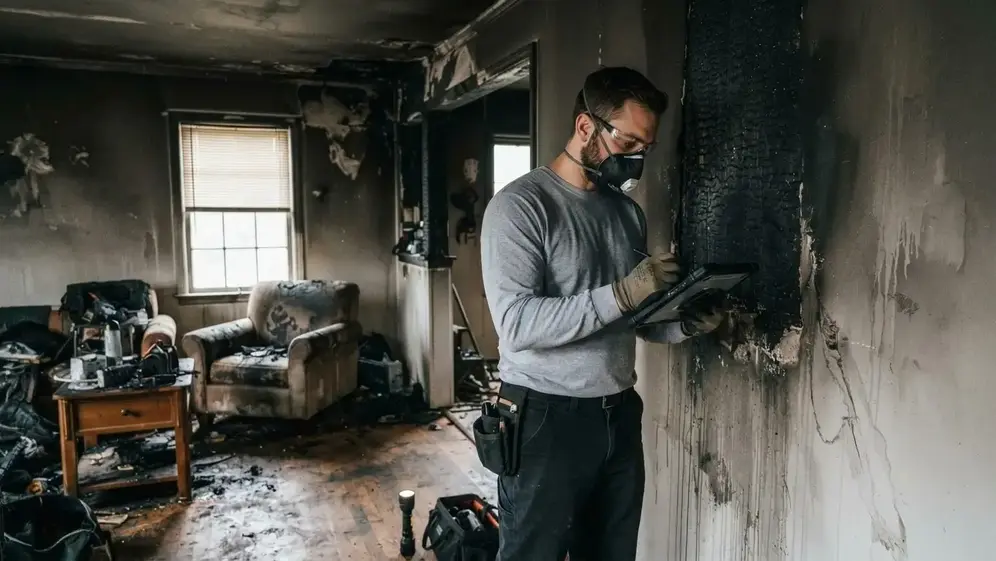
Fire restoration professional inspecting smoke and soot damage inside a residential property

A fire damage assessment examines affected rooms, building materials, smoke migration, and possible water intrusion before the restoration scope is established.

The Fire & Smoke Damage Restoration Process in Kansas City

Restoring a property after a fire involves more than removing burned materials and cleaning visible soot. Fire, heat, smoke, and water used during firefighting can affect different parts of a building, including adjoining rooms, concealed wall cavities, flooring assemblies, personal belongings, and ventilation pathways. A properly organized restoration process begins with evaluating the property's condition and establishing which areas require attention before cleanup and material removal begin. Whether the incident involves a kitchen fire, electrical fire, attached garage, basement, apartment, or commercial building, the restoration approach should reflect the actual damage rather than treating every fire loss the same way.

1. Property Access and Initial Fire Damage Evaluation

Before restoration work begins, confirm that the fire department or appropriate authorities have permitted access to the property. Fire-damaged buildings can contain hazards that are not immediately visible, including weakened structural components, damaged wiring, unstable ceilings, compromised utilities, and other unsafe conditions. Once access has been authorized, the initial evaluation considers where the fire originated, which materials experienced direct flame or heat exposure, and how far smoke and soot may have traveled beyond the original room.

In Kansas City homes, this evaluation may need to account for adjoining living spaces, finished basements, attached garages, upstairs bedrooms, utility rooms, and other connected areas. A kitchen fire, for example, can leave smoke residue throughout nearby rooms even when the flames never spread beyond the kitchen. The initial assessment also considers visible water intrusion from firefighting efforts so that fire, smoke, and moisture concerns can be incorporated into the restoration scope.

2. Fire Damage Documentation and Contents Review

Documenting the affected property helps establish the extent of the damage before cleaning, demolition, or material removal changes the original conditions. This may include photographs of burned surfaces, soot deposits, smoke staining, water-affected flooring, damaged ceilings, cabinetry, furnishings, appliances, and other affected belongings. Important observations should distinguish between direct fire damage, smoke contamination, heat exposure, and damage associated with firefighting water.

Personal belongings also need consideration because smoke can affect furniture, mattresses, clothing, curtains, electronics, kitchen contents, and stored possessions outside the room where the fire occurred. Items should be evaluated according to their material, exposure, and potential for restoration before they are discarded or moved into unaffected areas. For insured properties, maintaining photographs, contents inventories, estimates, and related records can also help support discussions with the insurance representative.

3. Fire Debris Removal and Necessary Demolition

After the affected areas have been evaluated, fire-damaged debris and materials that cannot reasonably be restored may need to be removed. Depending on the incident, this can involve charred drywall, burned insulation, damaged cabinetry, flooring, carpeting, ceiling materials, and other interior finishes. The extent of removal depends on the material's physical condition, exposure to heat, contamination, and whether appropriate cleaning or restoration remains practical.

Demolition should be based on identified damage rather than automatically removing every material near the original fire. For example, an adjoining room with limited smoke residue may require a different approach from a kitchen with heavily charred cabinets and damaged wall assemblies. Water-saturated materials may also require separate evaluation before they are retained or removed. Structural components, damaged electrical systems, and other building-related concerns should be evaluated by appropriately qualified professionals before repairs proceed.

4. Smoke and Soot Removal From Affected Surfaces

Smoke and soot removal addresses combustion residue deposited on interior surfaces during the fire. Soot can collect on walls, ceilings, doors, trim, cabinets, countertops, fixtures, flooring, and other exposed materials. Its consistency can vary depending on the materials burned and the conditions of the fire. Some deposits are dry and powdery, while others may be oily, sticky, or difficult to remove. Cleaning methods must account for these differences rather than treating every deposit as ordinary dust.

Different surfaces throughout a Kansas City property may require different cleaning considerations. Painted drywall, textured ceilings, hardwood finishes, concrete, metal fixtures, and cabinetry do not all respond to the same cleaning products or techniques. Improper wiping or aggressive scrubbing can spread soot, damage finishes, or make subsequent cleaning more difficult. The objective is to address the residue on affected materials using appropriate methods while identifying surfaces that cannot reasonably be restored through cleaning.

5. Firefighting Water Extraction and Structural Drying

Fire suppression efforts can introduce substantial amounts of water into a property, creating a separate restoration concern alongside the original fire and smoke damage. Water may affect carpeting, padding, hardwood flooring, drywall, insulation, cabinets, and subflooring. It can also travel through floor openings, stairwells, wall cavities, and other connected building spaces, sometimes reaching rooms that were not directly affected by the flames.

When water intrusion is present, the affected materials should be evaluated to determine whether water extraction, moisture mapping, material removal, drying equipment, and monitoring are necessary. In finished Kansas City basements and multi-level homes, concealed moisture beneath flooring or inside wall assemblies can be particularly important to identify. Addressing these conditions helps reduce the possibility of prolonged moisture exposure and secondary damage, including conditions that can contribute to mold growth when wet materials remain unaddressed.

6. Smoke Odor Identification and Source Treatment

Removing visible soot does not necessarily eliminate the odors associated with a fire. Smoke-related compounds can remain in porous materials such as carpeting, upholstery, mattresses, insulation, unfinished wood, and other affected building components. Odors may also persist in concealed locations or areas that were not included in the initial visible cleanup. Applying fragrances or deodorizing products without addressing the underlying source may temporarily mask the smell rather than resolve the remaining odor problem.

Effective smoke odor remediation begins by identifying which materials and areas are contributing to the odor. Depending on the exposure, treatment may involve additional surface cleaning, contents cleaning, removal of materials that cannot be restored, and appropriate specialized odor treatment. HVAC components and ventilation pathways may also require evaluation when smoke could have entered the system. The appropriate approach depends on the building, the materials involved, and the remaining sources of smoke-related contamination.

7. Final Cleaning and Restoration Condition Review

Once the identified cleaning, removal, drying, and odor treatment activities have been completed, the affected areas should be reviewed against the established restoration scope. This involves examining cleaned surfaces for remaining visible soot or residue, reviewing materials that were retained, and checking whether previously identified moisture concerns have been addressed. Any outstanding conditions should be documented rather than assumed to have been resolved simply because the property looks cleaner.

The review should also consider areas that received additional attention during the project, including adjoining rooms, lower-level spaces, affected contents, and locations where smoke or water traveled beyond the original fire area. If persistent odors, visible residue, or unresolved moisture concerns remain, additional evaluation may be necessary. A clear record of completed cleanup activities and remaining work helps establish whether the property is ready to move into the next phase of restoration.

8. Preparation for Fire Damage Repairs and Reconstruction

Fire damage cleanup and reconstruction are related but separate parts of the overall property recovery process. Once applicable mitigation, cleaning, material removal, and drying requirements have been addressed, the property can move toward repairing or replacing damaged building components. Depending on the severity of the fire, this may involve new drywall, insulation, flooring, cabinetry, interior finishes, roofing, electrical work, or other building repairs.

The reconstruction scope depends on the condition of the building and the findings from the earlier restoration work. A limited kitchen fire may require replacement of selected cabinets and interior finishes, while a more extensive incident could involve multiple rooms, damaged framing, and substantial rebuilding. Property owners should understand which cleanup activities have been completed, which materials were removed, and what repairs remain before coordinating the final reconstruction work with the appropriate contractors.

Why the Fire & Smoke Damage Restoration Sequence Matters

The order of restoration activities can influence whether underlying damage is properly addressed before a property is repaired. Painting over smoke-stained drywall before removing the residue can leave odor and staining problems unresolved. Replacing flooring before evaluating moisture beneath it can conceal wet materials. Cleaning visible surfaces without considering affected contents, concealed areas, or connected rooms may also leave parts of the property requiring additional attention.

This is especially important when a fire involves both smoke contamination and water from firefighting. A Kansas City home may have soot-covered kitchen cabinets, smoke-affected upstairs rooms, and water-damaged flooring or basement materials from the same incident. Each condition requires consideration within the overall restoration scope. Cleaning, drying, material removal, and odor treatment should be coordinated according to the actual condition of the building rather than following an identical sequence for every property.

Property owners should also understand that completing fire and smoke damage cleanup does not automatically mean that structural repairs, electrical work, rebuilding, or final interior finishes have been completed. These may involve separate contractors and project stages. Establishing which work has been performed and which items remain outstanding helps prevent confusion when moving from initial damage mitigation toward restoring the property for normal use.

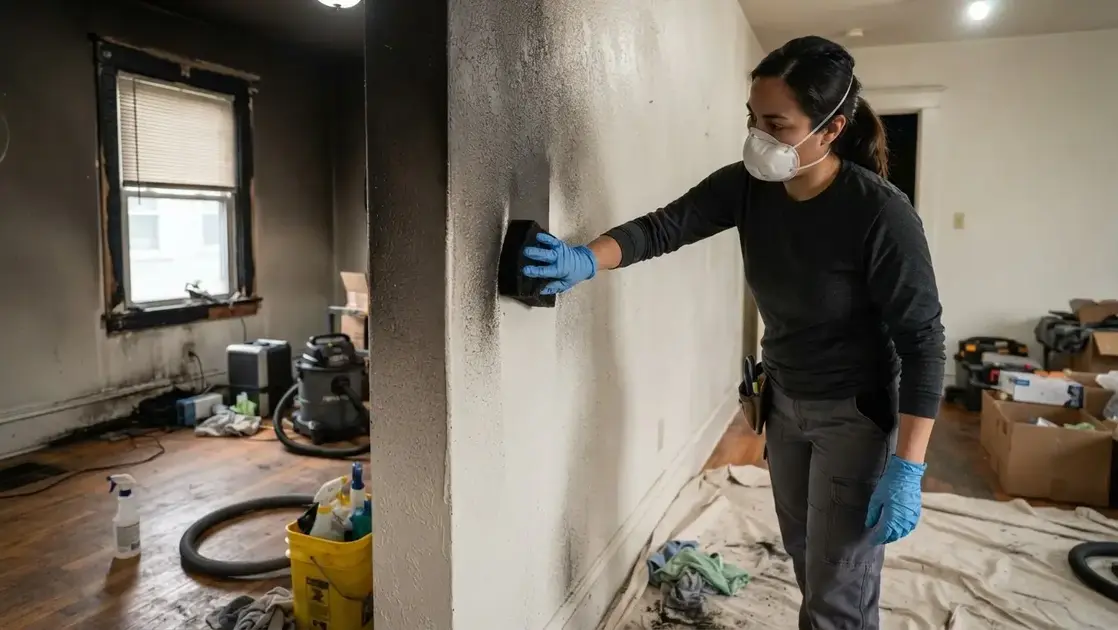
Fire restoration technician carefully cleaning soot residue from a smoke-affected interior wall

Smoke and soot removal requires cleaning methods suited to the residue and the affected surface to avoid spreading contamination or damaging interior finishes.

Need Fire & Smoke Damage Restoration in Kansas City?

Fire damage can extend beyond burned materials. Smoke residue, soot, persistent odors, and water from firefighting efforts may affect adjoining rooms, building materials, contents, and other areas of the property. If your Kansas City home or business has experienced a fire, tell us what happened, which areas were affected, and what cleanup or restoration concerns you are facing.

Call (816) 370-6439

How Fire, Smoke, and Soot Damage Different Building Materials

Fire damage can extend well beyond the visibly burned portion of a property. Heat can discolor finishes and weaken building materials, while smoke and soot can travel through doorways, stairwells, wall openings, and other pathways before settling on surfaces throughout the structure. Fire suppression water may introduce additional damage to drywall, flooring, insulation, cabinetry, and concealed building assemblies. Because different materials respond differently to heat, smoke, soot, and moisture, restoration decisions should be based on the actual condition and exposure of each affected material rather than appearance alone. Understanding how individual materials respond to fire damage helps property owners recognize why some surfaces can be cleaned while others may require specialized treatment or removal.

Painted Drywall and Interior Walls

Smoke residue can settle on painted drywall, leaving discoloration, staining, and persistent smoke odors. The type of soot, paint finish, and extent of exposure influence whether the surface can be cleaned without damaging the existing coating. Aggressive wiping and ordinary household cleaners can smear certain soot residues and make subsequent restoration more difficult.

Drywall may be salvageable when contamination is limited to a treatable surface condition. Sections that are charred, physically compromised, saturated by firefighting water, or affected by contamination that cannot be adequately addressed may require removal. Painting over smoke staining without addressing the underlying residue and odor source does not constitute complete restoration.

Ceilings, Plaster, and Textured Finishes

Smoke can accumulate along ceilings, upper wall surfaces, and around light fixtures, vents, and other openings. Textured ceilings can be especially challenging because their uneven surfaces may hold soot in grooves and recessed areas. Improper cleaning can damage the texture, loosen existing coatings, or spread residue across previously unaffected portions of the ceiling.

Older Kansas City properties may contain plaster walls, decorative ceiling finishes, or multiple layers of previous coatings. These materials should be evaluated individually before cleaning, sealing, refinishing, or removal is considered. Fire suppression water can also contribute to ceiling staining, deteriorated finishes, and loosened plaster.

Hardwood Floors, Trim, and Woodwork

Hardwood flooring, baseboards, door frames, cabinets, and exposed wood trim can collect soot and retain smoke-related odors. Unfinished, damaged, or porous wood may absorb contaminants more readily than a properly sealed surface. Heat exposure can also discolor finishes, damage protective coatings, and affect wood components near the fire's origin.

Firefighting water creates a separate concern. Moisture entering hardwood flooring and the layers beneath it can contribute to swelling, cupping, buckling, staining, and deterioration. Depending on the condition of the flooring and subfloor, restoration may involve cleaning, controlled drying, refinishing, selective removal, or replacement.

Carpet, Padding, and Subfloors

Carpet fibers can collect airborne soot, smoke particles, and odor-producing residues. Contamination may also reach the carpet backing, padding, tack strips, and subfloor. A carpet that appears relatively clean on the surface may still have problems beneath it, particularly after a fire involving substantial smoke or firefighting water.

The condition of each layer matters when determining whether carpet cleaning is appropriate. Padding that has absorbed contaminated water or cannot be adequately restored may need removal. Subfloors should also be evaluated for moisture, staining, odor, and physical damage before replacement flooring is installed.

Upholstery, Mattresses, and Soft Furnishings

Sofas, upholstered chairs, mattresses, curtains, rugs, and other textiles can retain smoke particles and odor within their fibers, seams, padding, and internal components. Different fabrics and construction materials have different cleaning limitations. Surface treatment alone may not address contamination that has penetrated deeper into an item.

Some belongings may be candidates for specialized textile or upholstery cleaning, while others may be too heavily damaged or contaminated to restore. Evaluation should consider the item's construction, material compatibility, exposure level, odor condition, and whether an appropriate cleaning method can achieve an acceptable restoration result.

Insulation and Concealed Wall Cavities

Smoke, heat, and firefighting water can affect insulation and other materials hidden behind finished walls and ceilings. Smoke may enter through wall openings, electrical penetrations, attic access points, and gaps around framing. Visible surface cleaning does not necessarily establish that the entire wall or ceiling assembly is free of damage.

Insulation exposed to substantial contamination, direct fire damage, or water intrusion may require removal. The condition of surrounding framing, sheathing, and other concealed components should also be considered before wall cavities are closed and new drywall is installed. Selective inspection may be necessary to understand the full extent of the affected assembly.

Kitchen Cabinets and Countertops

Kitchen fires can leave smoke and soot on cabinet doors, drawer fronts, cabinet interiors, countertops, backsplashes, range hoods, and nearby appliances. Cooking-related fires may produce greasy residues that behave differently from lighter dry soot. Residue can also collect along cabinet edges, hardware, hinges, and concealed surfaces.

Cabinet restoration depends on the finish, construction, degree of heat exposure, and whether smoke or moisture has affected the interior components. Some surfaces may be cleaned and refinished, while warped, charred, delaminated, or severely damaged components may require replacement. Countertop materials also need cleaning methods appropriate to their composition and finish.

Concrete, Brick, and Masonry

Concrete foundations, brick walls, masonry fireplaces, and block surfaces can collect smoke residue and staining. Rough, porous, or unfinished surfaces may retain contamination more readily than smooth, sealed materials. A fireplace or masonry wall near a fire may also experience direct heat exposure that requires a separate condition assessment.

Cleaning methods should be selected carefully because unsuitable pressure, chemicals, or abrasive techniques can damage masonry or drive residue farther into porous surfaces. The restoration approach depends on the material, surface condition, type of residue, and whether heat has affected the surrounding assembly.

HVAC Systems, Ductwork, and Air Filters

When smoke circulates through a building's ventilation system, particles may collect on air filters, return-air grilles, supply registers, duct surfaces, and accessible HVAC components. This can create additional cleaning considerations when smoke has moved between rooms or floors through connected air pathways.

HVAC contamination should be evaluated rather than assumed. The need for filter replacement, equipment inspection, duct cleaning, or additional treatment depends on whether smoke actually entered the system and where residue is present. Heating and cooling equipment exposed to fire, smoke, or water damage should be evaluated before being returned to normal operation.

Electronics and Electrical Components

Fine smoke particles can enter televisions, computers, appliances, control panels, and other electronic equipment through openings and ventilation ports. Residue may settle on internal components, while heat and firefighting water can introduce separate risks. Certain deposits may contribute to corrosion or interfere with electrical connections.

Potentially affected electronics should not be powered on simply because the exterior appears clean. Equipment exposed to smoke, heat, or water may require evaluation by an appropriately qualified electronics or electrical professional before it is considered safe to use. Cleaning the outside of a device does not establish that its internal components are undamaged.

Doors, Windows, Frames, and Glass

Smoke residue can collect on window glass, door surfaces, frames, hardware, and surrounding trim. Heat may discolor finishes, damage seals, or affect window components, while direct flame exposure can compromise materials and assemblies. Soot around windows and doors may also indicate smoke movement through adjoining spaces.

Glass and other nonporous surfaces may be candidates for appropriate cleaning, but frames, seals, finishes, and nearby materials require separate evaluation. Windows and doors exposed to significant heat should be inspected for physical damage and proper operation rather than judged by appearance alone.

Metal Fixtures and Structural Components

Metal railings, light fixtures, hardware, appliances, exposed fasteners, and structural components can accumulate soot and smoke residue. Heat exposure may also discolor finishes, damage protective coatings, or affect the condition of certain components. Residue on metal surfaces should not automatically be treated as ordinary household dust.

Restoration depends on the metal type, surface coating, exposure, and condition of the component. Structural metal and load-bearing connections exposed to significant heat may require evaluation by an appropriately qualified professional. Surface cleaning cannot correct heat-related loss of structural integrity.

Framing, Roof Structures, and Attic Materials

Fire can affect structural framing, roof decking, rafters, trusses, and other concealed components, particularly when flames or heat reach attic spaces. Smoke can also travel through roof cavities and openings around plumbing, electrical systems, and ventilation penetrations. Damage may extend beyond the room where the fire originated.

Charred wood, heat-exposed connections, damaged sheathing, and compromised roof components should not be evaluated by appearance alone. Structural conditions may require assessment by a qualified building or structural professional before repairs proceed. Cleaning and deodorizing do not restore the strength of a physically damaged component.

Stairways, Hallways, and Connecting Areas

Smoke can move between floors and rooms through stairwells, open doorways, hallways, and connecting spaces. These areas may collect soot and odor even when they are separated from the room where the fire started. Railings, wall surfaces, ceiling corners, flooring transitions, and other exposed finishes may need evaluation for secondary smoke contamination.

Multi-level Kansas City homes and properties with open interior layouts may require attention beyond the immediate fire room. Cleaning and restoration decisions should account for the actual smoke migration pathways and the materials present along those routes rather than assuming that only visibly affected rooms need attention.

Why material-specific fire damage assessment matters: Different building materials retain smoke residue, respond to heat, and absorb moisture in different ways. A cleaning method suitable for a hard surface may damage a delicate finish or fail to address contamination within a porous material. Evaluating each affected component helps establish whether cleaning, drying, specialized treatment, selective removal, or replacement is appropriate. It also helps identify concealed damage that may otherwise be overlooked before new finishes are installed.

For Kansas City homes, apartments, rental properties, and commercial buildings, restoration planning should reflect the actual fire conditions, building layout, affected materials, and extent of smoke and water exposure. Older plaster interiors, finished basements, attached garages, multi-level homes, and open-concept living spaces can present different assessment considerations. Not every property requires the same cleaning methods or material removal. The goal is to address identified damage without overlooking concealed conditions or replacing materials that may be successfully restored.

Smoke and soot damage affecting residential drywall, wood trim, flooring, and interior building materials

Drywall, wood finishes, flooring, insulation, cabinetry, and other building materials respond differently to fire, smoke, soot, and moisture exposure.

Fire and Smoke Damage Contents Cleaning, Packout and Belongings Restoration

A fire can damage far more than the building itself. Smoke and soot may affect furniture, clothing, mattresses, electronics, kitchenware, decorations, documents, and other personal belongings throughout a property. Even items in rooms without direct flame damage may retain smoke residue or unpleasant odors, depending on how smoke traveled through the building and the materials involved.

Contents restoration involves evaluating which belongings may be suitable for specialized cleaning, which require additional assessment, and which may be too heavily damaged to restore. Separating affected belongings from unaffected contents can also help prevent residue and odors from being transferred during handling, transportation, or storage.

Types of Household Belongings That May Require Smoke Damage Cleaning

  • Furniture and Upholstery
    Sofas, chairs, upholstered headboards, mattresses, and other fabric-covered furniture may retain smoke odor and particulate residue. Restoration depends on the upholstery material, internal construction, exposure, and condition of each item. Some pieces may be suitable for specialized cleaning, while others may have damage that cannot be adequately corrected.
  • Clothing and Household Textiles
    Clothing, bedding, towels, curtains, blankets, and rugs can absorb smoke-related odors and residue. Depending on the fabric and exposure, items may require specialized laundering or other appropriate textile cleaning. Ordinary household washing may not be sufficient for heavily affected materials.
  • Electronics and Appliances
    Televisions, computers, kitchen appliances, and other equipment may have smoke residue inside ventilation openings or on internal components. Heat, soot, and moisture can also affect equipment in ways that are not immediately visible. Potentially affected electronics should be evaluated before being powered on or cleaned.
  • Documents, Books, and Photographs
    Important papers, books, photographs, records, and keepsakes may be affected by soot, smoke odor, moisture, or heat. Paper-based materials can be particularly sensitive to handling and cleaning methods. Their restoration potential depends on the material, condition, and degree of exposure.
  • Kitchen Contents and Food Storage Items
    Dishes, cookware, utensils, food storage containers, and pantry contents may require individual evaluation after a kitchen fire. Items exposed to heat, smoke, firefighting residues, or other potentially unsafe conditions should not automatically be considered suitable for continued use. Food exposed to fire or smoke should be evaluated separately from cleanable household contents.
  • Closet, Basement, and Garage Belongings
    Stored items in closets, storage rooms, finished basements, and attached garages may be affected even when they are away from the original fire. Smoke can travel through doorways and connected areas, while residue may settle on exposed belongings. Enclosed containers and stored contents should be evaluated according to their actual condition and exposure.

How the Contents Packout Process Works

When a property contains numerous smoke-affected belongings, a contents packout can help separate selected items from the building while structural cleanup and restoration work proceeds. The process generally involves documenting belongings, identifying their condition, preparing them for transportation, and moving them to an appropriate location for evaluation, cleaning, or storage. The need for a packout depends on the amount of affected contents and the work required inside the property.

  • Inventory and Documentation
    Record selected belongings and their condition before they are moved, whenever access and safety conditions permit. Photographs and inventory records can help establish which items were present and document their condition during the restoration process.
  • Sorting and Categorization
    Organize belongings according to material, visible damage, apparent exposure, and potential restoration requirements. This helps distinguish items that may be suitable for cleaning from those requiring further evaluation or replacement consideration.
  • Careful Handling and Separation
    Prepare affected belongings for transportation and keep them appropriately separated from unaffected contents. Proper handling helps reduce the transfer of soot, residue, and odors to clean items during removal and storage.
  • Cleaning and Restoration Evaluation
    Evaluate each item to determine whether suitable cleaning or restoration methods are available. Materials, construction, heat exposure, residue, and odor retention all influence which treatments may be appropriate.
  • Inventory Reconciliation and Return
    Maintain records of belongings being evaluated, treated, returned, or identified as non-restorable. Reconciled inventory records help property owners understand the status of their belongings throughout the contents restoration process.

Should You Throw Away Smoke-Damaged Belongings?

Not necessarily. Visible soot, discoloration, and smoke odor do not always mean an item is beyond restoration. Some belongings may be recoverable through appropriate specialized cleaning, while others may have internal damage, persistent contamination, or heat exposure that makes restoration impractical. The decision should be based on the item's material, condition, and exposure rather than appearance alone.

Before discarding potentially valuable belongings, photograph their condition when it is safe and discuss documentation requirements with your insurance representative. Avoid moving heavily affected items into unaffected areas or attempting aggressive cleaning before their condition has been evaluated. For Kansas City homes with finished basements, attached garages, storage rooms, and multiple living areas, a room-by-room contents evaluation can help identify which belongings need attention without automatically treating everything in the property as damaged.

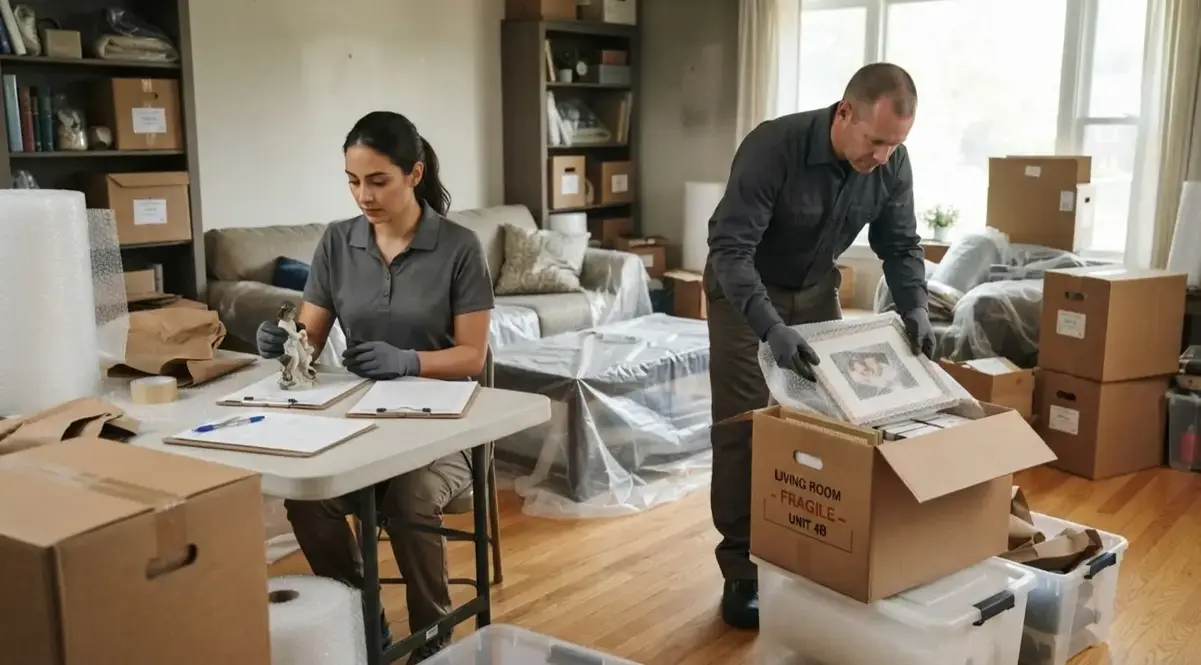
Fire restoration professionals documenting and packing smoke-affected household belongings for contents restoration

Contents packout involves documenting, sorting, carefully handling, and separating affected belongings before cleaning, transportation, or storage.

Commercial and Multifamily Fire Damage Restoration in Kansas City

Fire damage in a commercial building, apartment complex, rental property, or mixed-use development can create restoration challenges that extend beyond the room or unit where the fire started. Burned building materials, smoke migration, soot deposits, firefighting water, damaged contents, and potentially affected mechanical systems may all need to be evaluated. The scope can vary considerably between a single-family rental, a multi-story apartment building, a retail storefront, an office property, and a large commercial facility.

For property owners and managers, restoration involves more than arranging cleanup. Individual units, tenant spaces, common areas, building contents, and shared infrastructure may require separate evaluation and documentation. Smoke can travel through connected spaces, ventilation pathways, doorways, and building penetrations, while suppression water can affect flooring, walls, ceilings, and other materials outside the immediate fire area. The actual extent of damage should be established through property-specific inspection rather than assuming every connected space sustained the same exposure.

Kansas City commercial properties also vary in construction, occupancy, age, floor plans, and mechanical design. An apartment building with shared corridors presents different restoration considerations than a warehouse, restaurant, professional office, or mixed-use property. Effective planning accounts for the building's layout, affected occupants, contents, access requirements, moisture conditions, and the work needed before damaged areas can safely return to service.

Apartment Buildings & Multifamily Complexes

Apartment fires can affect individual units, adjoining residences, shared hallways, stairwells, laundry rooms, utility spaces, and other common areas. Smoke may migrate beyond the originating apartment depending on the building layout, fire conditions, ventilation, and pathways between spaces. Each potentially affected unit should be evaluated independently so restoration work reflects actual conditions rather than automatically treating the entire building as contaminated.

Rental Homes & Investment Properties

Fire damage in a rental home can involve kitchens, bedrooms, living areas, finished basements, attached garages, and connected storage spaces. Property owners may need to coordinate access with tenants, document structural damage separately from personal belongings, and establish which areas require cleaning, drying, repairs, or further inspection. Clear records help distinguish building-related restoration from tenant-owned contents and belongings.

Retail Stores & Commercial Storefronts

Fires in retail spaces can affect merchandise, shelving, display fixtures, counters, stockrooms, flooring, ceiling materials, and customer-facing interiors. Smoke and soot may reach areas beyond the visible fire damage, while firefighting water can affect inventory and building finishes. Restoration planning should identify affected merchandise, document damaged contents, and distinguish items that may be suitable for specialized cleaning from those that cannot reasonably be restored.

Restaurants & Commercial Kitchens

Restaurant fires can involve cooking equipment, grease deposits, exhaust areas, food preparation surfaces, storage spaces, dining rooms, and adjacent tenant areas. Different fire types can leave different residues, making material compatibility important when selecting cleaning methods. Potentially exposed food, food-contact surfaces, appliances, and kitchen equipment require appropriate evaluation before being returned to use. Cleanup planning should also account for smoke and residue that may have traveled beyond the kitchen itself.

Offices & Professional Buildings

Office fire restoration may involve workstations, conference rooms, reception areas, furnishings, carpeting, ceiling systems, interior partitions, and business records. Smoke residue can affect office contents and surfaces outside the original fire location. Computers, printers, electrical equipment, and other sensitive assets may require evaluation by qualified specialists before reuse. Restoration planning should account for both the physical building and the business property housed inside it.

Warehouses & Industrial Buildings

Warehouse and industrial fires can affect large interior spaces, storage racks, palletized inventory, packaging materials, machinery, equipment, and structural components. Smoke and soot may settle across extensive areas, including elevated surfaces and stored materials. Suppression water can also reach inventory, flooring, equipment, and areas beneath shelving. Evaluation should account for the building's contents, operational equipment, moisture conditions, and any structural components that may have experienced heat exposure.

Mixed-Use & Multi-Tenant Properties

Mixed-use buildings may combine apartments, retail storefronts, restaurants, offices, and shared building infrastructure. A fire in one occupancy can create concerns for neighboring spaces when smoke, heat, or water travels through connected areas. Restoration boundaries should reflect the actual conditions in each tenant space and common area. Property managers may need to coordinate separate evaluations, access schedules, contents documentation, and restoration activities across multiple occupants.

Smoke Migration Between Rooms & Units

Smoke does not always remain inside the room where a fire originated. Depending on building configuration and incident conditions, it may move through open doorways, corridors, ceiling spaces, ductwork, stairwells, and other connected pathways. The presence of an odor in an adjoining area can justify further evaluation, but odor alone does not establish the extent or type of contamination. Identifying affected surfaces and contents helps determine where cleaning is appropriate.

Firefighting Water & Secondary Damage

Water used to extinguish a fire can create additional damage even when the flames are confined to a relatively small area. Water may enter flooring, wall cavities, insulation, ceilings, lower levels, and materials beneath affected equipment. In multifamily and commercial buildings, it can also travel between floors or adjoining spaces. Moisture assessment and appropriate water extraction may be necessary to limit secondary damage and establish whether structural drying is required.

HVAC Systems & Shared Ventilation

Heating, ventilation, and air conditioning systems should be considered when fire conditions indicate possible smoke or soot exposure. Shared air-handling equipment, return pathways, ductwork, and ventilation components can create different evaluation requirements in multi-unit and commercial buildings. HVAC contamination should not be assumed simply because a fire occurred. Appropriate inspection can help determine whether system components require specialized cleaning, repair, or further assessment before operation resumes.

Commercial Contents & Business Equipment

Furniture, office equipment, merchandise, inventory, documents, furnishings, and other business contents may require separate evaluation from the building itself. Some materials can be candidates for specialized cleaning, while others may be too damaged or unsuitable for restoration. Inventory documentation, condition assessments, careful handling, and appropriate separation of affected and unaffected belongings can help property owners make informed decisions about contents restoration and replacement.

Property Manager Coordination & Documentation

Managing fire restoration across multiple units or tenant spaces requires organized documentation and communication. Property managers may need to coordinate authorized access, occupant updates, unit-by-unit assessments, photographs, contents inventories, work schedules, and records of completed services. Keeping building damage, tenant belongings, common-area conditions, and individual restoration requirements clearly separated can make project coordination and insurance discussions more manageable.

Structural & Building Material Assessment

Fire can affect framing, roof assemblies, floor systems, wall materials, insulation, doors, windows, and other building components. Visible charring is not the only concern because heat exposure and concealed damage may require further investigation. Restoration cleaning does not replace structural, electrical, or building-system inspections when those evaluations are needed. Qualified professionals should determine whether affected components can remain in service, require repair, or need replacement.

Phased Restoration & Occupancy Planning

Commercial and multifamily restoration projects may need to proceed in stages so that affected areas can be evaluated, cleaned, dried, repaired, and inspected in an organized sequence. Property managers may also need to coordinate contractors, tenants, building operations, and insurance representatives. Decisions about reopening or reoccupying affected spaces should account for fire department restrictions, required inspections, building-system safety, and applicable occupancy requirements rather than relying on cleanup completion alone.

Insurance Documentation & Restoration Scope

Commercial fire claims can involve building repairs, contents losses, smoke damage, water mitigation, inventory, equipment, and business interruption considerations. Property owners should maintain photographs, inventories, inspection findings, estimates, and records of completed work. A clearly documented restoration scope helps distinguish emergency mitigation from cleaning, contents services, structural repairs, and reconstruction. Coverage decisions remain subject to the individual insurance policy and insurer's claim process.

Emergency Board-Up & Property Protection

Fire-damaged commercial buildings may have broken windows, damaged doors, compromised roof sections, exposed interior areas, or openings that leave the property vulnerable to weather and unauthorized entry. Depending on the conditions, temporary board-up, controlled access, and other protective measures may be needed to secure the building while inspections, cleanup, and repairs are arranged. These measures can be especially important for vacant rental properties, storefronts, apartment buildings, and facilities containing business equipment or inventory.

For Kansas City commercial property owners, landlords, and multifamily property managers, effective fire restoration starts with understanding how the incident affected the building, its contents, and the people who use the property. Individual units, tenant spaces, common areas, shared ventilation, structural materials, and suppression-water damage may require different evaluation and restoration approaches. Coordinating fire and smoke damage cleanup, contents assessment, water extraction, structural drying, documentation, and necessary repairs around the actual property conditions helps establish a more complete recovery plan.

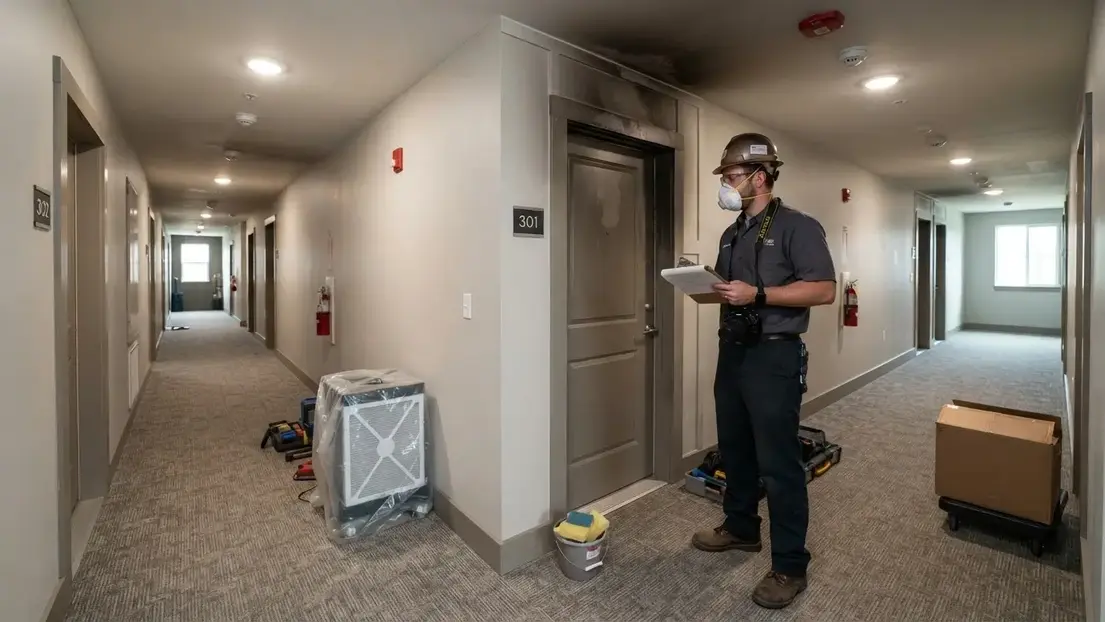
Commercial building interior undergoing professional fire and smoke damage restoration

Commercial and multifamily fire restoration requires evaluating affected units, common areas, building contents, and shared systems according to the actual conditions.

Managing Fire Damage Across a Kansas City Apartment Building or Commercial Property?

A fire in a multifamily or commercial property can create separate restoration needs across individual units, tenant spaces, hallways, common areas, and shared building systems. Smoke migration, soot deposits, firefighting water, damaged contents, and access coordination all need to be considered when establishing the restoration scope. If you own or manage an affected Kansas City property, tell us about the building type, the areas involved, the number of potentially affected units or spaces, and any cleanup or mitigation needs that require attention.

Call (816) 370-6439

What to Do After a Fire in Kansas City: A Property Owner's Checklist

The hours and days following a fire can involve important decisions about property access, insurance documentation, damaged belongings, smoke exposure, and water used during firefighting. Before cleanup begins, property owners should understand any restrictions imposed by fire authorities, document the loss when access is permitted, and identify conditions that may require additional inspection. Taking these steps can help protect occupants, preserve useful claim information, and establish a more organized path toward fire damage restoration.

Whether the fire occurred in a Kansas City home, rental property, apartment building, or commercial space, avoid rushing into cleanup or moving damaged materials before the property has been cleared for access. Structural conditions, electrical hazards, hidden moisture, and smoke residues may not be fully apparent from a visual inspection. The appropriate next steps depend on the incident, the condition of the building, and instructions from the authorities and insurance representatives involved.

What to Do Before Fire Damage Cleanup Begins

  • Wait for Official Clearance
    Do not enter the property until the fire department or appropriate authorities have permitted access. Visible damage does not reveal every structural, electrical, or environmental hazard. Follow any restrictions involving damaged areas, utilities, or reentry.
  • Contact Your Insurance Company
    Report the incident, obtain your claim information, and ask about documentation, inspections, emergency mitigation, and authorization requirements under your policy. Keep records of conversations, claim instructions, and any expenses related to protecting the property.
  • Document the Property Condition
    When access is permitted and conditions are safe, photograph affected rooms, damaged belongings, visible soot, burned materials, and signs of water intrusion. Document individual rooms and areas rather than relying on a few general photographs of the property.
  • Avoid Disturbing Soot Deposits
    Do not dry-wipe heavily affected walls, ceilings, furnishings, or belongings. Improper cleaning can spread residue, affect additional surfaces, or make restoration more difficult. Cleaning methods should be selected according to the type of residue and the material involved.
  • Do Not Operate Potentially Affected Equipment
    Avoid using HVAC systems, electrical equipment, appliances, or utilities when their condition is uncertain. Smoke, heat, soot, and water can affect equipment in ways that are not immediately visible. Follow instructions from qualified inspection and repair professionals.
  • Identify Possible Water Damage
    Mention any firefighting water, sprinkler discharge, wet carpeting, standing water, or suspected moisture inside walls and lower-level spaces. Water can move beyond the area where the fire occurred, making moisture assessment important even when visible standing water has been removed.
  • Keep Potentially Affected Belongings Separate
    Avoid moving smoke-affected furniture, clothing, documents, or other contents into unaffected rooms or clean storage areas before appropriate evaluation. Separating affected and unaffected belongings can help limit cross-contamination and simplify contents documentation.
  • Arrange a Restoration Assessment
    Discuss the fire location, affected rooms, smoke migration, soot deposits, persistent odors, water exposure, and known access restrictions. A property-specific assessment can help establish which materials and contents may require cleaning, drying, repair, specialized evaluation, or replacement.

What Should You Avoid Doing After a House Fire?

  • Do Not Paint Over Smoke Stains
    Covering discolored walls or ceilings before addressing the underlying residue can conceal visible damage without resolving the source of persistent odors or contamination. Affected surfaces should be evaluated and appropriately cleaned before decisions are made about sealing, priming, or repainting.
  • Do Not Use Household Cleaners on Heavy Soot
    Ordinary cleaners, abrasive products, and aggressive wiping may smear certain deposits, spread residue, or damage affected finishes. Smoke and soot cleanup requires methods appropriate to the residue, surface material, and condition of the item being cleaned.
  • Do Not Discard Everything Immediately
    Some fire- or smoke-affected belongings may be candidates for specialized cleaning and restoration. Photograph damaged possessions, preserve useful inventory information, and discuss documentation and disposal requirements with your insurance representative before discarding potentially claim-related property.
  • Do Not Overlook Hidden Water Damage
    Firefighting water can enter flooring assemblies, wall cavities, insulation, ceilings, and lower levels. A surface that appears dry does not establish that concealed materials are dry. Appropriate moisture assessment can help determine whether water extraction and structural drying are necessary.

When Should Fire Damage Cleanup Begin?

Cleanup should begin only after the property is authorized for access and the necessary safety considerations have been addressed. Emergency mitigation, contents handling, smoke residue removal, water extraction, and structural repairs may require different specialists or separate phases of work. Avoid disturbing damaged areas simply to begin cosmetic cleaning.

If you are uncertain whether an area is safe or whether an item can be salvaged, leave it undisturbed and seek the appropriate professional evaluation. For Kansas City property owners, a coordinated assessment of fire damage, smoke residue, affected belongings, and firefighting water can help establish the appropriate next steps for fire damage restoration, water extraction, and structural drying. Fire authority instructions and applicable insurance requirements should take priority over beginning cleanup.

Fire & Smoke Damage Restoration Costs in Kansas City, Missouri

Fire damage restoration costs in Kansas City range from several thousand dollars for contained fires to tens of thousands for extensive property damage. Costs depend on the fire's severity, affected square footage, smoke migration, soot contamination, and damage from firefighting water. Even a fire confined to one room can create cleanup and restoration needs throughout adjoining spaces and other levels of a property.

A comprehensive restoration estimate may include damage assessment, contents handling, soot removal, odor remediation, water extraction, structural drying, demolition, and reconstruction. The scope depends on which materials can be restored and which require removal or replacement. Structural repairs, electrical work, roofing, and rebuilding may involve separate contractors and estimates.

Typical Fire & Smoke Damage Restoration Cost Estimates

Localized Smoke Damage & Odor Cleanup

$200–$1,200 per room

Smoke can leave residue and persistent odors on walls, ceilings, fixtures, carpeting, and furnishings. Costs depend on affected rooms, residue levels, and whether odors have penetrated porous materials. Larger incidents may require additional cleaning and treatment.

Standard Combustible Fire Restoration

$8,330–$14,000

Fires involving ordinary combustible materials can damage interior finishes and spread smoke and soot beyond the original fire location. Restoration may involve debris removal, surface cleaning, odor treatment, and removal of materials that cannot be adequately restored.

Kitchen & Cooking Fire Restoration

$11,100–$18,500

Kitchen fires can leave heavy smoke residue, grease-related contamination, and odors throughout nearby living areas. Damage may affect cabinetry, appliances, ceilings, and adjoining rooms. Cleanup requirements depend on fire intensity, damaged materials, and water intrusion.

Electrical Fire Restoration

$11,100–$21,300

Electrical fires can damage wiring, outlets, wall cavities, and surrounding finishes while producing concentrated smoke and soot. Restoration may involve contaminated material removal, interior cleaning, and evaluation by qualified electrical professionals.

Comprehensive Fire & Smoke Restoration

$3,098–$51,243

Extensive losses can affect multiple rooms, floors, household contents, and building materials. Restoration may involve contents handling, widespread soot removal, odor treatment, demolition, water mitigation, and preparation for rebuilding.

Firefighting Water Extraction & Structural Drying

$925–$5,550

Fire hoses and sprinkler systems can saturate flooring, drywall, insulation, and concealed building assemblies. Mitigation may involve water extraction, moisture mapping, material removal, drying equipment, and monitoring to address moisture throughout affected areas.

These figures are broad published planning estimates, not guaranteed prices or individual contractor quotes. Published Kansas City cost data reports an estimated fire restoration average of approximately $27,091, with a project range of $3,098–$51,243. Actual costs depend on damage severity, affected square footage, smoke migration, structural conditions, and required services. Categories may overlap and should not be added together as separate charges. Extensive structural damage and reconstruction can exceed these estimates. A property-specific assessment is necessary to establish the actual restoration scope and cost.

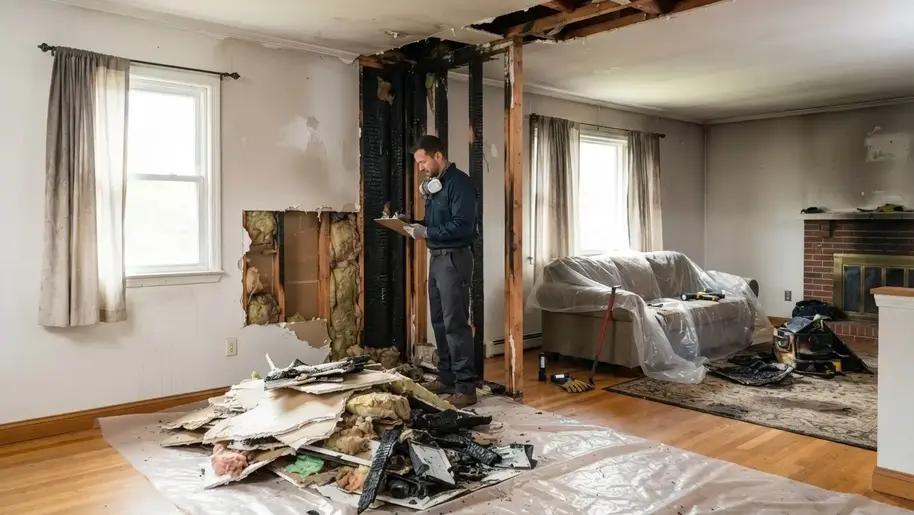
Residential fire damage restoration project showing affected interior walls, removed materials, and cleanup work

Fire restoration estimates depend on the extent of damage, affected building materials, contents handling, smoke cleanup, and any additional water mitigation or repairs required.

Fire & Smoke Damage Cleanup Service Areas Throughout Kansas City

KC Water Damage Pros serves residential and commercial properties throughout the Kansas City metropolitan area in Missouri and Kansas with fire and smoke damage cleanup services. Following a fire, property damage may extend beyond the room where flames were present. Smoke can travel through doorways, hallways, stairwells, and other connected spaces, leaving soot deposits and persistent odors on interior surfaces. The extent of cleanup depends on the fire conditions, the materials affected, and how far smoke and residue have traveled throughout the property.

Kansas City properties can present different cleanup considerations depending on their layout and construction. Finished basements, attached garages, multi-level homes, apartment buildings, rental properties, and commercial interiors may have multiple connected spaces where smoke residue can accumulate. Drywall, ceilings, flooring, cabinetry, insulation, and furnishings may require individual evaluation to determine whether they can be cleaned or need removal. Smoke odor concerns can also extend into rooms that show little visible damage, making a careful assessment important before cleanup begins.

  • Kansas City, MO
  • Kansas City, KS
  • Independence, MO
  • Lee's Summit, MO
  • Blue Springs, MO
  • Raytown, MO
  • Gladstone, MO
  • Liberty, MO
  • North Kansas City, MO
  • Grandview, MO
  • Belton, MO
  • Raymore, MO
  • Overland Park, KS
  • Olathe, KS
  • Lenexa, KS
  • Shawnee, KS
  • Leawood, KS
  • Prairie Village, KS
  • Mission, KS
  • Mission Hills, KS
  • Roeland Park, KS
  • Greater Jackson County, MO
  • Greater Johnson County, KS
  • Greater Kansas City Metropolitan Area

Fire cleanup can involve more than removing visible soot. Depending on the incident, the work may include evaluating smoke-affected surfaces, addressing residue on suitable materials, identifying persistent odor sources, and determining whether water from firefighting efforts has affected flooring, walls, or other building components. Avoid wiping substantial soot deposits or applying household cleaners to affected surfaces, as improper cleaning can spread residue or make removal more difficult. Keep people away from unsafe areas and follow instructions from fire officials before re-entering the property.

If your Kansas City property has experienced a fire, smoke infiltration, or related water damage, contact KC Water Damage Pros to discuss the affected areas and cleanup needs. You can also learn more about smoke and odor removal, water extraction, and structural drying for related property damage concerns.

Frequently Asked Questions About Fire and Smoke Damage Restoration in Kansas City

Fire damage can extend well beyond the area where flames were present. Smoke residue, soot, heat, combustion odors, and water from firefighting can affect connected rooms, personal belongings, and concealed building materials. These answers address common fire and smoke damage concerns for Kansas City homeowners, landlords, property managers, and commercial property owners, including cleanup decisions, material evaluation, odor problems, restoration timelines, and insurance documentation.

What should I do immediately after a house fire in Kansas City?
Follow the fire department's instructions and do not reenter the property until authorities have determined that access is permitted. A fire can leave hazards that are not immediately visible, including weakened structural components, damaged electrical wiring, unstable ceilings, hot materials, and unsafe utilities. Once access is permitted, avoid touching soot deposits, moving heavily affected belongings, or attempting extensive cleanup. Photograph visible damage when it is safe, contact your insurance company, and arrange an assessment of the affected property. The initial evaluation should consider direct fire damage, smoke migration, soot deposits, and water intrusion from firefighting.
Can a small kitchen fire cause smoke damage throughout the house?
Yes. A fire does not have to spread beyond the kitchen to create smoke damage in other parts of a home. Smoke can travel through open doorways, hallways, stairwells, and connected living spaces. Depending on the ventilation and layout, residue and odor may affect nearby rooms, cabinets, ceilings, furnishings, and belongings. Cooking-related fires can also leave residue that is difficult to identify by appearance alone. A proper assessment considers the room where the fire occurred as well as connected areas where smoke may have traveled before settling.
What is the difference between fire damage cleanup and smoke damage restoration?
Fire damage cleanup addresses the direct effects of combustion, including burned materials, char, heat damage, and debris. Smoke damage restoration addresses residue and odor left by smoke that travels through a property. These conditions often overlap, but they are not identical. A room may have substantial smoke contamination without direct flame damage, while another area may require evaluation for heat exposure or structural damage. The appropriate restoration scope depends on the materials affected, the type of residue, the extent of exposure, and whether cleaning, specialized treatment, or removal is necessary.
Can smoke damage occur in rooms where there was no fire?
Yes. Smoke can move beyond the room of origin through doorways, hallways, staircases, open floor plans, and other pathways. It may settle on walls, ceilings, trim, furniture, flooring, clothing, and stored belongings in rooms that never experienced direct flames. In multilevel Kansas City homes, smoke may travel between the main floor, upper bedrooms, and finished basements. The extent of migration depends on the fire conditions, building layout, air movement, and ventilation. Evaluating only the visibly burned room can overlook areas that also need attention.
What is soot, and why is it difficult to remove after a fire?
Soot is a deposit of fine particles and combustion residue produced when materials burn. Its composition and behavior vary according to the materials involved and the conditions of the fire. Some soot is dry and powdery, while other deposits may be oily, sticky, or strongly bonded to surfaces. It can collect on painted walls, ceilings, cabinets, fixtures, flooring, and furnishings. The cleaning method must match the residue and the surface. An unsuitable cleaner or aggressive wiping can smear deposits, drive residue into porous materials, or create additional surface damage.
Why should I avoid wiping soot off walls and ceilings myself?
Dry soot can spread when disturbed, while oily or sticky residue can smear when wiped with an ordinary cloth or household cleaner. This may enlarge the visibly affected area and make subsequent cleaning more difficult. Painted drywall, textured ceilings, wallpaper, and other finished surfaces can also be damaged by aggressive scrubbing or unsuitable cleaning products. Before attempting to clean affected surfaces, the residue and material should be evaluated so the appropriate method can be selected. Avoid disturbing heavy soot deposits while arranging professional assessment.
What is the difference between dry smoke, wet smoke, and protein residue?
Restoration professionals sometimes use these terms to describe different types of fire residue and the cleaning challenges they can create. Dry smoke residue is generally powdery and may result from hotter, more complete burning conditions. Wet smoke residue can be thicker, darker, and more difficult to remove, particularly after slower, smoldering fires involving certain materials. Protein residue can occur during cooking-related fires and may leave a difficult odor and discoloration that is not always obvious. These descriptions are not a substitute for inspecting the actual surfaces. The source of the fire, affected materials, and residue condition determine the appropriate cleaning approach.
Does a grease fire leave different smoke damage than other household fires?
A kitchen grease fire can create residue and odor conditions that differ from those associated with some other household fires. Cooking oils, food residue, cabinetry, plastics, and nearby materials may contribute to deposits that are difficult to clean using ordinary household methods. Smoke can also move from the kitchen into adjoining dining rooms, living areas, and upper floors. Cabinets, range hoods, ceilings, nearby furnishings, and stored kitchen contents may require evaluation. The cleanup method should account for the type of residue rather than treating every smoke deposit as ordinary dust.
Can an electrical fire cause smoke damage even if the flames were contained?
Yes. Electrical fires can produce smoke and residue from wiring insulation, plastic components, appliances, and surrounding building materials. Even when the fire is confined to an outlet, electrical panel, appliance, or wall area, smoke may travel into nearby rooms. Heat and electrical damage can also create hazards that require evaluation before cleanup begins. Do not operate affected equipment or attempt to inspect damaged wiring yourself. The property should be assessed for both smoke contamination and any electrical or structural concerns identified by appropriately qualified professionals.
Can a fireplace, chimney, or wood stove cause indoor smoke damage?
Yes. A fireplace or wood stove problem can release smoke and soot into the living space, sometimes without causing a larger structural fire. Smoke may affect the area around the fireplace, nearby walls and ceilings, furnishings, curtains, and connected rooms. A chimney or flue problem may also require separate inspection by a qualified chimney professional. Cleanup of indoor smoke residue does not replace evaluation of the appliance, chimney, or venting system. The source of the smoke should be addressed before the affected interior is considered fully restored.
Can a garage fire affect the rest of the house?
Yes. An attached garage can provide pathways for smoke to enter the home through doors, wall openings, framing connections, and other building penetrations. Smoke may also affect stored belongings, garage surfaces, vehicles, and adjacent rooms. The materials involved in a garage fire can vary considerably, so residue and odor conditions should be evaluated based on the actual contents and fire conditions. If fuel, chemicals, batteries, or other potentially hazardous materials were involved, follow emergency personnel's instructions and do not disturb affected materials until the area has been evaluated.
Why does smoke odor remain after visible soot has been cleaned?
Removing visible residue does not necessarily remove every odor source. Smoke-related compounds can remain in porous materials such as carpet, upholstery, insulation, unfinished wood, and some building components. Odor may also persist in concealed or difficult-to-access areas if they were affected by smoke. Applying fragrance or deodorizer without addressing the underlying source may temporarily mask the smell rather than resolve it. Effective odor remediation begins with identifying affected materials and removing or treating the sources that can reasonably be addressed.
Can smoke odor get into carpet, furniture, clothing, and personal belongings?
Yes. Smoke residue and odor can affect upholstery, mattresses, clothing, curtains, rugs, stored possessions, and other porous belongings. The extent of exposure depends on the item's location, material, and the conditions inside the property. Some contents may be suitable for specialized cleaning, while others may be too heavily affected or difficult to restore. Items should be evaluated before being moved into unaffected rooms or placed into storage. Moving contaminated belongings without appropriate handling can transfer residue and odor to other areas.
Can smoke and soot travel through the HVAC system?
Smoke may enter HVAC return pathways or affect system components when equipment is operating during a fire or when smoke reaches connected air pathways. Depending on the building and equipment, residue may affect return grilles, filters, duct surfaces, or other components. However, smoke odor near a vent does not automatically mean the entire duct system is contaminated. HVAC equipment should be evaluated based on the fire conditions and available evidence before deciding whether cleaning or other service is necessary. Replacing a filter alone may not address residue elsewhere in an affected system.
Should I turn on my furnace or air conditioner after a fire?
Do not operate HVAC equipment if authorities or a qualified professional have identified an electrical, mechanical, or other safety concern. Even if the equipment appears undamaged, operating the system may circulate smoke residue if affected components or air pathways have not been evaluated. Ask an appropriately qualified professional whether the equipment should remain off until it has been inspected. The decision depends on the location of the fire, the condition of the system, and whether smoke entered connected ventilation pathways.
Can water used by firefighters cause additional damage inside my home?
Yes. Fire suppression water can soak carpet, padding, hardwood flooring, drywall, insulation, cabinets, and other building materials. Water may travel through floor openings, wall cavities, stairwells, and lower-level spaces, sometimes affecting rooms away from the fire. This creates a separate moisture problem that may require water extraction, drying, and evaluation of affected materials. Fire, smoke, and water damage should be considered together when establishing the overall restoration scope. The presence of firefighting water does not mean every wet material must be removed, but concealed moisture should not be overlooked.
Can firefighting water lead to mold growth after a fire?
Water left in building materials can create conditions that support mold growth if moisture is not addressed. The risk depends on how much water entered the property, how long materials remain wet, indoor conditions, and the materials involved. Carpet, drywall, insulation, wood framing, and other moisture-sensitive components may require evaluation. Prompt moisture assessment and appropriate drying help address the conditions that can contribute to mold growth. Not every water-affected material automatically requires removal; decisions should be based on its actual condition and the extent of moisture exposure.
Can smoke damage affect drywall, insulation, ceilings, and wall cavities?
Yes. Smoke residue can deposit on exposed walls and ceilings and, depending on the fire conditions and building construction, may enter cavities, unfinished spaces, and openings around pipes or wiring. Insulation, framing, and concealed materials may also require evaluation if there is evidence of smoke, heat, or water exposure. Some finished surfaces can be cleaned, while heavily affected materials may require removal. Painting over smoke staining without addressing the underlying residue and odor source may conceal visible damage without resolving the problem.
Do fire-damaged walls, flooring, and structural materials always need to be removed?
No. Material removal depends on the severity of the damage, the type of material, smoke residue, heat exposure, moisture conditions, and whether effective cleaning or restoration is possible. Some nonstructural surfaces and belongings may be suitable for specialized cleaning. Other materials may be charred, structurally compromised, saturated, or affected by residue that cannot be reliably removed. Structural components should be evaluated by appropriately qualified professionals when fire or heat may have affected their integrity. Removal decisions should be based on the material's actual condition rather than appearance alone.
Can smoke damage affect electronics, appliances, and electrical equipment?
Smoke residue can affect electronics, appliances, and electrical equipment even when those items were not directly exposed to flames. Fine particles may enter openings and settle on internal components. Depending on the residue and exposure, deposits can contribute to corrosion, electrical problems, or equipment failure. Heat and water exposure create additional concerns. Do not power on or attempt to clean potentially affected electronics or electrical equipment until they have been evaluated by an appropriately qualified professional. Restoration or replacement decisions depend on the equipment's condition and the extent of exposure.
Can fire and smoke damage affect a finished basement in a Kansas City home?
Yes. Smoke can travel into finished lower levels through stairways, open doorways, and connected building spaces. Firefighting water may also move into basements and affect carpet, padding, drywall, storage areas, and other materials. Finished basements can contain a combination of concrete flooring, framed walls, insulation, finished ceilings, utility areas, and enclosed storage spaces. Each material may require a different evaluation. A proper assessment considers both visible smoke residue and moisture that may have entered concealed areas.
How is fire and smoke damage handled in Kansas City apartments and multifamily buildings?
Multifamily properties require consideration of the affected unit and any connected spaces that may have been exposed to smoke or water. Depending on the building layout, smoke may travel through shared hallways, stairwells, utility penetrations, and connected ventilation pathways. Property managers may need to coordinate access, occupant safety, contents handling, and work schedules. The cleanup scope should distinguish the directly damaged unit from surrounding areas that require evaluation. In buildings with shared systems, an odor or smoke complaint in another unit should be investigated rather than automatically attributed to contamination throughout the building.
Can smoke from a neighboring apartment or commercial unit affect my property?
It can. Smoke may move between connected units or shared spaces depending on the building's layout, openings, ventilation pathways, and conditions during the fire. Potentially affected areas may include entryways, hallways, adjoining rooms, and spaces around shared building systems. The presence of smoke odor does not by itself establish how much residue is present or which materials require treatment. An evaluation should identify the actual affected areas before determining the appropriate cleanup scope.
Is it safe to stay in my home after a fire if only one room was damaged?
Occupancy depends on the property's condition and whether authorities or qualified professionals have identified remaining safety concerns. A fire limited to one room can still affect adjoining spaces through smoke, soot, heat, or water. Electrical damage, structural concerns, damaged utilities, and indoor environmental conditions may also affect whether the property can be occupied. Do not assume that unaffected-looking rooms are safe simply because visible fire damage is limited. Follow official instructions and obtain necessary evaluations before returning to normal use.
How long does fire and smoke damage cleanup take?
The timeline depends on the size and severity of the fire, the amount of smoke and soot, the number of affected rooms, and whether firefighting water caused additional damage. A limited smoke cleanup may require much less work than a property with extensive fire damage, affected contents, persistent odor, and water-saturated materials. Access restrictions, material removal, drying requirements, specialized cleaning, and coordination with reconstruction can also affect the schedule. An assessment provides a more realistic estimate than applying one standard timeline to every fire.
How much does fire and smoke damage cleanup cost in Kansas City?
Costs depend on the extent of fire damage, the amount and type of smoke residue, the number of affected rooms, the materials involved, and whether water damage occurred during firefighting. A limited smoke cleanup can involve a very different scope from a fire requiring extensive material removal, contents treatment, odor remediation, and structural repairs. Additional cost considerations may include labor, specialized cleaning, equipment, moisture mitigation, debris handling, and coordination with reconstruction work. Because these factors vary substantially between properties, an assessment is necessary to establish an appropriate estimate. Use our fire and smoke damage quote request to discuss the damage to your property.
Does homeowners insurance cover fire and smoke damage cleanup?
Many homeowners policies provide coverage for certain fire-related losses, but the applicable coverage, limits, deductibles, and exclusions depend on the individual policy and circumstances. Smoke damage, firefighting water, damaged contents, temporary living expenses, cleanup, and reconstruction may be addressed differently under a particular policy. Contact your insurance company to report the loss and confirm the documentation and authorization requirements. Do not assume every expense will be covered or that an estimate guarantees payment.
What documentation should I keep for a fire damage insurance claim?
Keep photographs and videos of visible damage when the property can be accessed safely, along with incident information, inspection records, estimates, invoices, and communications with your insurer. A contents inventory can help document damaged furniture, appliances, electronics, clothing, and other belongings. Keep records that distinguish emergency mitigation and cleanup from repairs or reconstruction. If additional damage becomes apparent during the work, document the findings and discuss the next steps with your insurance representative. Follow the reporting and documentation requirements in your policy.
Should I paint over smoke stains before fire damage restoration?
Painting over smoke stains before the affected surfaces have been evaluated can conceal visible damage without addressing the underlying residue or odor source. Smoke deposits may interfere with paint adhesion or continue to cause staining and odor problems if the surface has not been appropriately cleaned and prepared. Document the damage when it is safe, and avoid cosmetic repairs until the appropriate cleanup scope has been established. Surface preparation and the need for specialized coatings depend on the material and the condition of the residue.
What is the difference between fire damage cleanup and reconstruction?
Fire damage cleanup and mitigation address contamination and damage that must be evaluated or addressed before a property can move toward normal use. This may include debris removal, soot and smoke residue cleanup, odor-source treatment, and response to water damage. Reconstruction involves repairing or rebuilding components such as framing, drywall, flooring, cabinets, roofing, and other damaged parts of the property. These are related but distinct scopes of work. The necessary repairs depend on the condition of the building and the findings of appropriately qualified restoration and construction professionals.
What information should I provide when requesting a fire and smoke damage estimate?
Helpful information includes the property's location, the approximate date of the fire, which rooms were affected, and whether the damage involves burned materials, soot, smoke odor, or water from firefighting. Mention whether the fire department has released the property for access and whether utilities or structural areas have been identified as unsafe. It is also useful to explain whether the property is occupied, whether personal belongings are affected, and whether you have contacted your insurance company. Photographs can help when they can be obtained safely without entering a restricted or hazardous area.
What types of Kansas City properties may need fire and smoke damage restoration?
Fire and smoke damage can affect single-family homes, older houses, finished basements, attached garages, apartment buildings, rental properties, offices, and commercial spaces. The building layout and construction influence how smoke travels and which materials may require evaluation. A detached home may have different exposure pathways from a multifamily building with shared hallways or ventilation systems. Restoration planning should account for the actual property, the location of the fire, and the materials affected rather than assuming every building requires the same cleanup approach.
Do you provide fire and smoke damage restoration throughout the Kansas City metro?
Service inquiries may involve properties in Kansas City, Missouri, Kansas City, Kansas, and surrounding communities such as Independence, Lee's Summit, Overland Park, Olathe, Blue Springs, Liberty, Shawnee, and Lenexa. The Kansas City metropolitan area includes communities on both sides of the Missouri-Kansas state line, so service availability should be confirmed for the property's specific location. Contact us with the property address and a general description of the fire or smoke damage to discuss availability and the next steps.
How do I arrange fire and smoke damage cleanup in Kansas City?
Start by providing the property's location and a general description of the fire and resulting damage. Explain whether the main concerns involve burned materials, smoke residue, soot, persistent odor, firefighting water, or a combination of conditions. Confirm whether authorities have released the property and mention any known access or safety restrictions. Avoid disturbing damaged materials or attempting extensive cleanup before the property has been evaluated. Use our fire and smoke damage quote request section to submit your information and discuss the property's restoration needs.

Need Fire & Smoke Damage Cleanup in Kansas City?

Fire damage can affect more than the areas directly exposed to flames. Smoke can travel into adjoining rooms, settle on walls, ceilings, flooring, and furnishings, and leave behind soot deposits and persistent odors. Firefighting efforts can also introduce water that affects building materials and creates additional drying needs. KC Water Damage Pros helps Kansas City property owners address fire-related cleanup concerns through evaluation of affected areas, appropriate cleaning of suitable surfaces, assessment of smoke residue and odor sources, and identification of materials that may require removal. Whether your property experienced a kitchen fire, an electrical fire, or more extensive smoke infiltration, contact us to discuss the damage and determine the appropriate next steps.