⭐ Kansas City Biohazard Cleanup • Contamination Cleanup • 24/7 Emergency Availability

Biohazard Cleanup in Kansas City, MO

Professional biohazard cleanup for blood and bodily fluid contamination, crime scenes, unattended deaths, trauma incidents, and other hazardous property conditions. Get help addressing biological contamination, affected materials, and specialized property cleanup throughout the Kansas City metropolitan area.

24/7 Emergency Availability • Biohazard Cleanup • Affected Property Cleanup

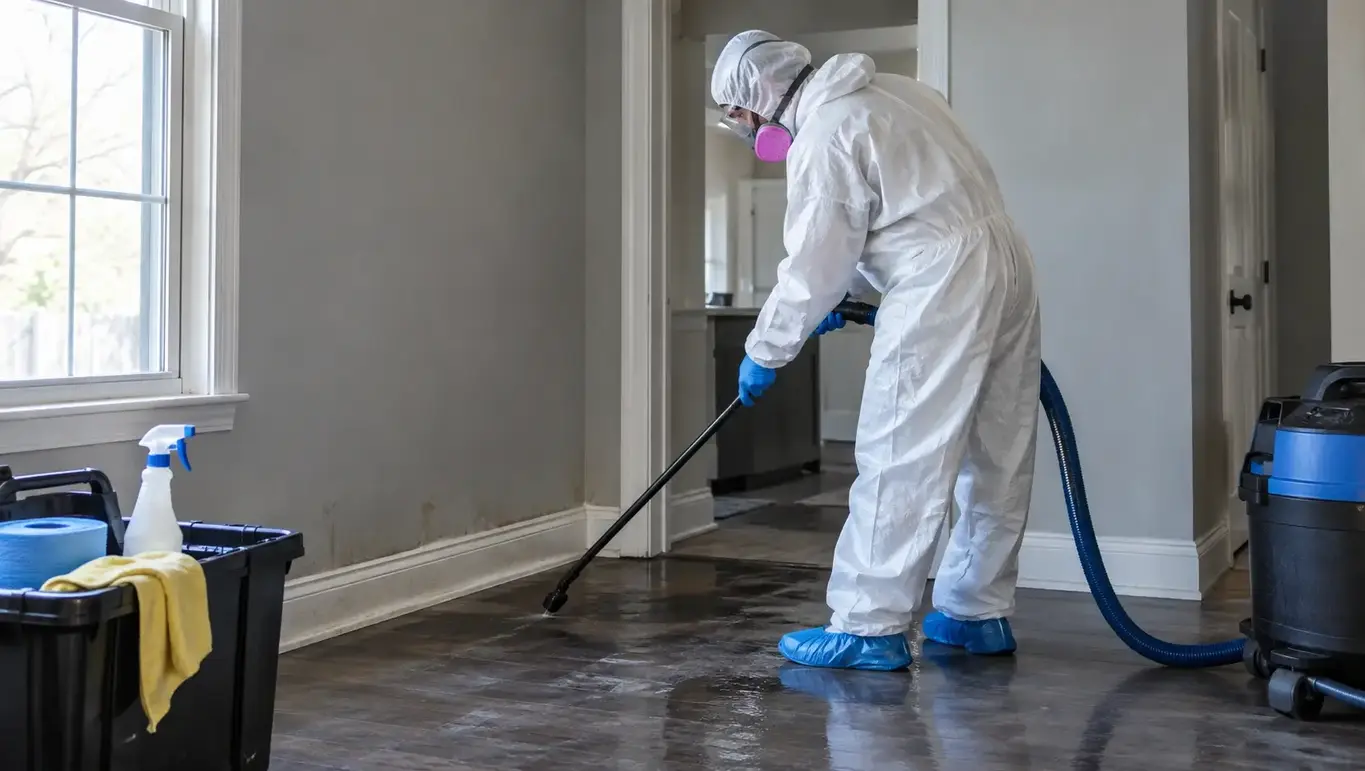
Professional cleanup of an affected interior area following a biohazard contamination incident
Professional Biohazard Cleanup Biological Contamination • Hazardous Materials • Affected Properties
Unattended Death Cleanup Decomposition Cleanup • Contaminated Surfaces • Odor Treatment
Trauma & Contamination Remediation Protective Procedures • Material Removal • Surface Decontamination
Kansas City Biohazard Cleaning Kansas City, MO • Kansas City, KS • Surrounding Communities

Understanding Biohazard Cleanup in Kansas City Homes and Businesses

Certain property incidents can leave behind biological materials that require specialized handling and professional cleanup. Unattended deaths, traumatic events, sewage contamination, and other situations involving potentially infectious materials can affect flooring, walls, furnishings, and surrounding surfaces. Unlike ordinary residential cleaning, professional biohazard cleanup involves evaluating affected areas, identifying materials that require attention, and using appropriate protective equipment and controlled cleaning procedures to address the contamination.

Biohazard conditions are not always limited to the immediately visible area. Biological materials can penetrate porous flooring, collect along baseboards, affect subflooring, and reach other surfaces or materials beyond the initial incident location. Depending on the circumstances, proper remediation may involve establishing a controlled work area, removing affected materials, cleaning and treating appropriate surfaces, and following suitable handling and disposal procedures. These steps help limit unnecessary exposure and prevent contaminated materials from being carried into unaffected areas of the property.

Restoring a property after a biohazard incident requires more than removing visible debris or applying household cleaning products. Professional remediation focuses on addressing affected surfaces, managing contaminated materials, and evaluating the condition of the surrounding environment before the work area is returned to normal use. Whether the situation involves an unattended death, a traumatic incident, or another source of biological contamination, a thorough cleanup process helps property owners move toward a safer, properly restored indoor environment.

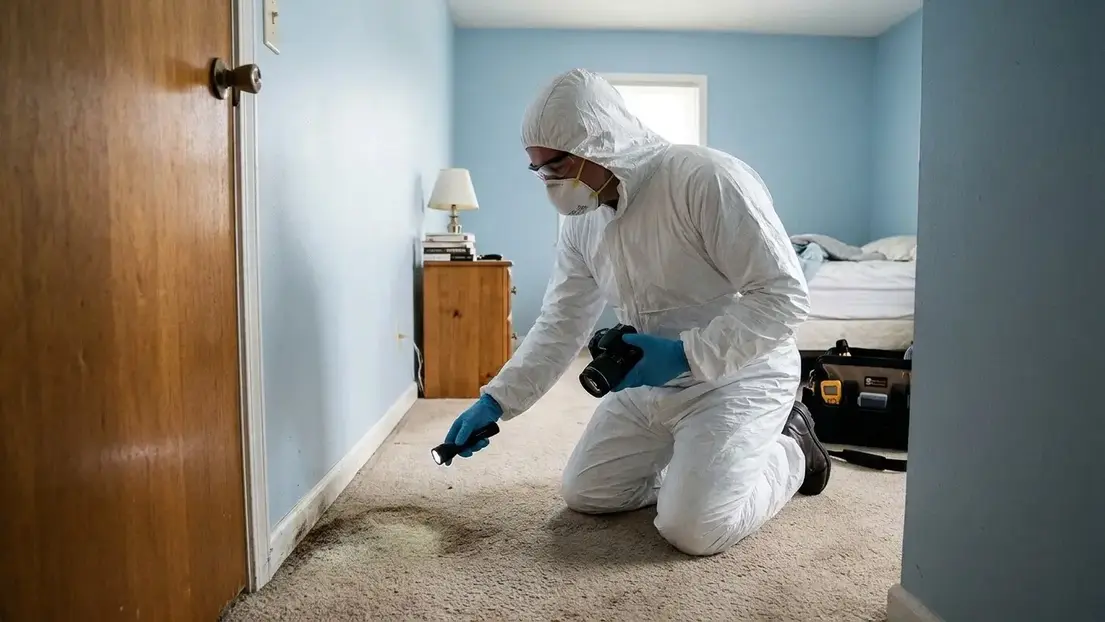
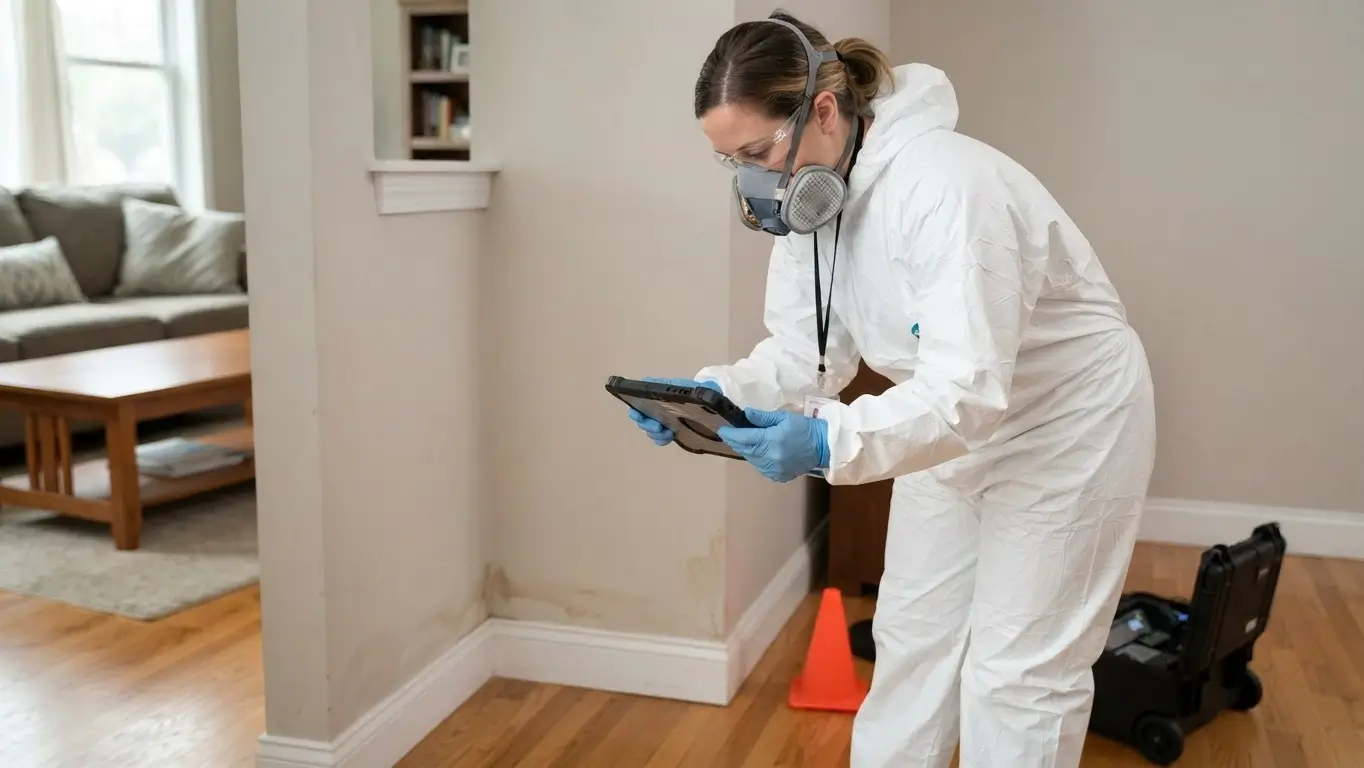
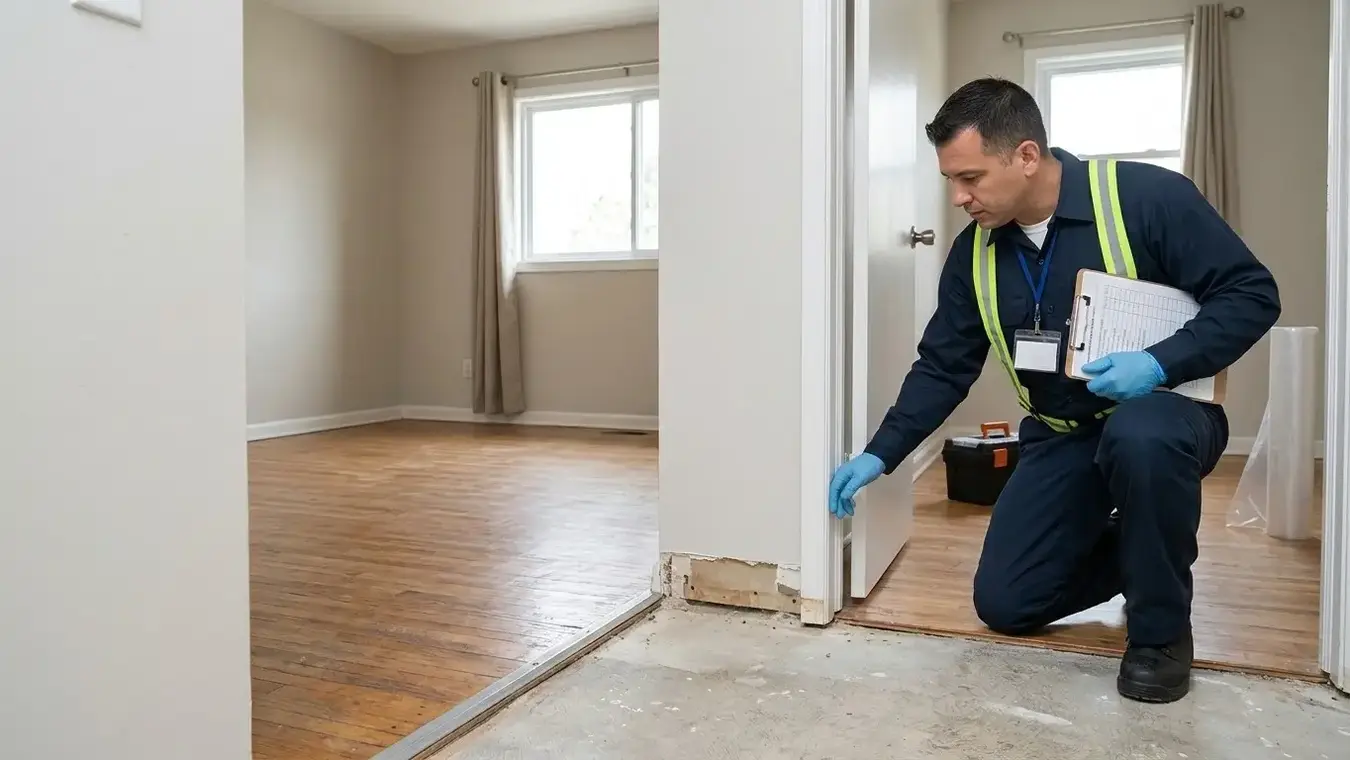
Biohazard cleanup professional wearing protective equipment while assessing an affected residential interior

Professional biohazard remediation begins with evaluating the affected area, identifying potentially contaminated materials, and determining the appropriate cleanup scope.

Types of Biohazard Cleanup Situations in Kansas City Properties

Biohazard cleanup is not one standardized service. The materials involved, the location of the incident, and the condition of the affected property determine what kind of remediation may be needed. A small area of blood contamination presents different cleanup considerations than decomposition affecting carpet, subflooring, furnishings, or multiple rooms. Identifying the type of incident helps establish the appropriate work area, protective precautions, material-handling needs, and cleanup scope.

Blood and Bodily Fluid Cleanup

Accidents, injuries, and other incidents can leave blood or bodily fluids on floors, walls, furniture, fixtures, and surrounding materials. Cleanup considerations include the amount of contamination, the surface involved, and whether liquids have entered seams, cracks, carpet, or other porous materials.

Unattended Death Cleanup

When a death is not discovered immediately, decomposition can affect flooring, carpet padding, furnishings, and surrounding building materials. The cleanup scope depends on the conditions at the property, the extent of biological contamination, and whether affected materials can be appropriately cleaned or require removal.

Crime Scene and Trauma Cleanup

Traumatic incidents may leave biological materials on interior surfaces and personal property. Cleanup generally begins only after the scene has been released by the appropriate authorities and an authorized party can arrange access. The affected area must then be evaluated to determine the necessary remediation.

Contaminated Furniture and Belongings

Mattresses, upholstered furniture, clothing, stored possessions, and other contents may be affected by biological contamination. Porous items can be difficult to restore when material has penetrated beyond the surface. Each item should be evaluated before a decision is made about specialized cleaning, retention, or removal.

Hoarding-Related Biohazard Conditions

Some hoarding situations involve more than accumulated belongings. Decomposing waste, animal waste, bodily fluids, spoiled materials, and unsanitary conditions can create additional cleanup concerns. The work may require separating ordinary contents removal from areas requiring specialized biological cleanup.

Sewage and Biological Waste Contamination

Sewage backups and certain waste-related incidents can introduce biological contaminants into basements, bathrooms, utility rooms, and other interior spaces. Cleanup requirements depend on the source, affected materials, and extent of exposure. These conditions should not be treated like an ordinary clean-water leak.

These situations can overlap. For example, an unattended death may involve contaminated furnishings, decomposition odors, and affected flooring. The correct cleanup plan should be based on the actual conditions at the property rather than the incident label alone.

What to Do Before Biohazard Cleanup Arrives in Kansas City

When a property has been affected by blood, bodily fluids, an unattended death, or another potentially hazardous biological material, the steps taken before professional cleanup begins can make a meaningful difference. Limiting access, avoiding contact with affected materials, and providing accurate incident information can help reduce additional exposure and prevent contamination from being carried into other parts of the building. Whether the incident occurs in a Kansas City home, basement, apartment, rental property, or commercial facility, the priority is to keep the affected area undisturbed until it can be properly evaluated.

1. Keep People and Pets Away From the Affected Area

Restrict access to rooms or surfaces where blood, bodily fluids, or other potentially contaminated materials may be present. Children, pets, tenants, employees, visitors, and maintenance personnel should not enter the affected area or walk through potentially contaminated pathways. Unnecessary foot traffic can transfer biological material from an affected room to hallways, stairways, adjoining rooms, and other commonly used surfaces.

In occupied Kansas City homes, this may mean keeping household members away from an affected bedroom, bathroom, basement, garage, or other isolated area. For apartments and commercial buildings, communicate access restrictions to the appropriate occupants without exposing them to unnecessary details about the incident.

2. Do Not Move Potentially Contaminated Belongings

Avoid moving furniture, mattresses, bedding, carpeting, clothing, upholstered items, personal belongings, or other materials from the affected area before they have been evaluated. Moving these items can transfer biological material to clean surfaces, door handles, flooring, vehicles, storage areas, and other parts of the property.

This is particularly important when an incident involves a bed, sofa, carpeted room, or furniture positioned against a wall. Materials that appear unaffected may still require evaluation depending on their proximity to the incident. Leave affected belongings where they are until their condition and appropriate handling can be determined.

3. Avoid Improvised Cleanup of Potentially Hazardous Materials

Do not attempt to wipe, scrub, vacuum, mop, or otherwise clean suspected biohazard materials using ordinary household supplies. Household cleaners and general-purpose disinfectants are not automatically appropriate for every type of biological contamination. Improvised cleanup can also spread material, expose the person performing the work, or complicate the evaluation of porous surfaces and furnishings.

Avoid mixing cleaning chemicals or applying products without knowing whether they are suitable for the affected material and surface. Leave the area undisturbed so the cleanup provider can evaluate the conditions and determine the appropriate cleaning, disinfection, and material-removal procedures.

4. Do Not Handle Needles, Sharps, or Unknown Materials

If needles, broken glass, sharp objects, unknown containers, or other potentially hazardous materials are visible, do not pick them up, move them, or place them in ordinary household trash. These items can create puncture injuries or additional exposure risks, particularly when they are mixed with clothing, bedding, debris, or other affected belongings.

Keep people away from the area and tell the cleanup provider what you observed. If someone experiences a needlestick, puncture, or direct exposure involving blood or bodily fluids, seek prompt medical evaluation rather than waiting for the property cleanup appointment.

5. Confirm the Property Has Been Released by Authorities

When an incident involves a death, suspected crime, or police investigation, confirm that the appropriate authorities have released the scene before arranging remediation work. Law enforcement investigations, evidence collection, and any applicable restrictions on property access take priority over cleanup activities.

Once access has been authorized, the affected property can be evaluated to determine the cleanup scope. This may include identifying affected flooring, furniture, surrounding surfaces, adjoining rooms, and materials that could require removal. Do not disturb potential evidence or attempt to prepare the scene for cleaning before authorization has been established.

6. Record Basic Incident and Property Information

Prepare to explain what happened, where the incident occurred, and approximately when it was discovered. Share whether the affected area includes carpet, hardwood flooring, tile, subflooring, drywall, furniture, mattresses, or other porous materials. Mention any visible contamination outside the original room or concerns involving adjoining spaces.

If photographs are needed for an insurance claim or property records, only take them from a location you can access safely without entering or disturbing the affected area. Do not move objects, touch surfaces, or approach hazardous materials to obtain additional pictures.

7. Coordinate With the Property Owner or Manager

If you rent the property, manage an apartment, or occupy a commercial building, identify the person authorized to approve access and coordinate remediation. Property owners, landlords, property managers, and business representatives may need to arrange entry, communicate with occupants, and address building access requirements before work can begin.

In multifamily properties, discuss any shared hallways, stairways, elevators, neighboring units, or common areas that may be affected or require access coordination. Avoid transporting potentially contaminated belongings through shared spaces. The cleanup provider can evaluate whether additional areas need attention.

8. Arrange Entry, Parking, and Site Access

Provide the property address, entry instructions, available parking information, and any building restrictions that could affect the initial assessment. Identify locked gates, access codes, stairs, narrow hallways, restricted loading areas, security procedures, and other conditions that may affect equipment or material removal.

These details can be especially useful for Kansas City properties with basement entrances, older multi-level homes, attached garages, apartment buildings, and commercial facilities with controlled access. If the property is occupied, coordinate an appropriate arrival and entry arrangement with the responsible representative.

9. Identify Other Areas That May Need Evaluation

Tell the cleanup provider if the incident may involve more than the immediately visible area. Examples include contaminated furniture, adjoining flooring, closets, bathrooms, basement storage areas, nearby rooms, or materials that may have been moved before the property was secured. Also mention any known concerns involving heating and cooling equipment, air returns, or ventilation openings near the affected location.

Do not inspect concealed spaces, open equipment, remove floor coverings, or investigate possible contamination yourself. Providing the information you already know helps the provider determine which areas should be considered during the initial property assessment.

Protect the Property Before Professional Biohazard Remediation Begins

The most important preparation is to limit access and avoid disturbing the affected area. Blood and bodily fluid incidents can involve more than the visible material on a floor or furnishing. Depending on the circumstances, the cleanup assessment may need to consider porous materials, surrounding surfaces, furniture, contents, and possible transfer into adjoining areas. Keeping the original area undisturbed helps prevent unnecessary handling and provides a clearer starting point for evaluating the work required.

For Kansas City property owners, landlords, tenants, and commercial property managers, useful preparation includes identifying the affected room, explaining the incident, confirming authorized access, and communicating any known building restrictions. Whether the property is in Kansas City, Independence, Lee's Summit, Blue Springs, Liberty, Overland Park, or another nearby community, these details help establish the conditions for an organized cleanup assessment.

The affected area should remain restricted until the cleanup provider has completed the applicable remediation work and addressed any remaining access or safety concerns. Cleaning and disinfection may not include reconstruction, replacement of removed building materials, or restoration of damaged finishes. Those needs should be identified separately during the property evaluation.

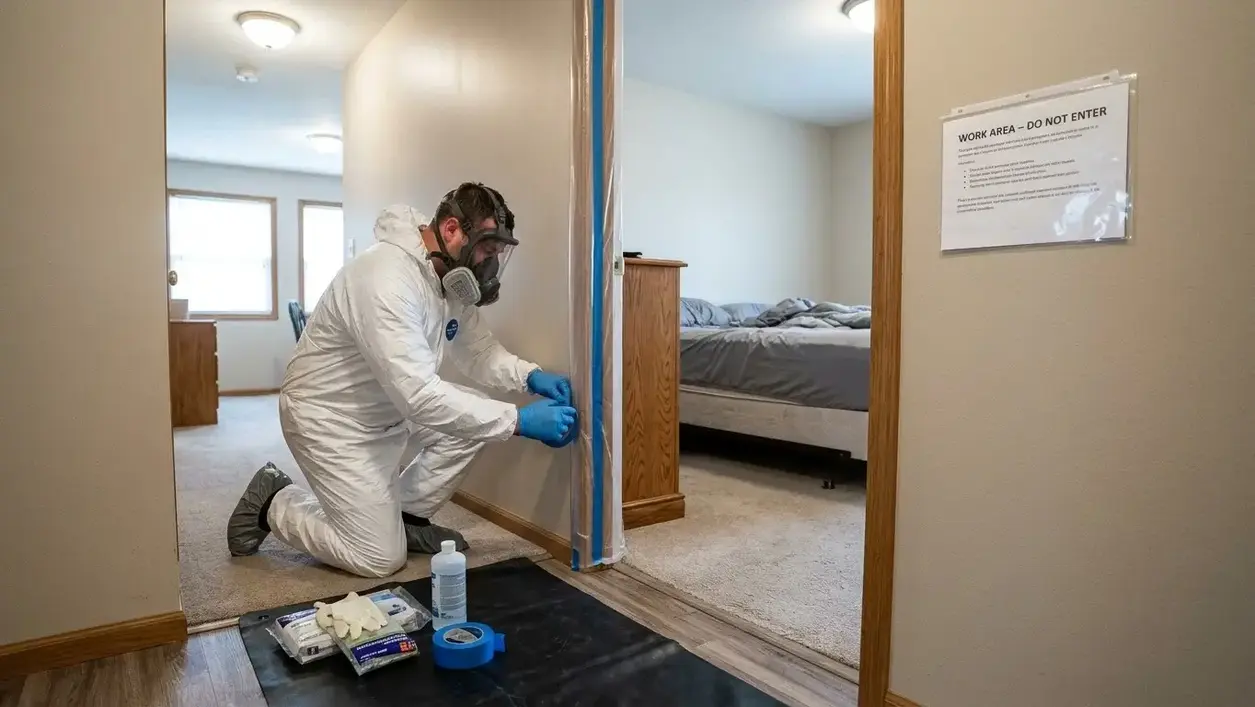
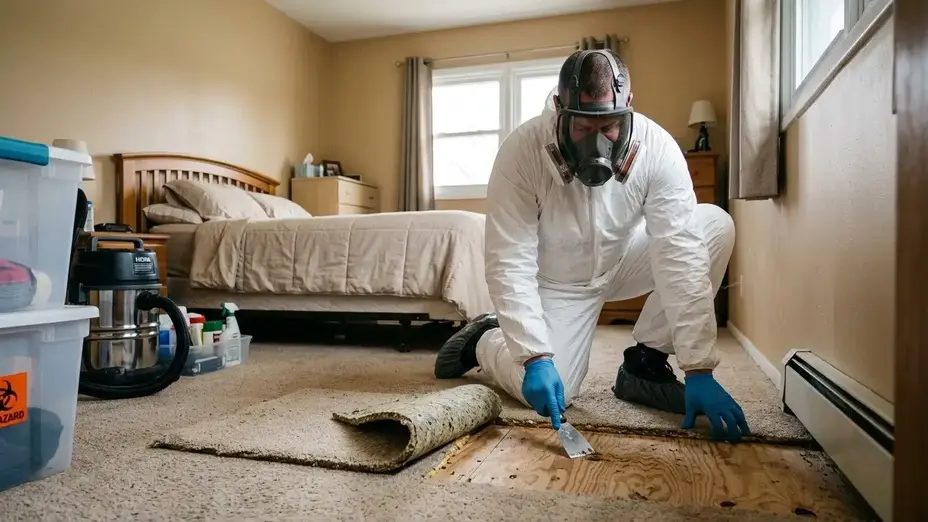
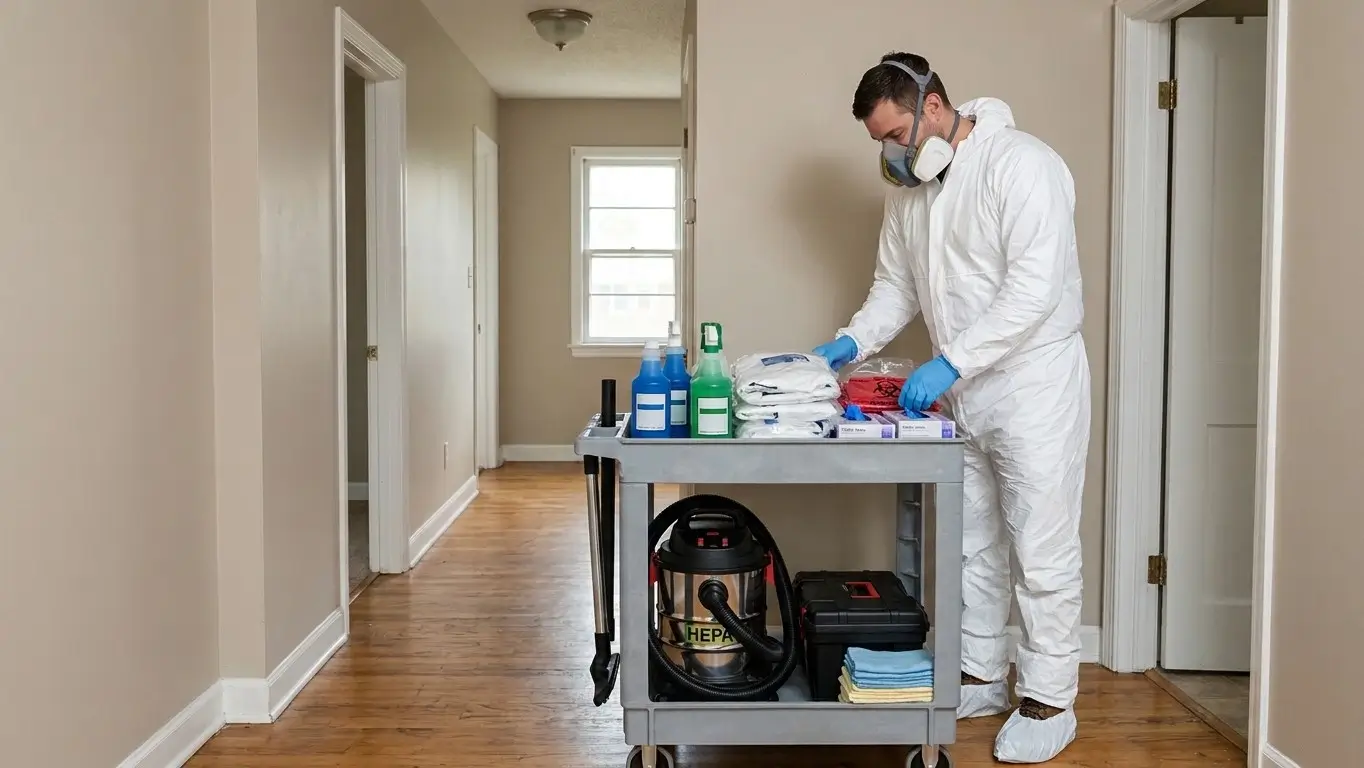
Biohazard remediation technician preparing a controlled work area inside a residential property

Preparing the work area helps limit unnecessary access, protect surrounding spaces, and reduce the potential transfer of biological material during remediation.

Our Professional Biohazard Cleanup Process in Kansas City

Professional biohazard cleanup requires a systematic approach to identifying biological contamination, controlling the affected work area, addressing contaminated materials, and evaluating the property after remediation. Blood, bodily fluids, decomposition residue, and other potentially infectious materials can affect more than the immediately visible surface. Depending on the incident, contamination may involve porous flooring, carpet padding, furnishings, structural materials, and nearby areas where biological material could have been transferred. Each Kansas City property requires a remediation plan based on the incident, the materials involved, the extent of contamination, and the condition of the affected space.

1. Conduct a Detailed Biohazard Assessment

The process begins with evaluating the incident and identifying the areas that may require professional biohazard remediation. The assessment considers the type of biological material involved, its location, the visible extent of contamination, the condition of affected surfaces, and any known circumstances that could influence the cleanup requirements. The objective is to establish what is affected rather than limiting the evaluation to the most immediately visible residue.

Depending on the incident, this may involve evaluating blood or bodily fluid contamination on flooring, carpet, padding, mattresses, upholstered furniture, baseboards, drywall, subflooring, and surrounding surfaces. Unattended death cleanup may require additional consideration of decomposition residue, the condition of materials beneath the original location, and possible odor sources. The assessment also considers whether biological material may have been transferred into adjoining rooms or access pathways.

Kansas City properties can present different assessment challenges. Finished basements, older homes, multi-level residences, rental units, and commercial interiors may contain different flooring assemblies, concealed spaces, and access limitations. These conditions help determine the initial cleanup scope and whether additional inspection or material evaluation is necessary.

2. Establish the Remediation Scope and Work Plan

After the initial assessment, the findings are used to establish the anticipated remediation work. This includes identifying the affected areas, materials that may require removal, surfaces that may be cleaned and treated, and any additional concerns that should be evaluated before the work is completed. The scope should reflect the actual conditions and distinguish necessary biological cleanup from unrelated property repairs.

The work plan may account for contaminated furnishings, affected contents, flooring removal, cleaning of structural surfaces, appropriate disinfection, waste handling, and odor-related remediation. If the incident involves a rental property, apartment building, or commercial facility, access restrictions and coordination with the responsible property representative may also influence the planned work.

Establishing a defined scope helps property owners understand which areas are included, what materials may need to be removed, and whether reconstruction or replacement work will require separate coordination. If additional contamination is discovered during remediation, the scope may need to be reassessed before proceeding with work beyond the originally identified conditions.

3. Prepare and Control the Affected Work Area

Before cleanup begins, the affected space is organized to limit unnecessary access and reduce the possibility of transferring biological material into unaffected portions of the property. Work boundaries are determined according to the contamination location, nearby rooms, access routes, affected belongings, and the activities required to complete remediation.

Depending on the circumstances, preparation may include restricting entry, establishing appropriate containment, protecting unaffected surfaces, organizing equipment, and controlling the movement of materials into and out of the work area. Containment requirements vary with the type and extent of contamination and the procedures being performed. Not every small or contained incident requires the same physical barriers or work area configuration.

This planning is particularly relevant in Kansas City apartments, duplexes, multi-family properties, and commercial buildings where hallways, stairways, shared entrances, and neighboring occupied spaces may be close to the affected room. In finished basements and multi-level homes, the route used to access the work area may also need to be considered when planning equipment movement and removal of affected materials.

4. Use Appropriate Personal Protective Equipment

Cleanup personnel must use protective equipment and work practices appropriate for the potential exposure hazards and the tasks being performed. Depending on the incident, this may include disposable gloves, protective clothing, eye protection, face protection, and respiratory protection when required by the conditions and applicable safety requirements.

Protective measures are selected based on factors such as the type of biological material, the possibility of contact with blood or bodily fluids, the condition of the work area, and the cleaning or removal procedures involved. Proper handling practices also help reduce the possibility of transferring contamination between the affected area, equipment, clothing, and other portions of the property.

Personal protective equipment is only one part of exposure prevention. Work practices, appropriate cleaning procedures, material handling, and the organization of the affected area must also be considered. Protective equipment requirements should be based on the actual work and applicable occupational safety requirements rather than assuming that every incident presents an identical exposure risk.

5. Remove Contaminated and Unsalvageable Materials

Materials that cannot be effectively cleaned may require controlled removal. Depending on the type and extent of contamination, this may include carpeting, carpet padding, mattresses, upholstered furniture, bedding, damaged contents, or portions of affected building materials. Removal decisions depend on the material's porosity, condition, contamination, accessibility, and whether appropriate remediation can be completed without discarding it.

Some incidents require evaluation beneath the visible surface. Blood or bodily fluids that reach carpet may also affect padding or the flooring beneath it. In more extensive unattended death situations, decomposition residue may involve flooring seams, subflooring, wall edges, furnishings, or other materials near the original location. Removing only the visible residue would not necessarily address contamination that has reached underlying materials.

Material removal should be based on the conditions found during the assessment, not an automatic assumption that every nearby item or building component must be discarded. The objective is to identify materials that cannot be appropriately retained, remove them using suitable handling practices, and preserve unaffected property materials whenever they can be safely and effectively addressed.

6. Perform Detailed Cleaning of Affected Surfaces

After affected materials have been evaluated and any necessary removal has been completed, remaining treatable surfaces are cleaned using methods appropriate for the contamination and the material involved. This may include floors, fixtures, hard-surface furnishings, structural surfaces, and other areas identified during the assessment. Visible biological residue must be addressed as part of the cleaning process before appropriate disinfection is performed.

Cleaning requirements differ between nonporous and porous materials. Sealed hard surfaces may be addressed differently from unfinished wood, carpet, upholstery, damaged drywall, or other materials that can absorb or retain biological material. Surface condition, accessibility, and the possibility of contamination beneath or within a material influence whether cleaning is appropriate or removal is necessary.

Attention may also be needed around seams, edges, corners, floor transitions, fixtures, and other areas where residue can remain. The purpose of detailed cleaning is to address the identified biological material and prepare suitable remaining surfaces for any applicable disinfection or additional treatment.

7. Apply Appropriate Disinfection and Surface Treatment

Once applicable cleaning has been completed, remaining treatable surfaces may receive an appropriate disinfectant or other treatment based on the identified contamination. Product selection depends on the intended use, the type of biological material involved, surface compatibility, and the product's labeled directions. Required application procedures and contact times must also be followed.

Disinfection is an important part of addressing suitable surfaces, but it does not replace physical removal of biological material or the removal of porous materials that cannot be effectively cleaned. Applying a disinfectant to an uncleaned surface may not produce the intended result. Cleaning and disinfection therefore need to be treated as related but distinct parts of the remediation process.

The appropriate treatment also depends on the material being addressed. A hard, nonporous surface may be suitable for a labeled disinfectant, while contaminated carpet padding, upholstery, or damaged building materials may require a different approach. Treatment decisions should reflect the actual conditions and applicable product and safety requirements.

8. Handle and Manage Contaminated Waste

Removed materials and disposable supplies must be appropriately contained, handled, and managed according to the type of waste and the requirements that apply. Depending on the incident, this may include contaminated disposable materials, affected furnishings, removed carpet and padding, and other items that cannot be retained. Waste handling practices should limit unnecessary contact and reduce the possibility of transferring contamination during removal.

Biological waste, contaminated sharps, ordinary demolition debris, and other removed property materials may have different handling and disposal requirements. Classification depends on the material and applicable regulations. Packaging, transportation, and disposal arrangements should therefore be determined according to the actual waste involved rather than treating every removed item as the same category.

For properties in Kansas City and surrounding communities, waste management must account for the applicable requirements governing the material and the locations involved. Property owners should not assume that contaminated materials can be placed in ordinary household trash or left with routine renovation debris without first determining the appropriate handling requirements.

9. Evaluate Persistent Odors and Additional Contamination

Certain incidents can produce odors that remain after visible contamination has been removed. Unattended deaths involving decomposition may create particularly persistent odor conditions when affected materials, furnishings, or concealed surfaces retain biological residue. Odor evaluation considers the original source, the materials involved, the affected room, and whether contamination may have reached areas that were not initially visible.

Depending on the findings, additional cleaning, removal of affected materials, or appropriate odor-treatment methods may be necessary. Carpet, padding, upholstery, unfinished wood, and other porous materials may retain odors when the source has not been fully addressed. HVAC components and ventilation openings near the affected area may also warrant evaluation when there is a specific reason to suspect that they were affected.

Deodorization alone does not remove biological contamination. Odor treatment should follow appropriate source removal and cleaning rather than being used to mask an unresolved problem. If an odor persists after the initial remediation work, further assessment may be needed to identify remaining sources or materials requiring attention.

10. Complete the Final Review and Identify Restoration Needs

After the agreed remediation work is completed, the affected areas are reviewed against the established scope. This includes identifying the surfaces addressed, materials removed, cleaning and treatment performed, and any remaining concerns that require additional evaluation. The review should also identify limitations or areas that were outside the agreed work rather than implying that every part of the property has been remediated.

Documentation may include the completed work description, affected areas addressed, materials removed, photographs where appropriate, and records relevant to the property owner or insurance claim. If concealed contamination, persistent odors, or previously unidentified affected materials become apparent, additional evaluation may be necessary before the remaining work can be determined.

The final review also helps establish what is needed before the property returns to its intended use. Replacement flooring, carpet installation, drywall replacement, painting, finish carpentry, and other reconstruction activities are separate from biological remediation unless specifically included in the agreed scope. Homeowners, landlords, property managers, and commercial representatives can use the findings to coordinate any remaining restoration work.

Every Kansas City Biohazard Cleanup Requires a Property-Specific Approach

The appropriate biohazard cleanup process depends on the type of incident, the amount and location of contamination, the materials involved, and the condition of the building. A limited blood cleanup on a suitable nonporous surface may require a substantially different scope from an unattended death involving carpet, padding, subflooring, furniture, and persistent decomposition odors. Sewage-related contamination also involves different assessment, cleaning, and waste-handling considerations. The remediation plan should reflect the actual incident rather than applying an identical procedure to every property.

Local property conditions can influence how the work is organized. Kansas City homes may include finished basements, older flooring assemblies, attached garages, and multi-level layouts. Apartments and duplexes can involve shared hallways, neighboring units, common entrances, and occupied spaces. Commercial properties may have controlled access, employee areas, customer-facing spaces, and operational restrictions. These details can affect work area boundaries, equipment access, material removal, and coordination with the person responsible for the building.

Whether the property is located in Kansas City, Independence, Lee's Summit, Blue Springs, Liberty, North Kansas City, Overland Park, or another surrounding community, the remediation scope should be based on the contamination and building conditions found at the site. The location of the property does not change the need to evaluate affected materials and use appropriate cleaning, treatment, and waste-handling procedures.

Professional biohazard remediation addresses the identified biological contamination and the materials included in the agreed cleanup scope. It should not be confused with complete property reconstruction. Structural repairs, replacement flooring, drywall installation, painting, and other finish work may require separate restoration services. Establishing this distinction helps property owners understand what has been addressed and what remains before the building returns to normal use.

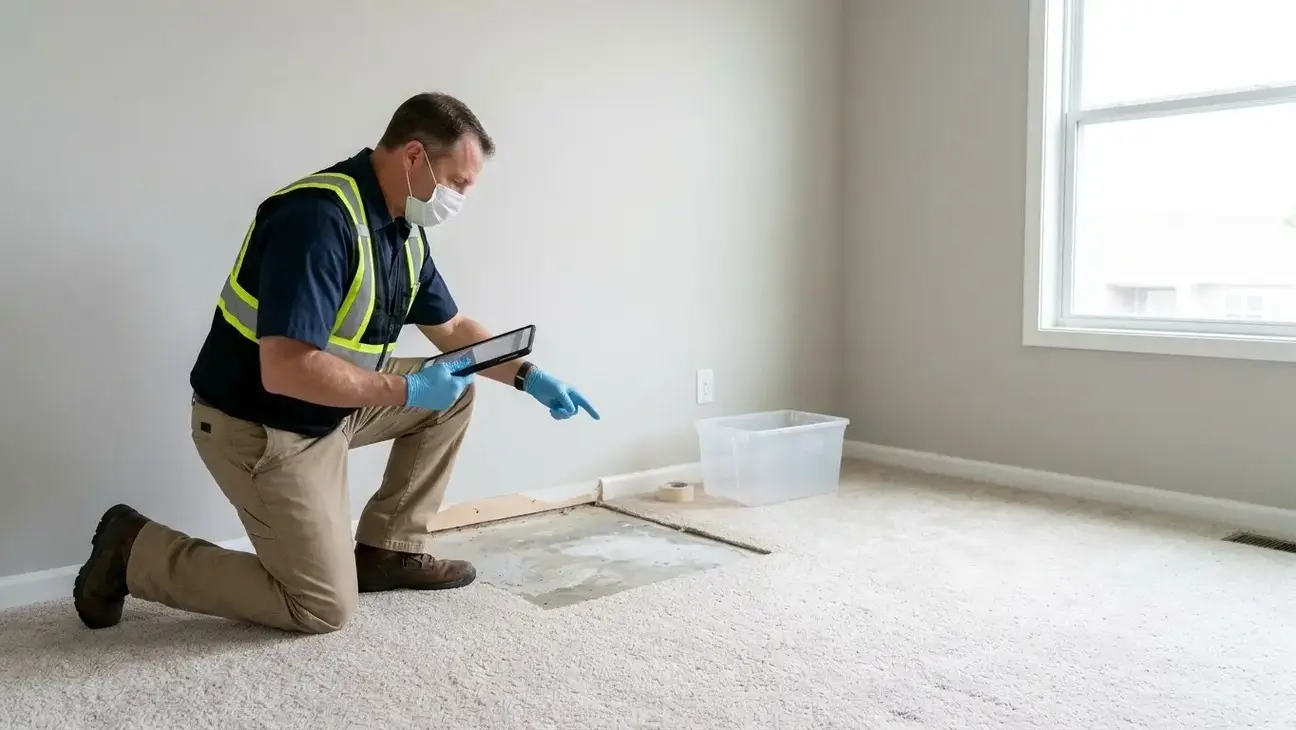
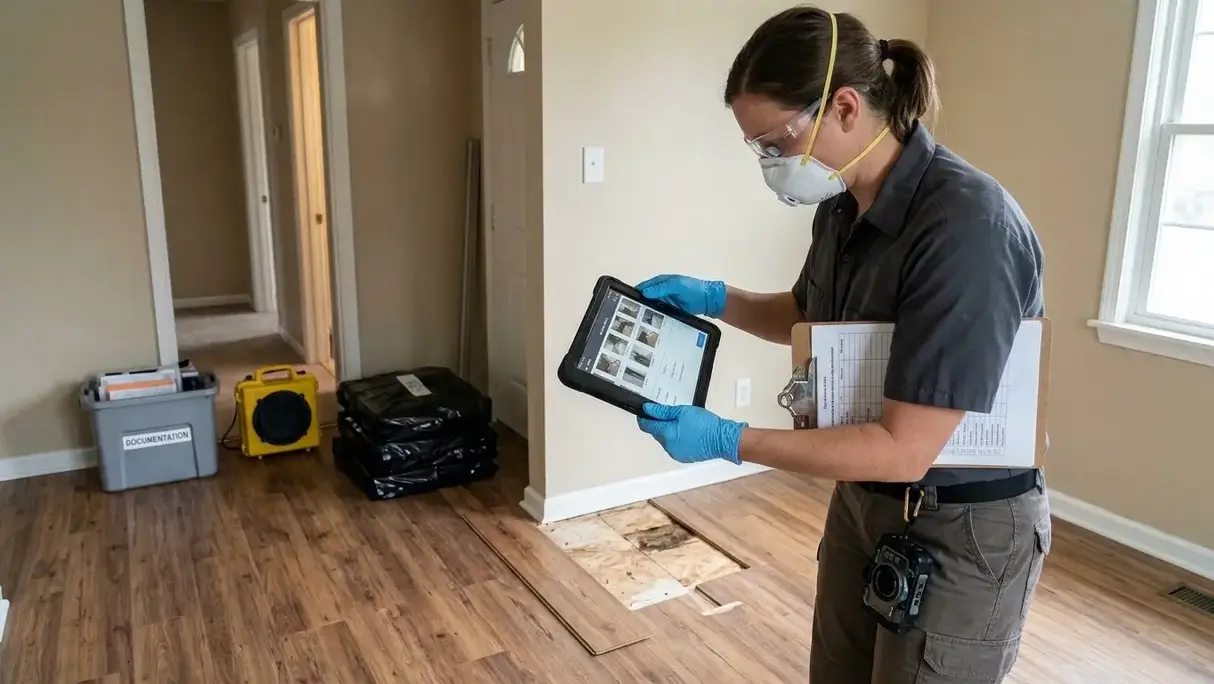
Biohazard remediation professional inspecting a cleaned residential room after cleanup

A final property review helps confirm which areas were addressed, identify remaining concerns, and determine whether separate repairs or reconstruction are still needed.

Need Professional Biohazard Cleanup in Kansas City?

When blood, bodily fluids, decomposition residue, or other potentially infectious materials affect a property, determining which surfaces and materials require attention is an important first step. Contamination may extend into carpet padding, flooring, furnishings, and other areas beyond what is immediately visible. The appropriate cleanup scope depends on the incident, affected materials, and condition of the property. KC Water Damage Pros connects Kansas City homeowners, landlords, property managers, and businesses with biohazard cleanup assistance for affected residential and commercial properties. Call to discuss the situation, the type of property involved, and the areas that may require professional evaluation.

Call (816) 370-6439

Biohazard Cleanup Assessment and Determining the Remediation Scope in Kansas City

Before biohazard remediation begins, the affected property must be evaluated to understand the location, type, and apparent extent of biological contamination. A cleanup assessment helps identify affected rooms, building materials, furnishings, and surfaces that may require professional attention. In Kansas City homes, apartments, and commercial properties, the appropriate remediation scope can vary considerably depending on the incident, how contamination spread, and whether biological material reached porous or concealed building components. The assessment helps establish what needs to be addressed without automatically treating every room or material as contaminated.

Factors Evaluated During a Biohazard Cleanup Assessment

  • Identifying the Original Location of Contamination
    The assessment begins by identifying the known or reported location of the incident and the surfaces or materials directly affected. This may include a bedroom, bathroom, basement, living area, office, or another enclosed space. Establishing the original affected area helps guide further evaluation of surrounding materials and access routes.
  • Evaluating Biological Fluids and Visible Contamination
    Blood, bodily fluids, decomposition-related materials, and other potentially infectious substances require evaluation based on the incident and the materials involved. The presence, location, and apparent extent of contamination help determine which surfaces require cleaning, disinfection, removal, or additional assessment.
  • Assessing Porous and Nonporous Building Materials
    Different materials respond differently to biological contamination. Tile, sealed surfaces, metal, and other nonporous materials may be evaluated for appropriate cleaning and disinfection, while carpet, upholstery, unfinished wood, and other porous materials may require closer evaluation to determine whether they can be adequately restored.
  • Inspecting Flooring, Subflooring, and Concealed Areas
    Contamination may extend below visible flooring or into joints, seams, baseboards, and other concealed areas. Depending on the incident, an assessment may need to consider carpet padding, subflooring, wall cavities, and other building components that cannot be evaluated from the surface alone.
  • Evaluating Furniture and Personal Belongings
    Mattresses, upholstered furniture, clothing, rugs, and household contents may be affected by direct contact or nearby contamination. Each item should be considered according to its material, condition, exposure, and whether appropriate cleaning or restoration is practical. Not every item in an affected room automatically requires disposal.
  • Checking Adjacent Rooms and Access Routes
    Nearby rooms, hallways, stairways, and access routes may require evaluation when people, equipment, or contaminated materials have moved through those spaces. The assessment should distinguish areas with a reasonable basis for concern from unaffected portions of the property.
  • Considering Odors and Environmental Conditions
    Persistent decomposition odors or other unusual odors may indicate that additional source evaluation is needed. Odor alone cannot establish the presence, absence, or extent of biological contamination. The underlying materials and conditions must be evaluated rather than relying on odor treatment as a substitute for remediation.
  • Evaluating Multi-Level Homes and Basement Areas
    Kansas City properties may include finished basements, lower-level bedrooms, utility spaces, and multi-story floor plans. The assessment should account for stairs, transitions between flooring types, and the possibility that affected materials extend beyond the room where the incident occurred.
  • Assessing Apartments and Shared Building Spaces
    In apartment buildings and multi-family properties, the evaluation may include the affected unit, shared hallways, entryways, elevators, or other spaces when incident conditions indicate they may have been affected. Neighboring units should not be presumed contaminated without a reason to evaluate them.
  • Identifying Sharps and Other Physical Hazards
    Needles, broken glass, sharp metal, unstable furnishings, and other physical hazards can affect how an area is accessed and evaluated. These items should not be handled casually or mixed with ordinary debris. The assessment should account for hazards that may require specialized handling.
  • Establishing the Appropriate Remediation Boundaries
    The findings help identify the work area, materials requiring attention, and any additional spaces that need further evaluation. The scope should be based on the observed conditions and available incident information, not an assumption that the entire property requires extensive remediation.
  • Documenting Recommended Cleanup and Removal Work
    A written scope can describe proposed cleaning, disinfection, material removal, waste handling, odor remediation, and any additional evaluation that may be necessary. Where concealed conditions are discovered after work begins, the scope may need to be revised to reflect the newly identified conditions.

The remediation scope should reflect the actual conditions found at the property. A small area of contamination on a cleanable surface may require a different approach from an unattended death involving biological fluids that have penetrated carpet, padding, subflooring, or furnishings. The appropriate response depends on the materials, exposure, and extent of the affected area.

For Kansas City property owners, a clear assessment helps distinguish necessary biohazard cleanup from unrelated repairs or unnecessary removal of unaffected materials. It also provides a more useful basis for discussing estimates, insurance documentation, and any reconstruction that may be needed after remediation.

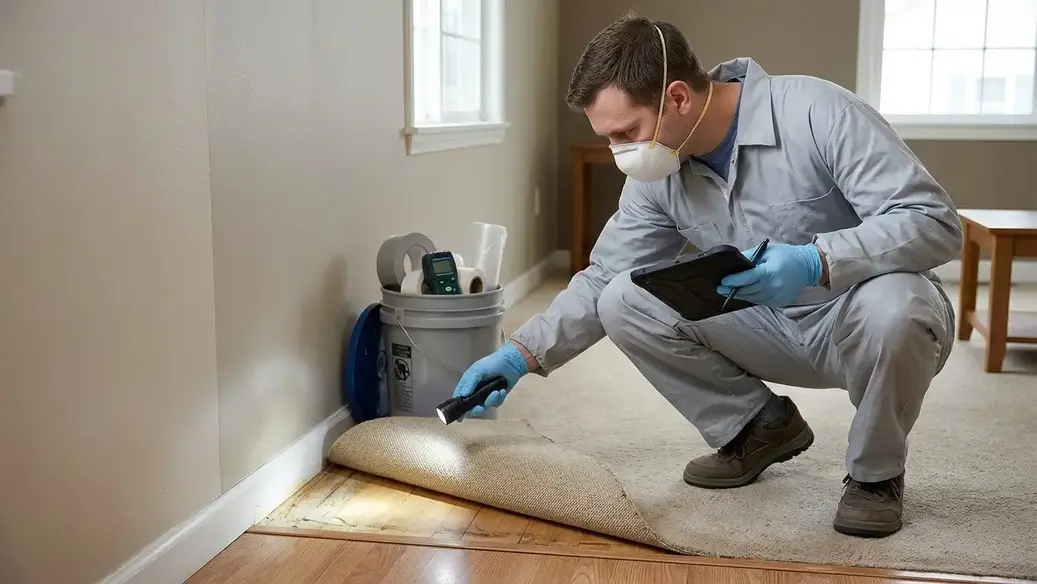
Professional biohazard cleanup technician in protective equipment assessing potentially affected surfaces and building materials inside a residential property

A thorough biohazard cleanup assessment evaluates affected surfaces, porous materials, furnishings, and surrounding areas to establish an appropriate remediation scope.

What Happens During Professional Moisture Mitigation and Structural Drying?

Professional moisture mitigation involves more than removing visible water from a floor or setting up drying equipment in an affected room. The process includes identifying the water source, evaluating how moisture traveled through the property, determining which materials can be restored, and establishing appropriate extraction and drying procedures. In Kansas City homes, finished basements, below-grade foundation walls, enclosed plumbing spaces, and multi-level flooring assemblies can allow water to spread beyond the area where damage first becomes visible. A thorough assessment helps identify both obvious damage and concealed moisture that may otherwise be missed.

1. Identify the Water Source and Stop Further Intrusion

The first step is determining where the water originated and whether it is still entering the building. Common sources include burst pipes, leaking supply lines, water heater failures, washing machine hoses, dishwasher connections, refrigerator water lines, overflowing fixtures, roof leaks, and basement water intrusion. The source and duration of exposure help establish the appropriate mitigation approach.

Kansas City properties may also experience water entry associated with sump pump failures, foundation openings, basement window wells, disconnected downspouts, and drainage problems around the structure. For example, a failed sump pump during a storm may allow water to accumulate across a finished basement floor, while a plumbing leak may continue feeding moisture into a wall cavity before anyone notices visible damage.

The original source must be stopped before affected materials can be reliably restored. Plumbing, roofing, foundation, sump pump, and exterior drainage repairs may require separate qualified contractors. Water mitigation addresses the resulting moisture damage, but should not be confused with repairing every underlying building defect.

2. Evaluate the Water Category and Contamination Risks

The source and condition of the water help determine the precautions, cleaning methods, and material restoration decisions required. Water damage is commonly evaluated using three categories. Category 1 generally involves water from a sanitary source, Category 2 involves significantly contaminated water, and Category 3 involves grossly contaminated water, including sewage and certain floodwaters.

A broken clean-water supply line may present different restoration possibilities from a backed-up floor drain, overflowing sewer line, or exterior floodwater entering a basement. Water that initially comes from a relatively clean source can also pick up contaminants after contacting dirty flooring, soil, waste, stored belongings, or other affected surfaces.

The cleanup plan should account for the actual conditions rather than relying only on where the water originally came from. Contaminated water may require additional protective measures, specialized cleaning, and removal of porous materials that cannot be adequately restored.

3. Inspect the Property and Trace Moisture Migration

Visible water is only one part of a water damage assessment. Affected rooms, adjoining spaces, flooring, baseboards, drywall, ceilings, cabinets, and accessible concealed areas should be evaluated to understand how far moisture has traveled. Water can move along flooring layers, behind baseboards, through wall cavities, and between floors before becoming visible.

In a Kansas City finished basement, water entering through a window well or foundation opening may affect carpet padding, lower drywall, framing, stored belongings, and flooring near the original entry point. A sump pump failure may affect several rooms even when the greatest accumulation of standing water occurred in only one area.

A plumbing leak from an upstairs bathroom may follow framing or floor penetrations and appear as a ceiling stain in a room below. The assessment should consider the likely path of water instead of limiting attention to the first visible discoloration or wet surface.

4. Measure Moisture and Document Affected Materials

Moisture detection helps identify affected building materials and establish a baseline for evaluating drying progress. Depending on the property and materials involved, an assessment may include moisture meters, temperature and relative humidity readings, visual inspection, and other appropriate inspection methods.

Measurements may be taken in drywall, wood framing, subflooring, baseboards, flooring, and other accessible materials. Where practical, readings from comparable unaffected areas can provide useful reference conditions. The material being tested, instrument type, measurement location, and surrounding conditions all affect how readings should be interpreted.

A moisture map or inspection record can help identify wet rooms, affected wall sections, flooring assemblies, and locations requiring additional investigation. This is especially useful when water has moved beneath finished basement flooring or behind enclosed walls.

5. Extract Standing Water From Affected Areas

Once the water source and affected areas have been evaluated, accessible standing water can be removed using extraction equipment appropriate for the conditions. Depending on the loss, extraction may involve basement floors, carpet, hard surfaces, and other suitable areas. Removing accumulated water helps limit continued exposure of building materials.

The extraction method depends on the water volume, surface material, accessibility, and contamination concerns. A flooded basement with several inches of standing water requires a different approach from a localized washing machine leak or a small plumbing failure beneath a sink.

Water removal does not establish that the property is dry. Moisture may remain in carpet padding, subflooring, wall cavities, insulation, cabinets, and other porous materials after visible water has been extracted.

6. Determine Which Materials Can Be Dried or Need Removal

Affected materials should be evaluated to determine whether they can be adequately cleaned and dried or whether removal is necessary. This decision considers the water category, exposure time, amount of moisture absorbed, material condition, contamination, and accessibility of concealed areas.

Carpet padding, swollen laminate, deteriorated drywall, contaminated insulation, and other unsalvageable materials may require removal. Other materials, including some hardwood, concrete, framing, and suitable building components, may be candidates for controlled drying when their condition and the water source make restoration appropriate.

In finished Kansas City basements, selective removal may be needed to access moisture behind lower wall sections, beneath flooring, or inside enclosed assemblies. Removing materials unnecessarily can increase replacement costs, but leaving saturated or contaminated materials in place can create additional problems.

7. Establish Controlled Structural Drying Conditions

After appropriate extraction and preparation, drying equipment may be installed to remove remaining moisture from affected materials and the surrounding environment. Air movers help circulate air across suitable surfaces, while dehumidifiers remove water vapor from indoor air and support continued evaporation.

Equipment placement should reflect the layout of the affected space, the type of materials, moisture conditions, and the extent of water migration. A finished basement, hardwood floor, open living area, and enclosed wall cavity may each require different drying considerations.

Depending on the loss, specialized drying methods may be appropriate for difficult-to- access areas such as wall cavities or flooring assemblies. Equipment should be selected and operated according to the actual conditions, not simply placed in a room without evaluating where moisture remains.

8. Monitor Equipment and Reassess Drying Progress

Structural drying requires evaluation throughout the process. Follow-up inspections may include checking affected materials, recording moisture readings, reviewing indoor temperature and humidity, and confirming that drying equipment is operating as intended.

Measurements taken at consistent locations can help show whether moisture levels are declining. If materials are not drying as expected, the drying arrangement or assessment may need to be reconsidered. Additional moisture sources, inaccessible wet materials, inadequate airflow, or other conditions may be affecting progress.

This is particularly important when water has affected several rooms, concealed wall spaces, basement flooring, or materials that retain moisture longer than the surrounding air. A room that feels comfortable does not necessarily mean the underlying building materials have dried.

9. Verify Drying Goals Before Reconstruction

Drying completion should be based on the condition of the affected materials, not simply the number of days equipment has been running. Appropriate moisture measurements and comparison with relevant reference conditions help determine whether salvageable materials have reached their intended drying goals.

Before new drywall, insulation, flooring, or cabinetry is installed, underlying materials should be evaluated for remaining moisture. Concrete floors, subflooring, framing, and concealed wall assemblies may need additional attention before they are covered by replacement finishes.

Mitigation and drying completion do not automatically include reconstruction, plumbing repairs, roof repairs, or mold remediation. Any remaining damage, necessary repairs, and additional restoration work should be identified before the property is considered fully restored.

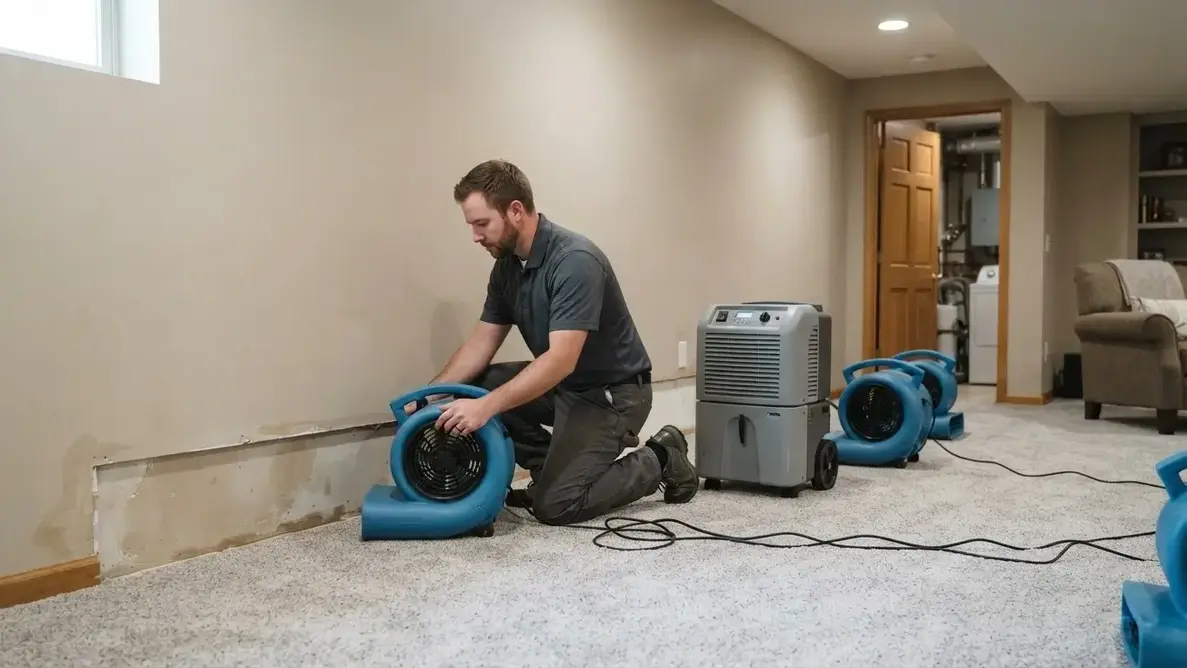
Water damage restoration technician positioning commercial air movers and a dehumidifier inside a finished Kansas City basement

Professional structural drying uses strategically positioned air movers and commercial dehumidifiers to address remaining moisture in affected building materials and indoor spaces.

Moisture Detection Equipment Used During Water Damage Assessments

Different inspection tools help evaluate different aspects of a water damage situation. Moisture meters measure material moisture conditions, thermal imaging helps identify temperature patterns that may warrant further investigation, and environmental instruments help evaluate the indoor conditions affecting evaporation and dehumidification. No single tool independently confirms that every affected area is dry.

Pin and Pinless Moisture Meters

Pin meters use contact points to assess moisture at specific locations, while pinless meters evaluate moisture conditions without penetrating the surface. Depending on the instrument and material, these tools can help investigate drywall, wood, flooring, and other suitable building surfaces.

Readings must be interpreted according to the material, instrument settings, and measurement method. A number from one material should not automatically be treated as a universal drying standard for another.

Infrared Thermal Imaging Cameras

Thermal imaging displays surface temperature differences that may help identify areas requiring additional moisture investigation. It can be useful when inspecting larger wall surfaces, ceilings, and areas where visible water damage is limited.

An infrared camera does not directly measure moisture or see through walls. Temperature patterns can have several causes, so suspected wet areas need confirmation using appropriate inspection and moisture detection methods.

Temperature and Relative Humidity Instruments

Temperature and relative humidity measurements help evaluate the indoor environment during structural drying. These readings provide useful information about conditions affecting evaporation, moisture removal, and dehumidification.

Environmental readings should be considered alongside measurements taken from affected building materials. Dry indoor air does not prove that a wet wall, floor, or structural assembly has reached its drying goal.

Kansas City Property Conditions That Can Complicate Structural Drying

Water damage can behave differently depending on how a building is constructed and which areas are affected. In Kansas City homes, finished basements, below-grade foundation walls, basement window wells, sump pump systems, utility rooms, and enclosed plumbing spaces can create additional inspection and drying considerations.

A basement water intrusion may involve more than the visible floor surface. Water can reach carpet padding, lower drywall, wall framing, stored belongings, and materials behind finished wall coverings. Foundation wall and floor junctions, sump pump areas, and locations near basement windows may also need evaluation when water has entered from outside.

Plumbing leaks can create a different challenge. Water from an upstairs bathroom, laundry area, kitchen, or water heater may travel through floor penetrations and concealed framing before appearing on a ceiling or wall below. The original leak location may not represent the full extent of the damage.

Commercial buildings and multifamily properties can introduce additional considerations, including shared plumbing lines, neighboring units, common hallways, utility spaces, suspended ceilings, and access restrictions. When water crosses unit or floor boundaries, the assessment may need to account for multiple affected areas and coordinate access with property management.

What Property Owners Should Have Documented During Mitigation

Clear documentation helps property owners understand the extent of the water damage, the materials affected, and the work performed. Records can also help when communicating with an insurance adjuster, property manager, or contractor responsible for subsequent repairs.

1. Affected Rooms and Building Materials

Identify the rooms, floors, ceilings, walls, and building assemblies affected by the original water intrusion. Note where water traveled beyond the initial leak or entry point, including adjoining spaces and concealed areas that required additional evaluation.

2. Water Source and Exposure Conditions

Record the suspected water source, water category when determined, approximate discovery time, and whether water continued entering the property. Include relevant information about plumbing failures, basement flooding, roof leaks, or other known causes.

3. Moisture Assessment Findings

Retain relevant moisture readings, inspection locations, affected materials, and areas requiring additional investigation. Where available, keep records that establish initial conditions and show how moisture levels changed during drying.

4. Material Removal and Cleaning

Document which materials were removed, the reason for removal, areas cleaned, and any additional precautions required because of contamination or the condition of the affected materials.

5. Drying Equipment and Work Performed

Keep records of the drying equipment used, areas addressed, general setup, and relevant changes made during the project. This can help explain how the drying strategy was established and adjusted.

6. Photographs and Project Records

Retain photographs of visible damage, affected materials, material removal, drying equipment, and completed mitigation work when available. Keep estimates, invoices, inspection records, and related communications together.

7. Drying Completion Findings

Request available documentation of the final moisture assessment, drying goals, relevant readings, and any remaining conditions requiring attention before reconstruction or replacement materials are installed.

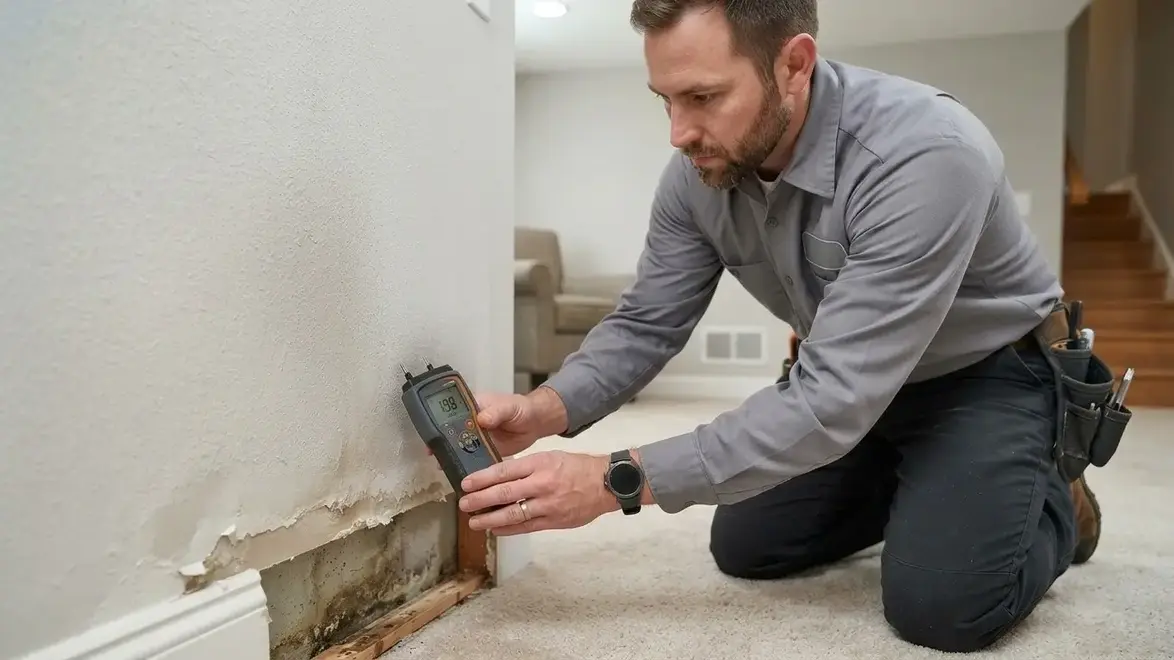
Water damage restoration technician using a professional moisture meter to inspect lower drywall near a basement baseboard

Professional moisture inspections help identify affected building materials, document moisture conditions, and evaluate drying progress before reconstruction begins.

Need Professional Water Damage Mitigation in Kansas City?

Water damage can extend beyond visible wet areas, affecting flooring, drywall, insulation, basement walls, and concealed building materials. If your Kansas City property has experienced a plumbing leak, basement flood, or other water intrusion, tell us about the affected rooms, the source of the water, and any moisture concerns you have. Understanding the conditions can help determine the appropriate next steps for water extraction, moisture assessment, and structural drying.

Call (816) 370-6439

How Long Does Professional Moisture Mitigation and Structural Drying Take?

There is no single drying timeline that applies to every water damage project. A limited plumbing leak affecting a small accessible area may require considerably less drying than a flooded basement with saturated carpet padding, wet drywall, insulation, and multiple affected rooms.

Drying time depends on the amount of water, how long materials remained wet, the type and thickness of affected materials, the extent of concealed moisture, indoor temperature and humidity, and the drying methods being used. Concrete, hardwood, subflooring, and enclosed wall assemblies can all behave differently during the drying process.

Some projects may reach their drying goals within several days, while more extensive water damage can take longer. Equipment should not be removed simply because a predetermined number of days has passed. The condition of the affected materials and documented drying progress should guide completion.

What Can Affect the Cost and Scope of Moisture Mitigation?

The cost of professional water damage mitigation depends on more than the size of the visible wet area. A relatively small plumbing leak that reaches an enclosed wall cavity may require additional investigation and material access. A larger area of water on an accessible hard surface may be more straightforward to address.

1. Number of Affected Rooms

Water that travels into adjoining rooms, lower levels, ceilings, or multiple units can increase the inspection, extraction, and drying scope. The total affected area may be larger than the original leak location.

2. Water Category and Contamination

Sewage, contaminated floodwater, and other unsanitary sources require additional precautions. The water category can affect cleaning procedures, material removal decisions, protective measures, and the overall restoration scope.

3. Building Materials and Construction

Carpet padding, hardwood, laminate, drywall, insulation, subflooring, concrete, and structural framing require different evaluation and drying considerations. Finished assemblies can increase the work needed to reach concealed moisture.

4. Hidden Moisture and Accessibility

Moisture behind cabinets, beneath flooring, inside wall cavities, and above ceilings may require additional inspection, access, or selective material removal before drying can be completed.

5. Equipment and Monitoring Requirements

The amount of drying equipment, length of operation, follow-up inspections, and complexity of the indoor drying conditions can affect the time and resources required for mitigation.

6. Repairs and Additional Restoration

Plumbing repairs, roof repairs, foundation corrections, demolition, reconstruction, contents restoration, and mold remediation may be separate from initial extraction and structural drying services.

Proper Moisture Mitigation Goes Beyond Making a Room Look Dry

Water damage can extend into materials and spaces that are not immediately visible. In Kansas City homes, a basement flood may affect carpet padding, lower wall sections, foundation surfaces, and concealed framing. A plumbing failure may send water through a ceiling assembly or beneath finished flooring before visible damage appears. Identifying these affected areas is an important part of determining the appropriate restoration work.

Property owners should understand the difference between water extraction, moisture mitigation, structural drying, mold remediation, and reconstruction. Extraction removes accessible water. Drying addresses remaining moisture in affected materials. Neither automatically removes existing mold contamination, repairs the original leak, or restores materials that require replacement.

Before authorizing work, ask which areas will be inspected, how affected materials will be evaluated, whether material removal is anticipated, how drying progress will be monitored, and what documentation will be available when the work is completed. Also clarify whether plumbing, roofing, foundation, drainage, reconstruction, or mold remediation will require separate providers.

Whether water damage affects a finished basement in Kansas City, a laundry room in Independence, a multi-level home in Lee's Summit, a rental property in Overland Park, or a commercial building in another nearby community, the restoration plan should reflect the actual water source, affected materials, and conditions inside that property.

Preventing Cross-Contamination During Biohazard Cleanup in Kansas City

Biological contamination can spread beyond the original incident area when affected materials, equipment, footwear, or personal belongings come into contact with otherwise clean surfaces. During biohazard cleanup, controlling access, separating affected materials, and following appropriate cleaning and disinfection procedures help prevent contamination from being transferred into nearby rooms, hallways, and shared building spaces.

Foot Traffic and Contaminated Access Routes

Footwear and other contact surfaces can transfer biological material when someone walks through an affected room and then enters an unaffected area. Hallways, stairways, flooring transitions, and doorways may become secondary contact points. Establishing a controlled route into and out of the cleanup area helps limit unnecessary movement through the property.

Cleaning Equipment and Reusable Tools

Mops, brushes, extraction equipment, containers, and other cleanup tools can carry contamination if they are moved between affected and unaffected areas without appropriate handling. Equipment should be separated, cleaned, disinfected when appropriate, or discarded when it cannot be adequately decontaminated. Clean supplies should also remain protected from contact with contaminated tools and materials.

Furniture, Mattresses, and Personal Belongings

Upholstered furniture, mattresses, bedding, clothing, and household belongings may absorb biological fluids or become contaminated through direct contact. Moving these items through clean rooms without evaluating their condition can spread contamination. Porous belongings may require specialized assessment to determine whether they can be safely cleaned or should be removed and properly discarded.

Door Handles and Frequently Touched Surfaces

Door handles, light switches, cabinet pulls, railings, and other frequently touched surfaces can become transfer points during an incident or cleanup. Surfaces along the route between the affected room and building exit should be considered when evaluating potential contamination. Cleaning and disinfection should address the surfaces identified during the assessment.

Porous Building Materials and Hidden Contamination

Carpet, padding, drywall, insulation, unfinished wood, and other porous materials can absorb biological fluids beyond what is visible on the surface. Simply wiping or disinfecting the exposed area may not adequately address material that has penetrated beneath the surface. The extent of contamination, material type, and ability to achieve effective cleaning help determine whether removal is necessary.

Ventilation Systems and HVAC Components

Heating and cooling equipment should not automatically be considered contaminated because a biohazard incident occurred inside a property. However, nearby air returns, ventilation openings, or HVAC components may warrant evaluation when there is a specific reason to suspect exposure. Any additional cleaning should be based on the actual conditions rather than assuming the entire ventilation system requires remediation.

Contaminated Waste and Material Removal

Removed carpeting, padding, furnishings, disposable protective equipment, and contaminated cleanup materials must be handled carefully. Uncontained materials can transfer biological contamination to stairways, hallways, vehicles, and other building surfaces. Appropriate packaging, transportation, and disposal procedures depend on the material and applicable waste requirements.

Apartments and Shared Building Spaces

Multi-family properties in Kansas City, Independence, Overland Park, and surrounding communities may have shared hallways, entrances, stairwells, elevators, and utility areas. Cleanup planning should account for these common spaces and reduce unnecessary contact with areas used by other residents. Property managers may also need to coordinate access and communicate appropriate restrictions while remediation is underway.

Basements and Multi-Level Residential Properties

Biohazard incidents in finished basements, lower-level bedrooms, or upper-floor rooms can create additional challenges when workers must move equipment and removed materials through occupied portions of a home. Stair treads, handrails, landings, laundry areas, and connecting hallways may need evaluation based on the access route and potential contact with contaminated materials.

Containment and Controlled Work Areas

Restricting access to an affected room helps prevent occupants, pets, and unauthorized visitors from entering the cleanup area. Depending on the incident, appropriate precautions may include protective barriers, designated entry and exit routes, separated equipment, and controlled handling of removed materials. The level of containment should reflect the affected area, materials involved, and potential contamination pathways.

Proper Cleaning and Disinfection

Cleaning and disinfection are separate but complementary parts of biohazard remediation. Cleaning removes biological material and other soil from affected surfaces, while an appropriate disinfectant is used according to its label directions and surface compatibility. Applying disinfectant without first addressing visible contamination may not provide effective treatment.

Final Inspection of Affected and Nearby Areas

Before the cleanup area is returned to use, affected surfaces, remaining materials, and relevant nearby areas should be reviewed for unresolved contamination. The evaluation should consider the original incident location as well as any secondary areas identified during cleanup. Odor reduction alone does not establish that biological contamination has been properly addressed.

Why cross-contamination prevention matters: A localized biohazard incident can create a larger cleanup problem when contaminated materials are moved through a property, shared equipment is handled improperly, or secondary contact surfaces are overlooked. Controlled access, appropriate protective equipment, careful material removal, and thorough cleaning help reduce the risk of transferring contamination beyond the original affected area.

For Kansas City homes, apartments, rental properties, and commercial buildings, the cleanup approach should reflect the actual incident, affected building materials, property layout, and potential exposure pathways. Not every property requires the same containment measures or material removal. The goal is to address identified contamination while protecting unaffected areas from unnecessary disruption.

Unattended Death and Decomposition Cleanup in Kansas City

When a death is not discovered immediately, decomposition can create biological contamination and property damage that require more than ordinary household cleaning. Biological fluids may affect flooring, furnishings, porous materials, and underlying building components. Persistent odors can also remain when affected materials have not been properly addressed. Professional unattended death cleanup evaluates the conditions throughout the affected area to determine what can be cleaned, what may require removal, and what additional property work is necessary.

Decomposition Conditions and Room Environment

The condition of a room after an unattended death depends on more than the amount of time that has passed. Indoor temperature, ventilation, humidity, the location of the affected area, and the surrounding materials can influence decomposition and the extent of cleanup required. Properties with similar discovery timelines may have substantially different remediation needs.

Biological Fluids and Affected Surfaces

Decomposition may involve biological fluids that affect flooring, furniture, nearby surfaces, and materials beneath the immediate location. The visible area does not always establish the full extent of contamination. A proper assessment considers direct contact, material absorption, and whether biological material has reached concealed portions of the building assembly.

Carpet, Padding, and Finished Flooring

Carpet and padding can absorb biological fluids and retain contamination below the visible surface. Laminate, vinyl, hardwood, and other flooring materials may also require evaluation depending on exposure and construction. Materials that cannot be adequately cleaned may need to be removed rather than covered with replacement flooring.

Subfloor and Concealed Building Materials

When biological fluids penetrate finished flooring, the subfloor or underlying materials may also be affected. Contamination can be difficult to identify without evaluating the flooring assembly and the areas surrounding the original exposure. Removal or treatment decisions should reflect the actual condition of the materials rather than assuming the visible floor is the only affected component.

Mattresses, Furniture, and Upholstery

Mattresses, upholstered furniture, bed frames, and nearby furnishings may be affected by direct contact, fluid penetration, or exposure within the room. Porous furniture can be particularly difficult to restore when biological material has entered internal padding or structural components. Salvage decisions depend on the type of item, extent of exposure, and whether effective decontamination is possible.

Clothing and Personal Belongings

Clothing, bedding, personal documents, stored possessions, and other belongings may require individual evaluation. Some items may be suitable for specialized cleaning, while others may be too heavily affected to retain safely. Moving potentially contaminated belongings into another room, storage unit, or vehicle before assessment can create additional cleanup concerns.

Persistent Decomposition Odors

Decomposition odors can remain in a property when affected biological material or porous items have not been adequately addressed. Odors may be noticeable in the immediate room, adjacent spaces, or areas containing affected furnishings. Deodorization alone does not resolve the underlying source when contaminated materials remain in place.

Nearby Rooms and Secondary Affected Areas

An unattended death does not automatically mean the entire home requires remediation. However, nearby rooms may warrant evaluation when people have moved affected belongings, materials have been transported, or there is another identifiable pathway for contamination. Hallways, bathrooms, adjoining bedrooms, and shared living spaces should be considered according to the actual property conditions.

Apartments and Multi-Family Properties

Unattended death cleanup in apartments, duplexes, and multi-family buildings can involve additional access and coordination considerations. Shared entrances, hallways, stairwells, elevators, and neighboring units may need consideration when planning equipment movement and material removal. Property managers and owners may also need to coordinate access while protecting the privacy of occupants and neighboring residents.

Scene Release and Authorized Property Access

Cleanup should not begin until law enforcement or the appropriate authorities have completed their responsibilities and released the scene. Family members, landlords, and property managers should avoid disturbing the affected area before authorized remediation can take place. Once access is permitted, the cleanup provider can evaluate the property and establish the appropriate scope of work.

Biological Cleanup and Odor Remediation

Professional remediation may involve removing biological material, cleaning affected surfaces, applying appropriate disinfectants, and addressing materials that cannot be effectively restored. Odor treatment may also be necessary after the contamination source has been addressed. The specific methods depend on the incident, affected materials, and conditions found during the assessment.

Remediation Versus Reconstruction

Biohazard remediation and property reconstruction are separate stages of recovery. Cleanup addresses biological contamination and the removal of affected materials. Reconstruction may involve replacing carpet, installing flooring, repairing subfloors, replacing drywall, painting, or completing other building repairs. These additional repairs may require separate contractors and estimates.

What determines the cleanup scope? Unattended death cleanup is not determined by discovery time alone. The extent of biological contamination, affected materials, room conditions, flooring construction, odor sources, and accessibility of underlying surfaces all influence the work required. A property assessment helps establish which materials can be cleaned, which may require removal, and whether additional repairs are necessary.

For Kansas City homeowners, families, landlords, and property managers, understanding the difference between biological remediation and reconstruction helps set realistic expectations for property recovery. Whether the affected property is a single-family home, basement, apartment, or rental unit, the cleanup approach should be based on the actual conditions rather than a predetermined removal or treatment plan.

Professional biohazard cleanup technician assessing affected flooring during unattended death remediation in a residential property

Unattended death remediation may require evaluating affected furnishings, flooring, carpet padding, and underlying building materials to determine the appropriate cleanup and removal scope.

How Long Does Biohazard Cleanup Take in Kansas City?

Biohazard cleanup timelines depend on the size of the affected area, the type and extent of contamination, the materials involved, and whether removal or additional treatment is necessary. A limited incident involving a small, accessible surface may require substantially less work than an unattended death affecting carpeting, furnishings, subflooring, or multiple rooms. Understanding the factors that influence the schedule helps Kansas City property owners, families, landlords, and property managers plan for remediation and the steps that follow.

Size of the Affected Area

A contained area may require less assessment, cleaning, and material handling than an incident involving multiple rooms, adjoining hallways, or shared building spaces. The size of the affected footprint influences the amount of work required, but the visible area alone does not always establish the full remediation scope.

Type and Extent of Biological Contamination

Blood, bodily fluids, decomposition-related contamination, and other potentially infectious materials can involve different cleanup requirements. The amount of biological material, surfaces affected, and possibility of contamination beyond the visible area all influence the work plan and time needed to complete remediation.

Initial Assessment and Work Area Preparation

Before cleanup begins, the affected property must be evaluated to identify contaminated materials, potential transfer pathways, access requirements, and appropriate protective measures. Establishing work area boundaries and organizing equipment and supplies are important parts of the process that contribute to the overall schedule.

Porous Materials and Concealed Contamination

Carpet, padding, upholstery, unfinished wood, drywall, and other porous materials may absorb biological fluids. When contamination extends beneath a visible surface, additional evaluation and material removal may be necessary. Addressing concealed contamination can involve more work than cleaning exposed, nonporous surfaces.

Removal of Contaminated Materials

Removing affected carpeting, mattresses, furniture, padding, or building materials adds handling, packaging, and disposal work to the cleanup process. The quantity, condition, and location of these materials influence how removal is organized, particularly when they must be transported through occupied portions of a property.

Unattended Death and Decomposition Cleanup

Unattended death cleanup may involve biological fluids, affected flooring assemblies, porous furnishings, and persistent decomposition odors. The discovery timeline alone does not determine how long remediation will take. Room conditions, material absorption, affected surfaces, and the need for removal or additional treatment all influence the schedule.

Odor Treatment and Additional Remediation

Persistent odors may require additional attention after the original contamination source has been addressed. Affected materials may need to be removed, and remaining surfaces may require further cleaning or treatment. Deodorization methods and their duration depend on the conditions found and should not replace proper source removal.

Containment and Cross-Contamination Prevention

Some incidents require controlled access, protective barriers, designated equipment areas, and specific routes for removing contaminated materials. These precautions help prevent contamination from spreading into unaffected rooms. The amount of preparation depends on the property layout, affected area, and potential exposure pathways.

Property Layout and Material Access

Finished basements, multi-story homes, narrow stairways, restricted entrances, and properties with limited loading access can affect equipment movement and material removal. Cleanup in an apartment or commercial building may also require coordination around shared hallways, elevators, entrances, and occupied spaces.

Apartments, Rental Properties, and Commercial Buildings

Multi-family and commercial properties can involve additional coordination with owners, property managers, maintenance personnel, and occupants. Access arrangements, building restrictions, neighboring units, and shared spaces may influence when work can begin and how remediation activities are scheduled in Kansas City and surrounding communities.

Cleaning, Disinfection, and Final Review

Cleanup involves more than removing visible biological material. Appropriate cleaning, disinfection of compatible surfaces, management of contaminated waste, and review of the affected area are also important. The work required depends on the materials involved and whether additional areas or surfaces need attention before remediation can be considered complete.

Reconstruction and Property Repairs

Completing biohazard remediation does not necessarily mean a room is ready for normal use. Replacing carpet, installing flooring, repairing subfloors, replacing drywall, painting, and other restoration work may require separate contractors, materials, and scheduling. These repairs can extend the overall property recovery timeline beyond the cleanup itself.

Why there is no universal biohazard cleanup timeline: The time required depends on the actual contamination, affected materials, property layout, access conditions, and work necessary to complete remediation. A small, accessible cleanup may be relatively straightforward, while an unattended death or multi-room incident involving porous materials and removal requirements can involve substantially more work. An accurate schedule should be established after evaluating the property rather than relying on a guaranteed number of hours or days.

Remediation versus reconstruction: Biohazard cleanup addresses biological contamination and affected materials. Replacement flooring, subfloor repairs, drywall installation, painting, and other building repairs are separate recovery activities that may follow. For Kansas City homeowners, families, landlords, and property managers, distinguishing these stages helps establish realistic expectations for cleanup completion and the return of the property to use.

Professional biohazard cleanup technician organizing remediation equipment and preparing materials inside a residential property

The time required for biohazard remediation depends on the affected materials, cleanup scope, property access, and any additional work needed before restoration can begin.

What Happens After Biohazard Cleanup Is Completed?

Completing biohazard cleanup is an important step in restoring an affected property, but the end of remediation does not always mean the building is ready for immediate occupancy or normal use. Property owners should understand which areas were addressed, what materials were removed, whether additional evaluations are needed, and what repairs remain. A documented closeout helps homeowners, families, landlords, and property managers coordinate the next steps without confusing completed remediation with unfinished restoration work.

Completed Cleanup Scope

Review the agreed cleanup scope and identify which rooms, surfaces, materials, and affected areas were included in the work. Confirm whether the completed remediation matches the documented scope and clarify any areas that were excluded, inaccessible, or identified as requiring separate attention. Understanding these boundaries helps prevent assumptions about work that was not part of the original agreement.

Removed Materials and Discarded Contents

Determine which contaminated furnishings, carpeting, padding, building materials, or personal belongings were removed during cleanup. This is particularly important when an incident affects mattresses, upholstered furniture, stored possessions, or rental furnishings. Property owners should understand what was discarded and which remaining items were outside the removal scope.

Remaining Odor and Indoor Conditions

If an unpleasant odor remains after remediation, the condition should be evaluated rather than automatically covered with fragrances or additional deodorizing products. Remaining odor may warrant checking whether an original contamination source, affected porous material, or another condition remains unresolved. Odor alone does not establish whether biological contamination is present.

Cleanup Photographs and Project Documentation

Keep available before-and-after photographs, work descriptions, estimates, invoices, and other project records together. Documentation can help establish what areas were addressed, which materials were removed, and what work remains. These records may also be useful when coordinating repairs, communicating with property managers, or discussing an insurance claim.

Estimates, Invoices, and Insurance Records

Retain the original estimate, any approved changes to the work scope, final invoices, and available supporting documentation. If insurance is involved, property owners may need to provide these records to their insurer or adjuster. Coverage and reimbursement depend on the policy, circumstances of the loss, and the insurer's review. Cleanup documentation should not be treated as a guarantee of insurance payment.

Flooring, Subfloor, and Drywall Repairs

Removing contaminated materials can leave areas that need replacement or reconstruction. Carpet installation, subfloor repairs, drywall replacement, insulation, baseboards, trim, and painting may be necessary depending on what was removed or damaged. These building repairs are generally separate from the biological cleanup itself and may require additional contractors and scheduling.

Additional Evaluation of Affected Areas

Some properties may require additional evaluation when concealed materials were inaccessible during the initial work or when new concerns become apparent after removal. The need for further assessment depends on the incident, original remediation scope, and condition of the exposed building materials. Additional testing or specialized evaluation should be arranged when appropriate rather than assumed necessary for every cleanup.

Remaining Safety and Access Considerations

Before occupants, maintenance personnel, or contractors enter the affected area, confirm whether any access restrictions remain. Unfinished removal work, exposed building components, repair activities, or other identified hazards may require continued precautions. Protective measures should remain in place until the relevant work and safety concerns have been addressed.

Rental Property and Tenant Coordination

Landlords and property managers may need to coordinate remediation closeout with maintenance personnel, repair contractors, and affected tenants. This can include confirming the cleanup scope, arranging access for reconstruction, documenting removed rental furnishings, and determining what work must be completed before the affected room or unit can return to service.

Commercial Property and Workplace Reopening

Commercial buildings may require coordination between property management, business owners, maintenance teams, and other responsible parties before an affected area reopens. Shared entrances, restrooms, offices, and employee areas may have separate access or repair considerations. Reopening decisions should account for completed remediation and any remaining building or operational requirements.

Separating Remediation From Restoration

Biohazard remediation addresses biological contamination and affected materials. Restoration focuses on returning the property to its previous functional condition through repairs and replacement of removed components. Keeping these work phases distinct helps owners understand which services have been completed, which contractors may still be needed, and why the overall recovery process can continue after cleanup ends.

Determining When a Property Is Ready for Use

Returning a room or property to normal use depends on the completed remediation scope, the condition of the affected area, and any remaining repairs or safety requirements. A visually clean room alone does not establish that every concern has been resolved. Property owners should confirm that agreed cleanup work is complete and that outstanding issues have been addressed by the appropriate professionals.

What should happen before a property returns to use? Property owners should understand the completed remediation scope, review available project documentation, identify materials that were removed, and determine whether additional evaluation or building repairs remain. The requirements depend on the incident and property conditions. Not every biohazard cleanup requires independent testing or formal clearance certification, but unresolved concerns should be evaluated before normal use resumes.

For Kansas City homeowners, landlords, property managers, and commercial building operators, separating cleanup documentation from reconstruction records makes the recovery process easier to coordinate. Biohazard remediation addresses the affected area; flooring replacement, drywall repairs, painting, and other restoration work may follow before the property is fully returned to service.

Biohazard remediation professional reviewing a cleaned residential room after completion of the cleanup work

A post-remediation review helps document completed cleanup work, identify remaining property concerns, and determine whether separate repairs or restoration are still required.

Need Help With Biohazard Cleanup in Kansas City?

If a biohazard incident has affected your home, rental property, or commercial building, understanding what was addressed and what remains is an important part of recovery. Contaminated materials may require removal, while flooring, drywall, subflooring, and other building components may need separate repairs. Property owners should also understand what documentation is available and whether additional evaluation is needed. KC Water Damage Pros connects Kansas City homeowners, landlords, property managers, and businesses with biohazard cleanup assistance. Call to discuss the affected areas and what may need attention.

Call (816) 370-6439

Biohazard Cleanup Insurance Documentation and Claim Coordination in Kansas City

When a biohazard incident affects a home, rental property, apartment, or commercial building, insurance documentation may become an important part of the recovery process. Kansas City property owners may need to document the circumstances of an incident, identify affected rooms and building materials, and provide records of professional biohazard remediation. Whether the loss involves unattended death and decomposition, biological fluid contamination, or another incident involving potentially hazardous materials, organized estimates, photographs, invoices, and communications can help explain the work performed. Coverage depends on the individual insurance policy, the cause of loss, applicable exclusions, and the insurer's claim determination.

Documentation That May Be Useful for a Biohazard Cleanup Insurance Claim

  • Written Biohazard Cleanup Estimates and Scope of Work
    A written estimate can identify the proposed remediation services, affected rooms, surfaces, and building materials. It may describe biological cleanup, detailed cleaning, disinfection, contaminated material removal, odor treatment, and other work when applicable. An itemized scope helps explain why particular services are being proposed instead of presenting the cleanup as a single unexplained charge.
  • Photographs of Affected Rooms and Property Conditions
    Photographs or video can help document visible contamination, affected flooring, furnishings, damaged building materials, and the general condition of the work area. When appropriate and safe, photographs taken before remediation can provide a useful record of the original conditions. Sensitive images should be handled discreetly and shared only with authorized parties. Do not enter or photograph a restricted incident scene without permission.
  • Initial Assessment and Affected Area Documentation
    Assessment records can describe the location and apparent extent of affected areas, including rooms, flooring, walls, furnishings, and other surfaces requiring evaluation. Distinguishing directly affected materials from nearby areas that were inspected but did not require remediation can help explain the actual scope of work.
  • Itemized Invoices and Completed Work Descriptions
    Retain invoices identifying the services actually performed, the areas addressed, and the associated charges. Depending on the project, records may distinguish assessment, cleaning, disinfection, material removal, waste handling, and odor remediation. The completed invoice should reflect the work performed rather than simply repeating the original estimate if the final scope changed.
  • Contaminated Flooring and Building Material Removal Records
    When carpeting, padding, mattresses, drywall, subflooring, or other materials cannot reasonably be cleaned and must be removed, documentation can identify the affected materials and explain their relationship to the remediation scope. This is particularly relevant when biological contamination has penetrated porous materials or reached concealed surfaces. Photographs and written descriptions may help explain why removal was necessary.
  • Personal Belongings, Furniture, and Contents Documentation
    Unattended death cleanup and other biohazard incidents can affect mattresses, upholstered furniture, clothing, household contents, and personal belongings. A separate inventory can identify affected items, their condition, and whether they were retained, cleaned, or removed. Ownership, age, purchase information, and available receipts may also be useful if the insurer requests a contents inventory.
  • Incident Dates, Discovery Dates, and Remediation Dates
    Maintain a record of the known or reported incident date, when the condition was discovered, when the property was assessed, and when cleanup began and ended. For unattended death and decomposition incidents, the date of discovery may differ significantly from the date the incident occurred. Clearly distinguish confirmed information from estimates or information provided by others.
  • Insurance Adjuster Communications and Claim Instructions
    Keep copies of emails, letters, claim numbers, adjuster instructions, inspection requests, submitted estimates, and requests for additional information. A communication log containing dates, contact names, and important instructions can help property owners track outstanding questions throughout the claim process.
  • Policy Information, Deductibles, and Claim Requirements
    Review the insurance policy and declarations page applicable to the date of loss. Important information may include coverage limits, deductibles, exclusions, conditions, reporting requirements, and deadlines for submitting requested documentation. Property owners should ask their insurer to explain any policy language or claim requirements they do not understand.
  • Emergency Mitigation and Temporary Protection Expenses
    If immediate action is necessary to protect the property or prevent additional damage, keep records of reasonable emergency mitigation measures and related expenses. Depending on the circumstances, this may include temporary protection, securing affected areas, or other necessary actions. Retain receipts, photographs, and service records. Ask the insurance company how these expenses should be submitted, but do not put personal safety or necessary mitigation at risk while waiting for an inspection.
  • Odor Treatment and Additional Remediation Documentation
    If decomposition odors or other persistent odors require additional treatment, records should identify the service performed and the conditions it was intended to address. Documentation should distinguish odor treatment from the removal of biological contamination, cleaning of affected materials, and any necessary demolition. Odor treatment alone does not establish that contaminated materials have been adequately remediated.
  • Separate Biohazard Remediation and Reconstruction Costs
    Professional remediation and subsequent reconstruction involve different types of work. Cleanup may include removing biological contamination, cleaning affected surfaces, and addressing materials that cannot be restored. Reconstruction may involve replacing drywall, flooring, subflooring, trim, insulation, or other building components. Separate estimates and invoices where practical so the proposed remediation and repair expenses can be evaluated independently.
  • Rental Property, Apartment, and Multi-Family Building Records
    Landlords and property managers may need to coordinate documentation among the property owner, management company, remediation provider, and insurance representative. Records should identify the affected unit and any shared building areas that required evaluation. In apartment properties, documentation may also need to distinguish the affected unit from hallways, neighboring units, common areas, and other spaces that were not part of the remediation scope.
  • Commercial Property and Business Interruption Records
    When a biohazard incident affects an office, retail location, rental facility, or other commercial property, property owners may need to document the affected work areas, restricted access, cleanup expenses, and repairs. Businesses should maintain relevant invoices, service records, and communications about the interruption. Any business income or interruption claim involves separate policy terms and documentation requirements that should be confirmed with the insurer.
  • Organized Claim Files and Supporting Records
    Keep estimates, invoices, photographs, material inventories, receipts, correspondence, and other relevant documents together in an organized claim file. Retain copies of submitted records and note when they were provided. This can be especially useful when a property owner, landlord, adjuster, and remediation provider are coordinating different parts of a Kansas City property recovery project.
  • Privacy and Sensitive Incident Information
    Biohazard cleanup records can contain sensitive details involving an individual's death, personal belongings, household circumstances, or other private information. Photographs, names, and incident details should be handled carefully. Share information only with authorized parties who reasonably need it for the remediation, property management, or insurance process.
  • Final Remediation Records and Property Condition Updates
    At the end of the cleanup, retain available documentation describing the work completed, areas addressed, materials removed, and any remaining repair recommendations. If additional reconstruction or evaluation is necessary, keep those recommendations separate from the completed remediation records. Do not describe a property as independently certified or cleared unless the appropriate evaluation was actually performed and documented.

Questions to Ask Your Insurance Company Before Biohazard Cleanup

Before proceeding with non-emergency work, property owners can contact their insurance company or claims adjuster to clarify the claim process. The following questions can help identify documentation requirements and avoid misunderstandings about the proposed cleanup.

  • Does my policy cover this type of incident?
    Ask whether the specific cause of loss and resulting property damage may fall within the policy's coverage, and whether exclusions or special limitations apply.
  • Do I need to submit an estimate before cleanup begins?
    Find out whether the insurer wants a written remediation estimate, photographs, or other documentation before non-emergency work proceeds.
  • Does an adjuster need to inspect the affected property?
    Ask whether an inspection is requested and how it should be coordinated with the remediation provider and property access requirements.
  • What should happen if immediate cleanup or mitigation is necessary?
    Ask how to document emergency conditions and necessary mitigation expenses. Confirm what records should be retained if the work must begin before an adjuster can inspect the property.
  • What documentation is required for contaminated material removal?
    Find out whether photographs, itemized estimates, material descriptions, or additional supporting information are needed when carpeting, padding, furnishings, drywall, or subflooring must be removed.
  • Are remediation and reconstruction evaluated separately?
    Ask whether biological cleanup, disinfection, material removal, odor treatment, and subsequent building repairs require separate estimates or supporting documentation.
  • What are my deductible and applicable coverage limits?
    Confirm the deductible, relevant policy limits, and any restrictions that could affect the amount payable for the covered loss.
  • What are the deadlines and submission procedures?
    Ask when estimates, invoices, photographs, inventories, proof-of-loss forms, and other requested documents must be submitted, and how to send them securely.
  • What if additional contamination is discovered during cleanup?
    Ask how newly identified affected materials or concealed conditions should be documented and reported if the original estimate no longer reflects the required work.
  • Who should I contact about a disputed estimate or coverage decision?
    Request the appropriate claims contact and ask how to submit additional documentation or request a review if you disagree with the insurer's assessment.

Insurance Documentation for Kansas City and Surrounding Communities

Biohazard cleanup projects throughout the Kansas City metropolitan area can involve different property types and insurance arrangements. A homeowner in Kansas City, Independence, or Lee's Summit may be coordinating a residential property claim, while a landlord in Overland Park, Olathe, or another Johnson County community may need to document remediation within a rental unit or multi-family building.

Because the metropolitan area crosses the Missouri and Kansas state line, property owners should identify the correct insurance company, policy, property address, and claim contact for the affected location. Insurance requirements are determined by the applicable policy and circumstances of the loss, not simply by the municipality where the cleanup takes place.

For Missouri property owners, the Missouri Department of Commerce and Insurance provides consumer information about homeowners insurance. Kansas property owners can consult the Kansas Department of Insurance for homeowners claim guidance and information about policyholder responsibilities.

If a claim involves a property in a different state, contact the appropriate insurance department for that jurisdiction when additional consumer assistance or claim guidance is needed.

Insurance coverage for biohazard remediation is not automatic. The cause of the incident, policy language, exclusions, deductibles, coverage limits, and claim circumstances all matter. An estimate or invoice documents proposed or completed work, but it does not guarantee reimbursement or establish that an insurer has approved the expense.

Kansas City property owners should contact their insurance company or claims adjuster directly to confirm coverage, documentation requirements, inspection procedures, and applicable claim deadlines. Keeping organized records of the incident, cleanup scope, completed services, and related expenses can help make the property recovery process easier to manage.

Biohazard remediation professional documenting affected residential materials and completed cleanup work

Organized photographs, written assessments, and itemized work records can help property owners document biohazard remediation expenses during the insurance claim process.

Biohazard Cleanup Costs in Kansas City, Missouri

Biohazard cleanup costs in Kansas City depend on the type of biological contamination, the size of the affected area, and how deeply contaminants have penetrated flooring, furnishings, and other building materials. A limited area of blood or bodily fluid contamination may require a more contained cleanup, while an unattended death involving decomposition can require extensive remediation, removal of porous materials, and additional odor treatment. The condition of the property and the work required determine the overall cost.

A biohazard cleanup estimate may include an initial assessment, protective equipment, containment procedures, removal of affected materials, cleaning and treatment of suitable surfaces, and contaminated waste handling. Reconstruction, replacement flooring, plumbing repairs, and other building repairs may be separate expenses. The categories below represent different types or scopes of work, so their prices should not be added together as though every project requires each service independently.

Typical Biohazard Cleanup Cost Estimates

Limited Blood & Bodily Fluid Cleanup

$500–$1,500+

A relatively small affected area may require controlled cleanup, protective equipment, removal of contaminated items, and treatment of suitable surfaces. Costs depend on the amount of biological material, the surfaces involved, and whether contamination has reached porous materials or surrounding areas.

Trauma Scene Cleanup

$1,000–$5,000+

Cleanup following a traumatic incident may involve blood and bodily fluid contamination across flooring, walls, furnishings, or other interior surfaces. The extent of the affected area, the materials requiring attention, and the amount of removal and treatment needed influence the overall cost.

Unattended Death Cleanup

$1,500–$7,500+

An unattended death can involve biological contamination, decomposition fluids, affected furnishings, and persistent odors. Costs depend on how long the property was affected, the extent of contamination, and whether flooring, carpet padding, subflooring, or other materials require removal.

Decomposition & Extensive Contamination

$3,000–$15,000+

More extensive decomposition can affect multiple surfaces and building components, particularly when biological fluids have penetrated porous flooring or reached concealed areas. Remediation may require expanded material removal, additional surface treatment, and more involved cleanup procedures.

Contaminated Furniture & Material Removal

$500–$2,500+

Mattresses, upholstered furniture, carpet, padding, and other porous belongings may require removal when biological contamination cannot be adequately addressed through surface cleaning. Costs depend on the quantity of affected materials, removal difficulty, handling requirements, and disposal needs.

Biohazard Odor Treatment

$500–$3,000+

Persistent odors associated with decomposition or biological contamination may require additional treatment after affected materials have been addressed. The extent of odor penetration, the condition of the property, and whether contaminated materials remain in concealed spaces can influence the work and cost involved.

These figures are broad planning estimates based on published industry cost information, not verified Kansas City market averages or guaranteed prices. Actual costs depend on the incident, affected materials, cleanup area, and services included in the estimate. Cleanup, material removal, and odor treatment may overlap within a combined remediation project, while reconstruction and replacement materials may be billed separately. Extensive contamination can exceed the ranges shown. A property-specific assessment is needed to determine the appropriate scope and cost.

Biohazard cleanup professional evaluating affected flooring and residential materials to determine remediation requirements

Biohazard cleanup estimates are based on the affected area, contaminated materials, removal requirements, and the remediation work needed at the property.

Biohazard Cleanup Service Areas Throughout Kansas City

KC Water Damage Pros provides biohazard cleanup and biological contamination remediation support throughout the Kansas City metropolitan area in Missouri and Kansas. Residential and commercial properties can require specialized cleanup following unattended deaths, traumatic incidents, blood and bodily fluid exposure, decomposition, and other situations involving potentially hazardous biological materials. Remediation needs depend on the type of contamination, the surfaces affected, and whether biological materials have penetrated flooring, furnishings, or surrounding building components.

From unattended death cleanup in established Kansas City neighborhoods to biological contamination affecting apartment buildings, rental properties, and commercial interiors, each situation requires consideration of the property's condition and the extent of the affected area. Carpet padding, subflooring, baseboards, drywall, and upholstered materials may require additional evaluation when biological substances penetrate porous surfaces. Appropriate remediation can involve controlled work areas, protective procedures, removal of affected materials, cleaning and treatment of suitable surfaces, and proper handling of contaminated waste.

  • Kansas City, MO
  • Kansas City, KS
  • Independence, MO
  • Lee's Summit, MO
  • Blue Springs, MO
  • Raytown, MO
  • Gladstone, MO
  • Liberty, MO
  • North Kansas City, MO
  • Grandview, MO
  • Belton, MO
  • Raymore, MO
  • Overland Park, KS
  • Olathe, KS
  • Lenexa, KS
  • Shawnee, KS
  • Leawood, KS
  • Prairie Village, KS
  • Mission, KS
  • Mission Hills, KS
  • Roeland Park, KS
  • Greater Jackson County, MO
  • Greater Johnson County, KS
  • Greater Kansas City Metropolitan Area

If a property in the Kansas City area has been affected by biological contamination, avoid disturbing the affected materials and keep occupants and pets away from the cleanup area. The appropriate response depends on the incident, the condition of the property, and the materials requiring attention. Professional remediation may involve evaluating affected surfaces, managing contaminated materials, and addressing persistent biological odors before the space is considered ready for normal use. For related cleanup information, learn more about sewage cleanup and professional odor removal.

Frequently Asked Questions About Biohazard Cleanup in Kansas City

Biological contamination can affect more than the immediately visible area of a property. Unattended deaths, traumatic incidents, blood and bodily fluid exposure, decomposition, and sewage-related contamination can create complex cleanup conditions involving flooring, furnishings, structural materials, and persistent odors. These answers explain professional biohazard remediation, property cleanup considerations, and what Kansas City homeowners, landlords, and business owners should understand before arranging service.

What situations require professional biohazard cleanup in Kansas City?
Professional biohazard cleanup may be necessary when a property contains potentially infectious biological materials or contamination that cannot be appropriately addressed through ordinary cleaning. Common situations include unattended deaths, decomposition, traumatic incidents, blood and bodily fluid contamination, certain sewage backups, and biological waste affecting residential or commercial interiors. The appropriate response depends on the type of material, the surfaces involved, and how far contamination has extended. Professional remediation focuses on identifying affected areas, managing contaminated materials, cleaning appropriate surfaces, and following suitable handling and disposal procedures.
What is the difference between biohazard cleaning and regular house cleaning?
Regular house cleaning addresses everyday dirt, dust, household residue, and routine sanitation. Biohazard remediation addresses biological materials that may present exposure risks and require specialized handling. Blood, bodily fluids, decomposition residue, and certain contaminated waste can penetrate porous materials or remain in areas that ordinary surface cleaning does not adequately address. Professional cleanup may involve protective equipment, controlled work areas, removal of affected materials, appropriate cleaning and disinfection, and regulated waste handling when applicable. The distinction is not simply how dirty a property is, but the nature of the contamination and the procedures needed to address it.
What should I do first when I discover a biohazard situation in my home?
Keep family members, visitors, and pets away from the affected area. Avoid touching biological materials, walking through contaminated areas, or moving potentially affected belongings into other rooms. Do not attempt to clean the area using household disinfectants, paper towels, or ordinary cleaning equipment. If the incident involves an unattended death, serious injury, or circumstances requiring an emergency response, contact the appropriate emergency services or authorities first. Once the property can be accessed, arrange a professional assessment to determine the extent of contamination and the appropriate next steps.
What is involved in unattended death cleanup in Kansas City?
Unattended death cleanup involves addressing biological contamination that may develop when a person remains undiscovered for an extended period. Decomposition can produce fluids, residues, and persistent odors that affect flooring, carpet padding, subflooring, baseboards, furnishings, and nearby building materials. The extent of contamination depends on the time involved, room conditions, temperature, and materials surrounding the affected area. Professional remediation may include establishing a controlled work area, removing contaminated materials, cleaning and treating suitable surfaces, managing affected waste, and addressing remaining odor sources. A careful assessment is important because visible conditions do not always reveal the full extent of the affected materials.
Does decomposition affect flooring and materials beneath the surface?
Yes. Decomposition-related fluids can penetrate carpet, padding, hardwood seams, laminate joints, and other porous or vulnerable materials. Depending on the construction, contamination may reach the subfloor or collect around flooring transitions and baseboards. This is particularly important when evaluating finished basements, bedrooms, and other enclosed residential spaces. Removing visible residue without evaluating the materials underneath may leave contamination behind. The decision to clean, treat, or remove building materials depends on their composition, the depth of penetration, and whether effective remediation is possible.
Do you provide professional blood and bodily fluid cleanup?
Blood and bodily fluid cleanup may be necessary following accidents, injuries, unattended deaths, and other traumatic incidents. Blood and certain other biological materials can contain potentially infectious microorganisms, making appropriate protective procedures important during remediation. Contamination may affect flooring, furniture, walls, fixtures, and materials surrounding the original incident. Professional cleanup focuses on identifying affected surfaces, managing contaminated materials, cleaning and disinfecting suitable areas, and following appropriate disposal procedures. The work required depends on the amount of material, the surface composition, and the extent of exposure.
What is trauma scene cleanup and when is it necessary?
Trauma scene cleanup addresses biological contamination following serious accidents, injuries, assaults, and other traumatic events. These incidents can leave blood and bodily fluids on floors, walls, furniture, fixtures, and other surrounding surfaces. Depending on the circumstances, biological material may travel beyond the immediate location and affect nearby porous materials. Professional remediation involves evaluating the affected area, using suitable protective measures, removing contaminated materials when necessary, and cleaning appropriate surfaces. The objective is to address the physical contamination while treating the property and its contents with care and discretion.
Can biohazard contamination spread beyond the visible affected area?
Yes. Biological materials can move into carpet backing, padding, flooring seams, cracks, porous furnishings, and other materials that are not immediately visible. Liquids may also collect beneath furniture, along baseboards, or within gaps between flooring components. In some properties, the surrounding building assembly requires evaluation before the actual cleanup boundary can be established. This is why professional assessment should consider the materials surrounding an incident rather than relying exclusively on the visible surface area. Identifying concealed contamination helps determine whether additional material removal or treatment is necessary.
Do contaminated carpet, hardwood floors, and drywall need to be removed?
Not every contaminated material automatically requires removal. The decision depends on the material's porosity, the type of biological contamination, how deeply the material has been affected, and whether appropriate cleaning and disinfection can be performed. Nonporous surfaces may sometimes be effectively cleaned and treated, while contaminated carpet padding, drywall, insulation, or subflooring may require removal. Hardwood flooring and other layered materials can require additional evaluation because contamination may enter joints or reach materials underneath. The goal is to determine what can reasonably be remediated and what cannot be reliably restored.
Why does an unattended death leave such persistent odors?
Decomposition produces gases and other compounds that can create strong, persistent odors. These odor sources may affect porous materials such as carpet, upholstery, padding, unfinished wood, and other surfaces that absorb or retain contamination. Odors can remain even after the immediate biological material has been removed because affected materials may continue releasing odor-causing compounds. Effective remediation starts by identifying and addressing the underlying contamination. Depending on the condition of the property, this may involve material removal, appropriate surface treatment, and additional odor-control procedures rather than simply applying fragrances or air fresheners.
Can decomposition odors travel through HVAC systems and into other rooms?
Odors can move beyond the room where an incident occurred through open doorways, air movement, shared building spaces, and, under certain conditions, HVAC return pathways. This can be a concern in apartments, duplexes, and larger residential properties where rooms or units share building systems. Odor movement does not necessarily mean biological contamination is present throughout the entire property. The original source and any affected surrounding areas should be evaluated before determining whether additional cleaning or odor treatment is needed. HVAC components should not be treated as contaminated solely because an odor is noticeable near a vent.
Is it safe to clean blood or bodily fluids using household products?
Household cleaning products are not a substitute for appropriate biohazard remediation when significant biological contamination is present. The effectiveness of a disinfectant depends on the product, the microorganisms being addressed, the surface, and following the manufacturer's directions for concentration and contact time. Improper cleaning can also spread material across surfaces or expose the person performing the work. Avoid direct contact with potentially contaminated materials and arrange professional cleanup when an incident involves substantial blood, bodily fluids, decomposition, or uncertain biological exposure risks.
What protective equipment is used during professional biohazard cleanup?
Protective equipment is selected according to the contamination and the conditions of the work area. Depending on the assessment, cleanup personnel may use disposable protective coveralls, nitrile gloves, protective footwear, eye protection, and appropriate respiratory protection. Additional precautions may be necessary when removing contaminated materials or working in areas where airborne exposure is a concern. Equipment selection, safe work practices, and proper removal of protective clothing are important considerations because contaminated gloves, footwear, and garments can transfer biological material into otherwise unaffected areas.
What does containment mean during a biohazard cleanup?
Containment refers to measures used to separate an affected work area from surrounding spaces and reduce the potential movement of contaminants during cleanup. Depending on the situation, this may involve restricting access, using protective barriers, controlling the movement of equipment and materials, and establishing appropriate entry and exit procedures. Containment considerations are especially important in occupied homes, apartment buildings, and commercial properties where unaffected rooms or neighboring spaces need to remain separated from the remediation work. The necessary precautions depend on the type and extent of contamination.
How are contaminated materials removed and disposed of?
Contaminated materials must be evaluated and handled according to their condition and applicable waste-management requirements. Depending on the incident, materials may include absorbent supplies, disposable protective equipment, contaminated furnishings, carpet padding, drywall, or other affected building components. Materials requiring regulated handling must be appropriately contained, packaged, transported, and directed through suitable disposal channels. Not all waste from a cleanup is classified the same way, so the appropriate handling method depends on the material and applicable requirements. Ordinary household disposal should not be assumed to be appropriate for regulated biological waste.
Do you provide sewage and biological waste cleanup in Kansas City?
Sewage backups and certain biological waste incidents can introduce microorganisms and contaminated water into residential and commercial properties. Affected locations may include basements, bathrooms, utility rooms, laundry areas, and lower-level finished spaces. Cleanup requirements depend on the source of the contamination, the amount of material involved, and which surfaces or building components have been affected. Sewage contamination is not equivalent to an ordinary plumbing leak and should not be treated as clean water. Keep occupants and pets away from affected areas. For more information about contaminated-water situations, visit our sewage cleanup service page.
Can biohazard contamination affect furniture, mattresses, and personal belongings?
Yes. Furniture, mattresses, upholstery, clothing, stored belongings, and other personal items may become contaminated depending on their location and material composition. Porous materials can absorb biological substances, making effective cleaning more difficult than with nonporous surfaces. Some belongings may be suitable for specialized cleaning, while others may require removal and appropriate disposal. Moving potentially contaminated possessions into another room before they have been evaluated can spread the affected area. Decisions about salvage and removal should consider the material, contamination level, and practical limitations of effective remediation.
Is biohazard cleanup different in Kansas City basements and finished lower levels?
Basement cleanup can involve additional considerations because of the materials and construction commonly found in finished lower-level spaces. Carpet and padding, concrete flooring, drywall, wood framing, utility areas, and enclosed storage spaces can all require different remediation approaches. Biological fluids may also collect along flooring transitions or enter materials surrounding the original incident. In properties with limited ventilation or adjoining utility rooms, access and air movement may require additional attention. Evaluating the actual construction and affected materials is important when determining the cleanup scope rather than treating every basement as a single open room.
How does biohazard cleanup work in Kansas City apartments and rental properties?
Apartment and rental-property remediation requires consideration of the affected unit as well as nearby shared spaces. Biological contamination may affect flooring, fixtures, furnishings, or materials that belong to the property owner. In multifamily buildings, shared hallways, adjacent units, access routes, and building ventilation may also need to be considered depending on the incident. Property managers and landlords should coordinate access, keep occupants away from affected areas, and determine who is authorized to approve the work. The cleanup scope should be established before repairs, painting, or preparing the unit for another tenant.
Can a property be occupied while biohazard remediation is underway?
Occupancy depends on the extent of contamination, the location of the affected area, and the work being performed. A limited incident may allow unaffected portions of a property to remain accessible if the work area can be appropriately separated. More extensive contamination may require occupants to stay elsewhere until remediation is complete and the affected space has been evaluated. Children, pets, visitors, and other occupants should remain away from the cleanup zone. Access should not be restored simply because visible residue has been removed; the condition of the affected materials and completion of the necessary work also matter.
How long does professional biohazard cleanup take?
The timeline depends on the type of incident, the size of the affected area, the amount of biological material, and the condition of surrounding building materials. A limited surface cleanup may require considerably less time than an unattended death involving decomposition, contaminated flooring, material removal, and persistent odors. Additional work involving containment, disposal, specialized cleaning, or odor treatment can also affect the schedule. An initial assessment provides a more realistic understanding of the expected work than relying on a standard number of hours or days for every type of incident.
How much does biohazard cleanup cost in Kansas City?
Biohazard cleanup costs depend on the type of incident, the size of the affected area, the extent of contamination, and the amount of remediation required. A limited blood cleanup can involve a substantially different scope than an unattended death with decomposition, affected flooring, material removal, and odor treatment. Other cost considerations may include protective equipment, containment, labor, cleaning supplies, regulated waste disposal, and additional treatment of affected surfaces. The condition of the underlying materials is particularly important because removing contaminated carpet, padding, drywall, or subflooring can increase the scope of work. A property assessment is the best way to establish an appropriate estimate. Use our biohazard cleanup quote request to discuss the situation.
Does homeowners or commercial property insurance cover biohazard cleanup?
Insurance coverage depends on the policy, the cause of the incident, applicable exclusions, and the circumstances of the loss. Some policies may provide coverage for certain cleanup expenses following a covered event, while other situations may be subject to limitations or exclusions. Coverage for unattended death cleanup, trauma-related remediation, and other biological contamination should never be assumed. Contact your insurance company to determine what applies to your policy and whether prior authorization or specific documentation is required. Photographs, incident information, estimates, and records of completed work may help support the claims process.
What information should I provide when requesting a biohazard cleanup estimate?
Helpful information includes the property's location, the general type of incident, the rooms involved, and whether the contamination includes blood, bodily fluids, decomposition, sewage, or another biological material. It is also useful to explain whether the property is occupied, whether the affected area contains carpet or other porous materials, and whether furnishings or belongings are involved. Photographs should only be provided when they can be obtained safely without entering or disturbing the affected area. You do not need to provide unnecessary personal or graphic details to begin discussing the cleanup requirements.
Is discreet biohazard cleanup available for sensitive residential incidents?
Biohazard incidents can involve difficult personal circumstances, grieving families, tenants, and property representatives. Professional communication should be respectful, considerate, and focused on the work required rather than unnecessary details about the incident. Privacy considerations may include scheduling, property access, coordination with authorized representatives, and minimizing unnecessary disruption to surrounding occupants. If you are arranging cleanup after an unattended death or traumatic event, you can explain any specific access or privacy concerns when discussing the service.
What areas around Kansas City can require biohazard remediation?
Biohazard contamination can affect many types of properties throughout the Kansas City metropolitan area, including single-family homes, apartment buildings, rental properties, offices, and commercial spaces. Cleanup requests may involve properties in Kansas City, Missouri, Kansas City, Kansas, and surrounding communities such as Independence, Lee's Summit, Overland Park, Olathe, Blue Springs, Liberty, Shawnee, and Lenexa. Service availability depends on the property's location and the scope of the incident. Contact us to confirm whether service is available at your address.
How do I arrange professional biohazard cleanup in Kansas City?
Start by providing the property's location and a general description of the biological contamination. Explain whether the situation involves an unattended death, blood or bodily fluid contamination, a traumatic incident, sewage, or another cleanup concern. If the property is occupied, mention whether access restrictions or other safety considerations are necessary. Avoid disturbing affected materials while arranging service. The information provided helps establish the likely cleanup requirements and determine the appropriate next steps. Use our biohazard cleanup quote request section to submit your information and discuss the situation.

Need Professional Biohazard Cleanup in Kansas City?

Blood, bodily fluids, unattended deaths, and other biological contamination can affect more than the immediately visible area. Materials such as flooring, carpet, furnishings, and surrounding surfaces may require careful evaluation to determine the appropriate cleanup and remediation scope. KC Water Damage Pros helps Kansas City property owners address biohazard cleanup needs through property-specific assessment, controlled removal of affected materials when necessary, detailed cleaning, and appropriate disinfection. Whether you are dealing with an unattended death, a traumatic incident, or another situation involving biological contamination, we can help you understand the cleanup requirements and the next steps for your property.